From Camp Bucca to Mount Qasioun: how the US coalition paved the way for Al-Sharaa
Originally published on DARAJ :
The career of Ahmad al-Sharaa, aka Abu Muhammad al-Jolani, raises questions and fascinations, and since he seized power by force, many would like to see him as a providential man, a repentant jihadist who has become a pragmatic statesman. Reexamining his career through the prism of the power struggles and relationships that shaped the Syrian civil war opens up the possibility of another, less mythological view of the man.
Jabhat al-Nusra, a product of US detention camps
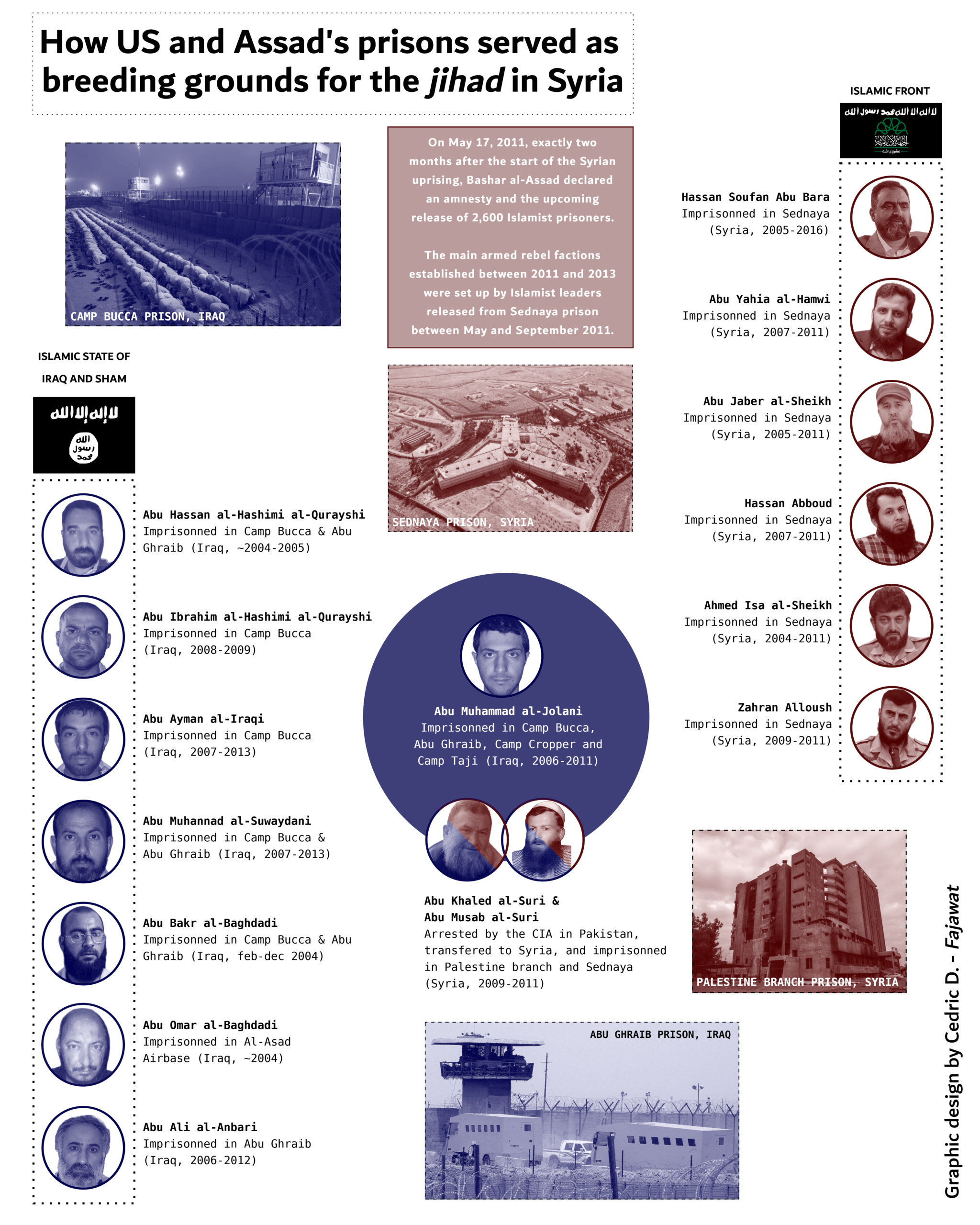
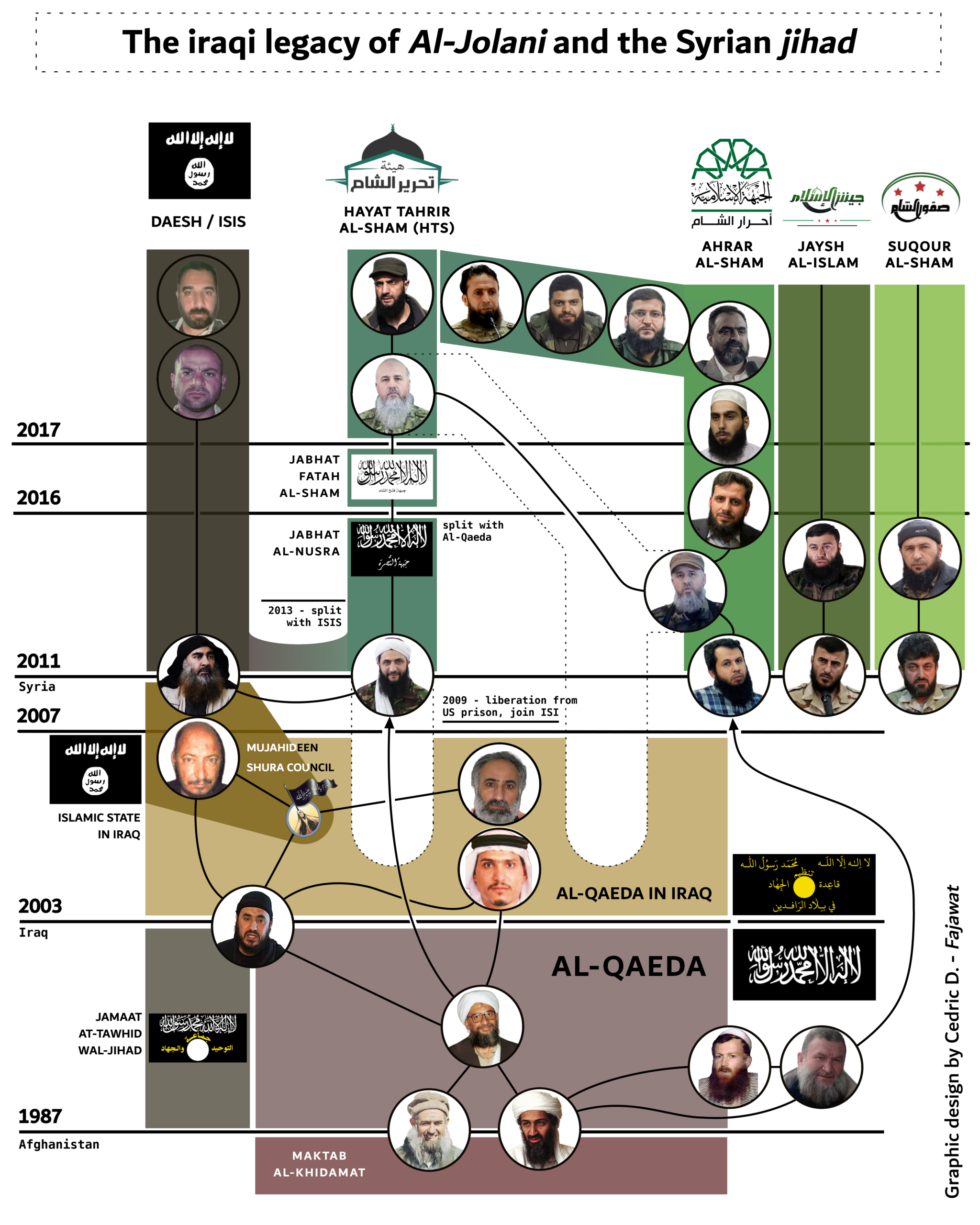
Abu Muhammad al-Jolani began his career at Camp Bucca, the detention facility (and incubator) for jihadists established by the US Army in 2003 near the port of Umm Qasr in Iraq. While he was just a young, inexperienced militant, possibly recruited in Damascus by the preacher Mahmoud al-Aghasi (Abu al-Qaqaa), he is believed to have been held in this prison between May 2005 and April 2010 alongside Abd al Rahman Mustafa al-Qaduli (Abu Ali al-Anbari), a Salafist ideologue close to the founder of Al-Qaeda in Iraq, Abu Musab al-Zarqawi, and favored by the organization’s leadership as his successor. As such, Al-Anbari was what could be called a “leader maker.” While the circumstances and reasons for Al-Jolani’s capture in Mosul remain unclear, it was behind bars—and through Al-Anbari—that he became someone of importance within the international jihad ecosystem. It should be noted that another of Al-Jolani’s fellow prisoners was then knighted by Al-Anbari: former Iraqi military intelligence officer Fadel Ahmed al-Hiyali (Abu Muslim al-Turkmani / Abu Mutaz al-Qurayshi).
The latter became his accomplice and together they allegedly devised a plan to set up the Syrian branch of Al-Qaeda, a project that Al-Hiyali submitted for approval to the emir of the Islamic State, Abu Bakr al-Baghdadi, upon his release from prison in 2010. Consequently, immediately after his release on March 13, 2011 (when the Syrian popular uprising had just broken out), Al-Jolani was doubly endorsed by Ayman Al-Zawahiri—Bin Laden’s deputy who became his successor three months later—and by Al-Baghdadi, to go and implement the Al-Qaeda branch in Syria. With a monthly budget of $60,000, Al-Jolani crossed the Syrian border into Hasakeh with six companions in July 2011, before meeting with several Salafist leaders who had been conveniently released from prison by Assad in the preceding weeks. Finally, after making its debut with a few bomb attacks on Syrian intelligence buildings in Damascus during the winter, the Syrian branch of Al-Qaeda was finally born on January 23, 2012, under the name Jabhat Nusrat Ahl al-Sham, or Al-Nusra Front. This is what you might call an operational project.
Assad and the Islamization of the Syrian rebellion
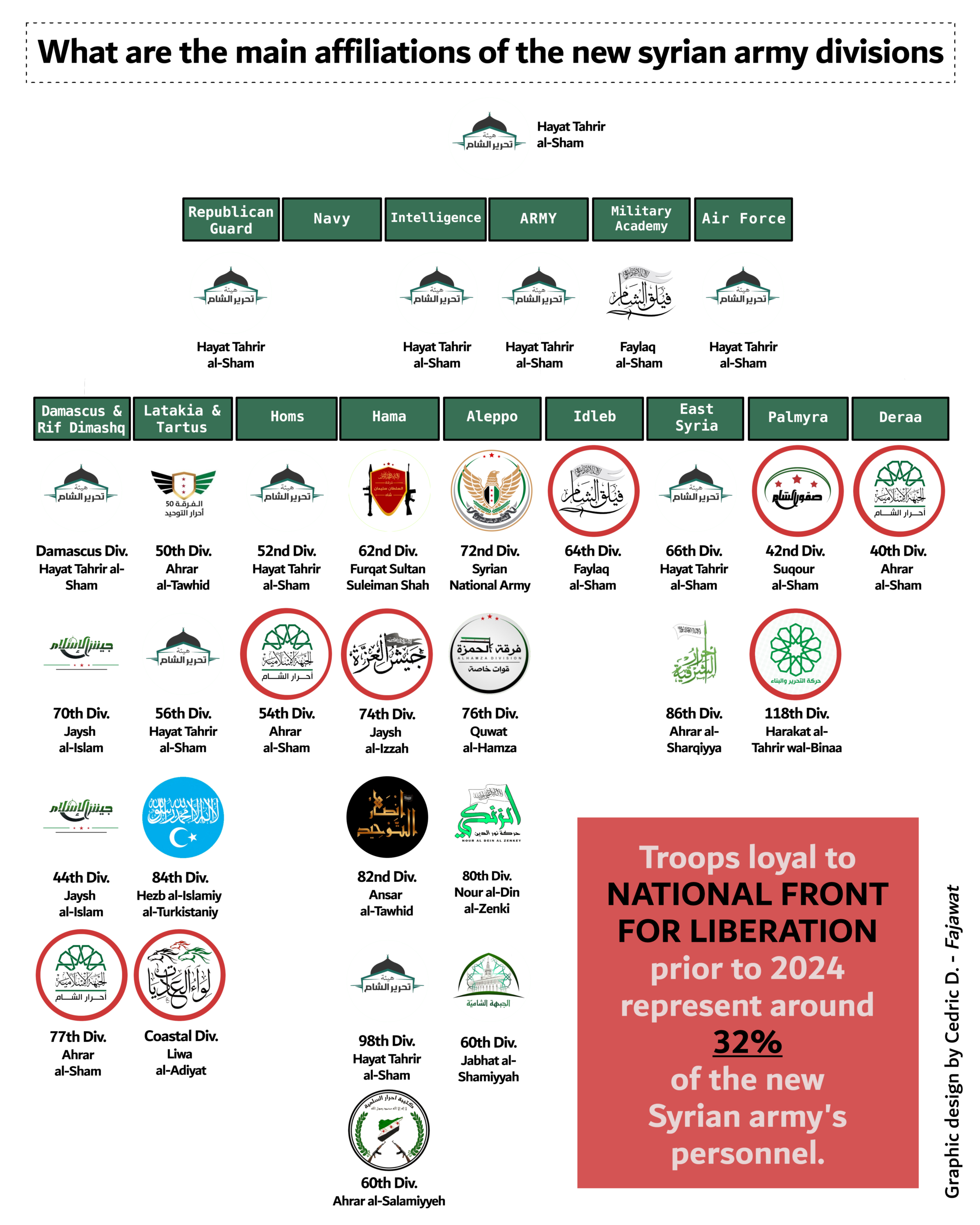
One might wonder about this surprising leniency on the part of the American and Syrian authorities, which led to the release without prosecution of dozens of Islamist leaders at the dawn of the Syrian uprising, on the pretext that their intelligence services were unable to identify them or pin any serious crime on them. Apart from Al-Jolani, those lucky ones include his mentor Abu Ali al-Anbari and Abu Bakr al-Baghdadi himself, as well as Abu Hassan al-Hashimi al-Qurayshi, Abu Ibrahim al-Hashimi al-Qurayshi, Zahran Alloush, Ahmed Isa al-Sheikh, Abu Khaled al-Suri, Abu Musab al-Suri, Hassan Abboud, Abu Jaber al-Sheikh, Abu Yahia al-Hamwi, Amer al-Absi Abu Atheer, Abu Muhannad al-Suwaydani, and Abu Ayman al-Iraqi. It is important to name them because, in the year following their release, they all became leaders of the most radical Salafist groups involved in the Syrian civil war, but also the fiercest competitors within the regional jihadist network. Let us add—and this is what will be of particular interest to us later on—that they are also the main architects of the fragmentation of the Syrian rebel forces, which was achieved through the radical purge of its most secularist and progressive components. At the head of this counter-revolutionary movement were Al-Jolani’s Al-Nusra Front, Hassan Abboud’s Ahrar al-Sham, Zahran Alloush’s Jaysh al-Islam, Ahmed Isa al-Sheikh’s Suqour al-Sham and all the groups affiliated with Abu Bakr al-Baghdadi’s Islamic State.
The empowerment of Jabhat al-Nusra
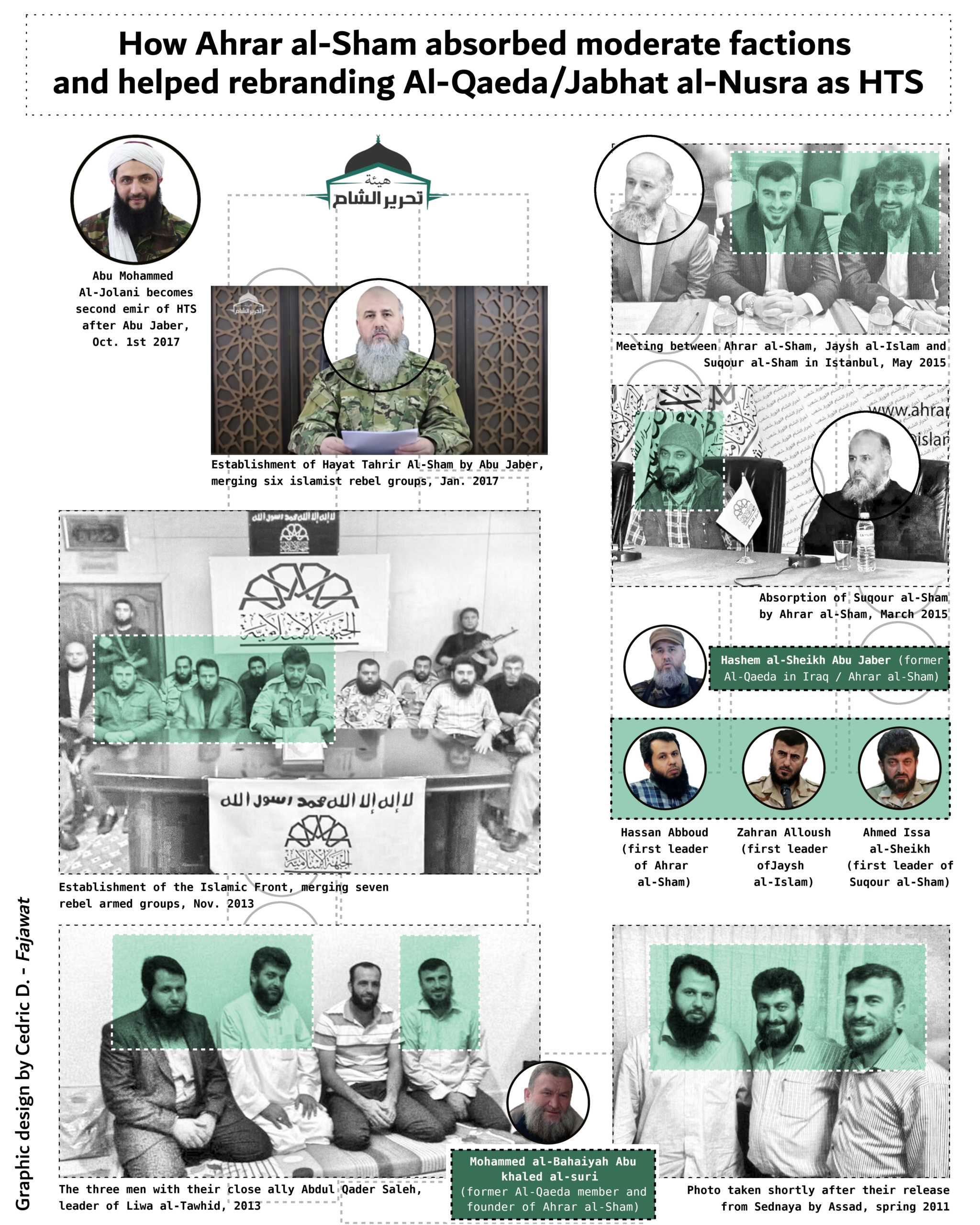
Just a few months after establishing Jabhat al-Nusra, Al-Jolani was already beginning to break away from his parent organization, prompting Al-Baghdadi to send his former mentor Al-Anbari to keep an eye on things. Al-Anbari exchanged several letters with the emir of Mosul to share his observations, and in one of them, his description of Al-Jolani is damning: “He is a sneaky person with two faces. He loves himself and does not care about the religion of his soldiers. He is willing to sacrifice their blood just so he is mentioned in the media. He flies with joy like a child when his name is mentioned on TV channels.” In 2013, the split between the Al-Nusra Front and Islamic State was complete, while Al-Jolani maintained a tactical cooperation with the seven main Syrian Salafist organizations grouped within the Islamic Front (Ahrar al-Sham, Suqour al-Sham, Jaysh al-Islam, Liwa al-Tawhid, Liwa al-Haqq, Ansar al-Sham, and the Kurdish Islamic Front), despite their differences over the relationship to be maintained with Turkey. It was this last point of disagreement that led part of the leadership of Ahrar al-Sham, at the time Jabhat al-Nusra’s main rival, to defect and align itself with Jabhat al-Nusra between 2014 and 2015. This was particularly the case for Abu Jaber al-Sheikh, whom we will discuss further below. At the same time, Al-Jolani thoroughly crushed the driving forces of the Syrian revolution, starting with the Syrian Revolutionary Front, the Hazm Movement, and the 13th Division of the Free Syrian Army, gradually strengthening his hegemonic position within the armed opposition to the Assad regime.
Foreign intervention, localization, and rebranding
The year 2015 marked a turning point. The Islamic State expanded rapidly on the fertile ground of the combined counterrevolutionary actions of the Assad regime and of Jabhat al-Nusra, which enabled it to seize the province of Idlib and the Palestinian camp of Yarmouk on the outskirts of the capital that same year. This second victory was also the result of a temporary tactical alliance with the Islamic State, the strategic implications of which remain unclear to this day, unless we consider that it was mainly a matter of removing the Free Syrian Army and the Islamic Front (already in decline) from the front line with the regime’s forces. It should also be noted that prior to the Islamic State’s takeover of the camp, Jabhat al-Nusra had prepared the ground by methodically assassinating nearly fifteen Palestinian community leaders and civil society activists. But the pivotal event that year was the Russian military intervention in the fall, which would allow Assad to recapture Aleppo and push Al-Jolani to adopt a whole new strategy to keep Idlib in the face of the rapidly deteriorating situation. It should be noted that at the time, one of the main threats to Jabhat al-Nusra was the potential cooperation between the United States and Russia to eradicate it, as would soon show the memorandum of understanding the two powers signed on October 20, 2015, in the name of fighting ISIS. It was therefore necessary to prove one’s credentials in order to benefit from the support of states allied to the United States, in particular by rallying rebel groups that had hitherto been reluctant to associate themselves with an organization affiliated with Al-Qaeda and therefore with international jihad. Thus, Jabhat al-Nusra reconciled with Ahrar al-Sham to seize control of Idlib, forming an alliance backed by Saudi Arabia, Qatar, and Turkey, before officially dissociating from Al-Qaeda and rebranding itself as Jabhat Fatah al-Sham on July 28, 2016. The change was to be accompanied by a merger with Ahrar al-Sham, but Al-Jolani’s proposal to this effect was rejected. Everything comes in its own time.
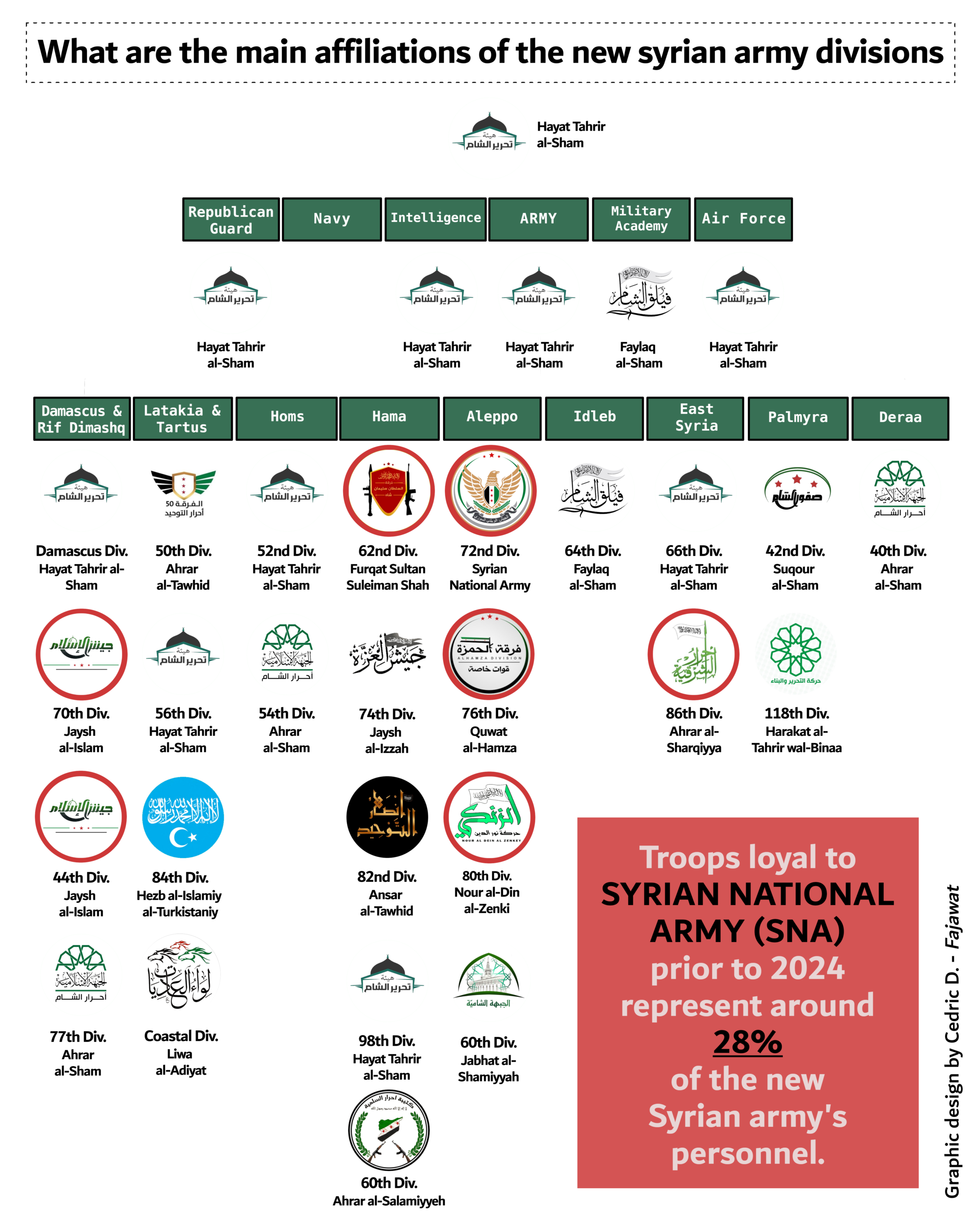
It was from this moment, coinciding with the launch of the Astana talks initiated by Russia and the Turkish Euphrates Shield offensive (August 2016–March 2017) leading to the occupation of northern Syria by a coalition of rebel forces under Turkish leadership, that Al-Jolani began to claim allegiance to the Syrian revolution and to offer guarantees of “deradicalization” allowing him to navigate between the various foreign powers involved in the civil war through their numerous proxies. The opposition in exile, embodied by the Syrian National Coalition and the Syrian Interim Government (SIG), was funded by the United States to the tune of tens of millions of dollars and would give rise a few months later to the Syrian National Army (SNA), an alliance of 28 factions, 21 of which were supported and armed by the United States via a joint operations room based in Azaz and controlled by Turkey. Although the historical rivals of Jabhat al-Nusra, aka Jabhat Fatah al-Sham, were now included in the Turkish-American project, Al-Qaeda’s controversial heir did not yet seem quite ready to embody the “Syrian revolution” as defined and specified by the Coalition. The split with Al-Qaeda was still too recent to be credible in the eyes of most Syrian rebels, especially given that it was carried out with the approval of several prominent Al-Qaeda figures, namely Ahmed Hassan Abu al-Khayr, Abu Muhammad al-Maqdisi, and Abu Qatada al-Falastini. Some sources claim that even Ayman al-Zawahiri himself endorsed this tactical choice.
The hand of Ankara, the elbow of Astana, and the shoulder of Washington
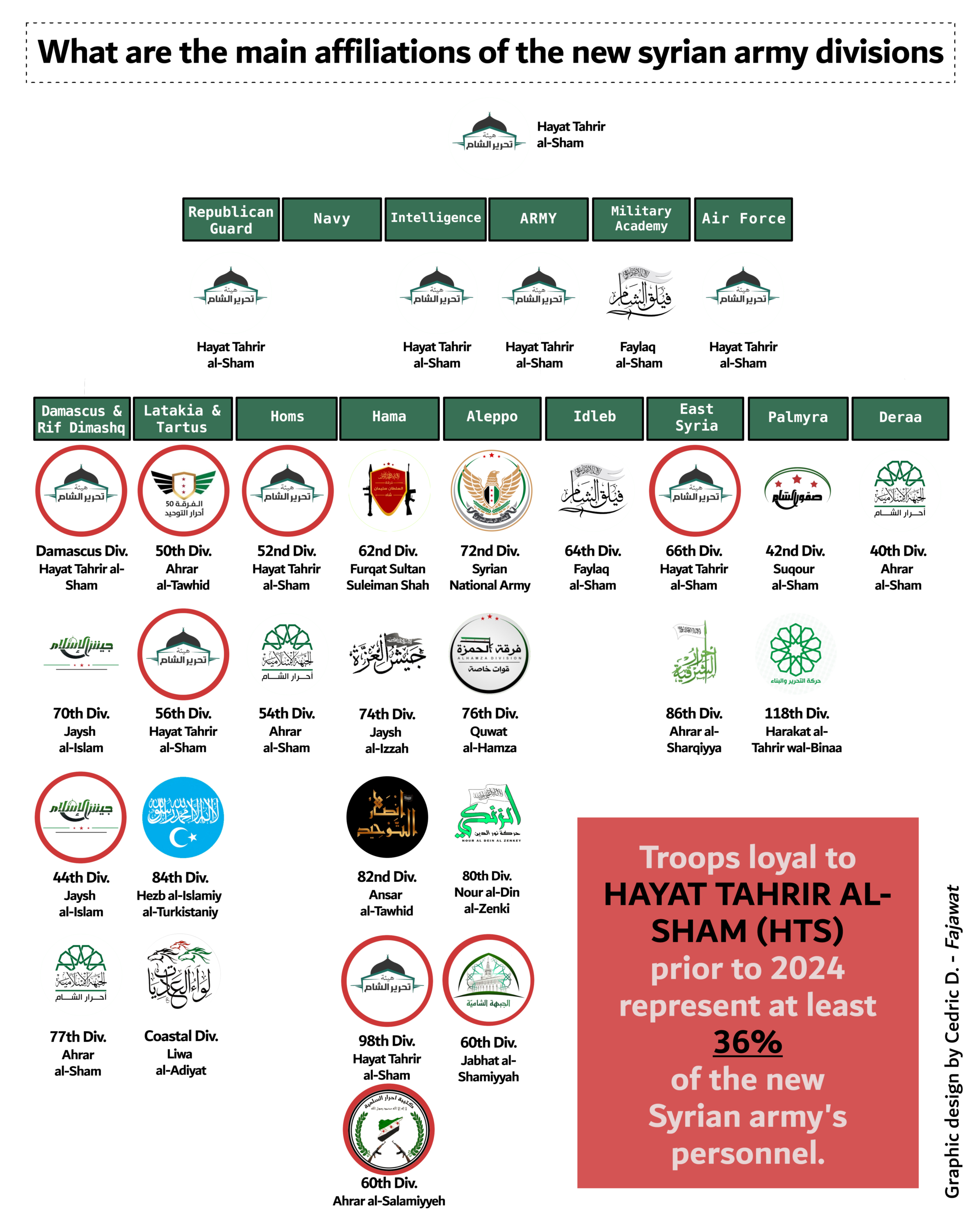
In any case, Al-Jolani methodically placed his pawns on the chessboard, with the aim of becoming the hegemonic leader of a Syrian rebellion in which he had to neutralize both the most uncontrollable elements on his right flank, namely the takfirists without lasting allegiance, and the more moderate factions on his left flank. While the former tended to cluster around Jabhat al-Nusra / Jabhat Fatah al-Sham, the latter had gradually moved closer to Ahrar al-Sham, whose leader Abu Jaber al-Sheikh had just created Jaysh al-Ahrar in December 2016 by incorporating sixteen local factions not yet affiliated with Jabhat Fatah al-Sham. All that remained was to merge the two, which was almost entirely accomplished just one month later with the creation on January 28, 2017, of Hayat Tahrir al-Sham (HTS), whose command was entrusted to this same Abu Jaber al-Sheikh. This appointment of a supposed adversary to lead his own troops, as well as the merge of Ahrar al-Sham into a short-lived entity that lasted merely a month (Jaysh al-Ahrar), strongly suggests that Al-Jolani had reached a prior agreement with Al-Sheikh. The question that remains unanswered is: how long had this been brewing? What is certain is that the reluctant ones of Ahrar al-Sham were subsequently rendered powerless during the summer, when HTS imposed its armed sections in all the localities where the group was still established and its remnants were forced to cede the border crossings with Turkey that had been under their control until then, including that of Bab al-Hawa, which for years served as a crossing point for Salafist fighters coming from Europe with Turkish backing. Finally, in the fall of 2017, more than 30 Salafist hardliners more or less officially affiliated with HTS were assassinated, or arrested by HTS, while Al-Sheikh ceded his position to Al-Jolani and took over as head of the Shura Council, the advisory body that traditionally surrounds the caliph. Al-Sheikh was known for being a supporter of “popular jihad” a form of Islamist populism that prioritizes the support of the people over the establishment of a caliphate (Islamic State). It should be noted that Al-Jolani subsequently established the Syrian Salvation Government to supplant the Syrian Interim Government supported by his competitors (and until then by the United States), before completing the crushing of the latter between 2018 and 2019. By early 2019, the HTS government controlled the entire province and was therefore able to begin playing politics. It finally seemed ready to rule with the approval of the Coalition.
Even though the United States and Turkey may have disagreed on strategy, particularly regarding the management of northeastern Syria and the attitude to adopt towards ISIS and the YPG/SDF, they nevertheless constitute the two cornerstones of the International Coalition in Syria and, as such, must be considered allies on the Syrian issue. When the Coalition ended its intervention in 2019 and the United States withdrew its support for the SDF, Turkey certainly had more freedom to act, but its actions continued to be negotiated with Washington. After promoting—intentionally or unintentionally, only the future will tell for sure when the archives are declassified—the emergence of a multitude of Salafist groups contributing to the fragmentation of the Syrian rebellion between 2011 and 2015, the Coalition was now steering its gradual deradicalization. This development appears to be the culmination of Turkey’s takeover of HTS. Throughout the twelve meetings with Russia and Iran in Astana and Sochi between 2015 and 2021, Turkey actively worked to expand its influence and military presence in Syria, by invading the entire area northwest of Aleppo between 2016 and 2018, then by establishing de-escalation zones and a buffer zone in Idlib. The Turkish military presence in Idlib—legitimized by the defense of its 12 observation posts, which were gradually surrounded by regime forces between December 2019 and February 2020—was therefore quickly “imposed” on Al-Jolani.
Turkish forces deployed at this fateful moment to form a protective belt around the rebel forces, which were still insufficiently unified and therefore too vulnerable to offensives by the regime and the Russians. The name of the Turkish operation, “Spring Shield,” is very significant in this regard, and marks a major turning point that allowed the Idlib pocket to hold out and HTS to definitively establish its dominance over the region. This Turkish patronage, accompanied by funding for major reconstruction and development projects and the establishment of civil institutions, enabled the beylerbey Al-Jolani to calmly organize the administrative takeover of the province, thereby setting up a rudimentary state apparatus and gaining access to the threshold of power in the spring of 2023. In May of that year, he therefore publicly announced his intention to retake Aleppo, describing the city as the gateway to Damascus.
The red carpet to Damascus
On December 8, 2024, a broad alliance of rebel groups led by HTS seized power by force of arms and placed its leader at its head. This is what is known as a coup d’état. The day before, the final act of the Astana talks took place in Doha, Qatar, in the presence of five Arab countries and those presented as the three great enemies: Turkey, Russia, and Iran. Unsurprisingly, they agreed on a cessation of hostilities, coinciding with a halt to Russian bombing, as well as a total withdrawal of Hezbollah and Iranian Revolutionary Guard Corps fighters, but also of all the regime’s armed forces, which, as we know, have massively thrown down their uniforms before heading back home. During the night, the Assad clan flew out along with the regime’s chief negotiator in Astana, Bashar Jaafari, while sunni Prime Minister Muhammad Ghazi al-Jalali obtained a guarantee of amnesty. Before 4:30 a.m. on December 8, when the last flight departing from Damascus airport disappeared from radar just before reaching the Russian air base in Hmeimim (Tartus), more than fifty regime officers had vanished. In the evening, the Kremlin announced that Assad had taken refuge in Moscow with his family and that the matter had been settled. Thus, an escorted exit route was discreetly negotiated between the parties to the conflict with Russian mediation, like when HTS and Islamic State fighters were evacuated from Yarmouk by bus by the regime in spring 2018. Same actors, same methods.
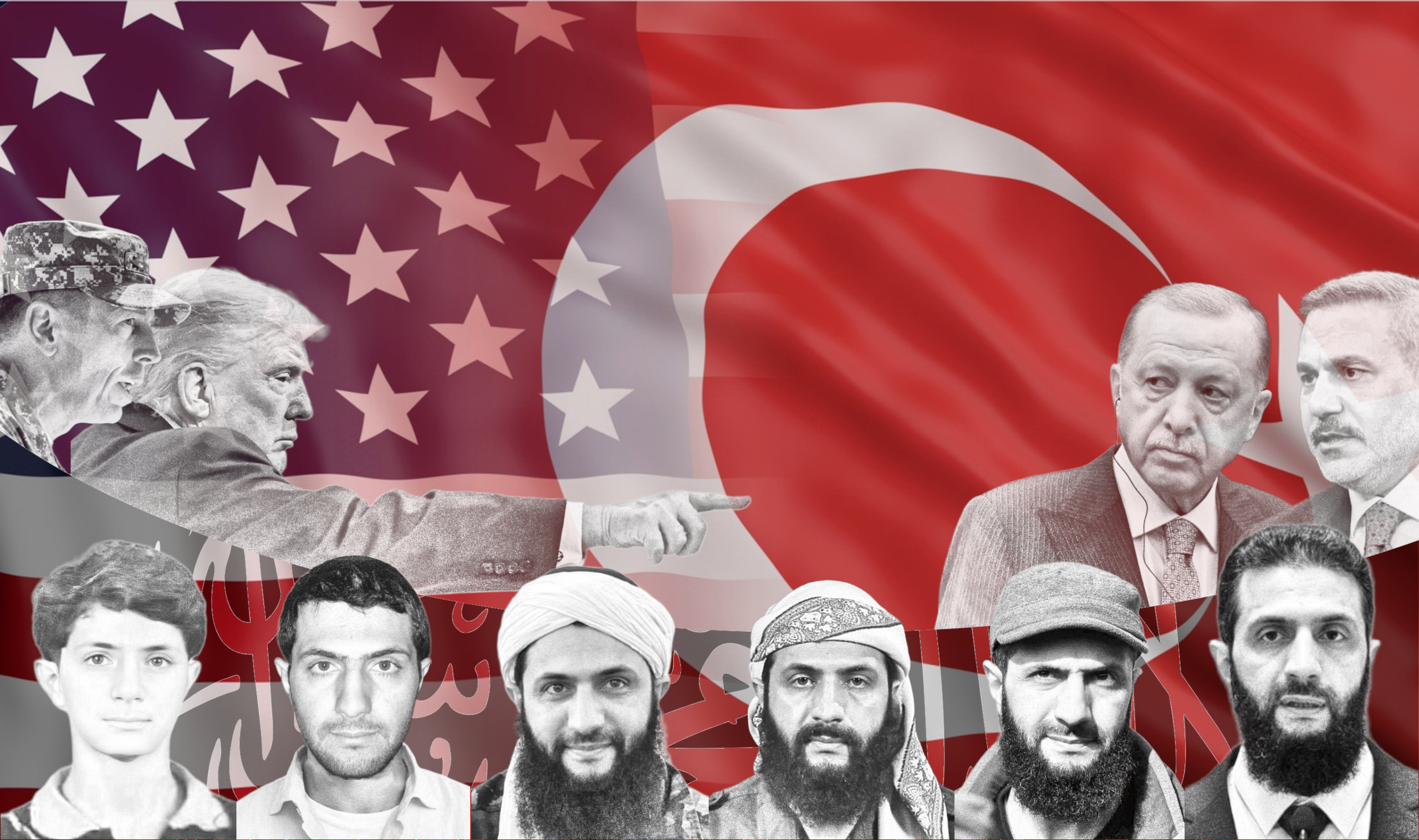
Four days later, the head of Turkish intelligence (MIT) İbrahim Kalın was the first foreign delegate to visit Damascus where he prayed at the Umayyad Mosque and met Al-Jolani, followed ten days later by his predecessor (2010-2023) and current Turkish Minister of Foreign Affairs Hakan Fidan. Al-Jolani and his patron were shown together drinking tea on the terraces of Mount Qasioun, which had been off-limits to the Syrian people since the 2011 uprising. The message could not have been clearer: if HTS’s path to Damascus was not blood-stained, it was because a red carpet had been rolled out beforehand by Erdogan’s agents with the consent of the other imperialist powers, including Iran. This is what Donald Trump would call a “good deal.” Indeed, the US president was very transparent about it during his first press conference since his reelection, on December 16, 2024: “Turkey’s the one behind it. He’s [Erdogan] a very smart guy, they’ve wanted it for thousands of years, and he got it, and those people that went in are controlled by Turkey, and that’s OK, it’s another way to fight […] Nobody knows what the final outcome is gonna be in the region. Nobody knows who will rule in the end. I believe it is Turkey. Turkey is very smart, he is a very smart guy and he’s very tough. Turkey did an unfriendly takeover without a lot of lives being lost.”
All these undisputed facts lend credence to the claim that Al-Jolani and his companions are long-standing partners of Turkish intelligence, even though there is no evidence to suggest that this link predates the creation of Jabhat Fatah al-Sham in 2015. The only existing source is the exiled Turkish journalist Abdullah Bozkurt, who claims that Anas Khattab has been linked to MIT since the beginning of the civil war. It is noteworthy that this journalist has been the target of several threats, attacks, and legal proceedings by the Turkish state for this reason, which has also pressured the Swedish government to shut down his research center Nordic Monitor, to no avail. With the necessary hindsight and without giving in to conspiracy theories, we are still entitled to consider that Al-Nusra and what it spawned after it are in fact the fruitful result of the Coalition’s strategies in the region. This seems to have been confirmed by the former Commander-in-Chief of US forces in Iraq and then Director of the CIA, David Petraeus, when he warmly praised Al-Jolani’s career with these words on September 22, 2025: “Your vision is powerful and clear. Your demeanor is very impressive as well …We obviously hope for your success, Inshallah, because at the end of the day, your success is our success.” This surreal scene took place at the Concordia Annual Summit, a conservative forum that has been held annually since 2011 with the aim of “Building Partnerships Against Extremism” (sic). In a carefully orchestrated staging in which Petraeus interviewed Al-Jolani, the latter was cordially invited to deploy his “post-jihadist” seduction game on the eve of his historic speech at the United Nations. The enthusiasm of a bridgehead of Western imperialism for the bloody achievements of a Salafist warlord on the list of “specially designated global terrorists” may seem surprising, and the lack of resonance that his statement had in the international press is up to par with the leniency of the international community in the face of Donald Trump’s destructive madness. But that is undoubtedly another matter. To understand the unexpected nature of his praise, it should be noted that David Petraeus is known for having been the architect of the counterinsurgency strategies implemented in Mosul in the first year of the war. His fieldwork led him to revive the teachings of David Galula, a French army officer and torturer in Algeria who, in 1962, wrote the seminal work on psychological warfare, ‘Counterinsurgency: Theory and Practice’. Petraeus even wrote the preface to its 2008 French reissue, after publishing his own ‘Counterinsurgency Field Manual’ (FM 3-24) and even as the scandal of the abuse inflicted by the US Army on prisoners at Abu Ghraib had just placed the practices of the US Psychological Operations Teams (PsyOps) on the same level as the atrocities committed by their enemies, each thus becoming the other’s terrorist. What we must remember is that Petraeus is the man who “unwittingly” arrested the bomber Al-Jolani in Mosul, before offering him a stay in the jihadist breeding ground of Camp Bucca.
“Ahmad Al-Jolani,” or the success of counterinsurgency
But what success is Petraeus talking about? To answer this question, we need to look at how Al-Jolani has been portrayed by experts and journalists since he took power. Driven by a kind of collective fascination with his character, many analysts seem to agree that the new “interim president” has become “deradicalized”—a term borrowed from the jargon of counterterrorism—over the past decade, and that this process has been the result of a gradual realization of the futility of his previous actions. Reading their comments, it is easy to be convinced that Al-Jolani, the jihadist turned statesman, is a kind of self-made man, a success story promoted in particular by the states that seem to have sponsored him since 2013. But more than just personal self-examination, we are led to believe that this individual process was accompanied as well by a collective realization on the part of his early companions, notably Anas Hasan Khattab (nom de guerre: Abu Ahmad Hudoud), Asaad al-Shaibani (Abu Ammar al-Shami or Zaid al-Attar) and Abd al-Rahim Attoun (Abu Abdallah al-Shami).
Once “most wanted terrorists,” they all would have transformed themselves into skilled strategists and can now be considered pragmatic leaders, their day-to-day management activities in Idlib having suddenly enlightened them to the need to demonstrate Sunni national populism rather than dogmatic Salafist intransigence. Experts cite the writings of renowned Islamologist Olivier Roy on political Islam to explain to us—and no doubt to reassure themselves and the rest of the world who was already comparing Syria to Afghanistan—that radical Islam is doomed to moderation when it finds itself in a position of having to run a state. The media were also quick to ask the rhetorical question, “Has Ahmad Al-Sharaa ceased to be a jihadist?”, even though no one seems to know anything about the man’s biography.
It should be noted that Al-Jolani’s true identity was only revealed in the mainstream press after December 5, 2024, following the publication on the HTS Telegram channel of a message congratulating the people of Hama on their liberation and signed with his name, which was picked up by Reuters and the Saudi channel Al-Arabiya. Prior to that, only one TV interview given in February 2021 to journalist Martin Smith for the American PBS program Frontline had publicly mentioned his real identity. The previous TV interview, given eight years earlier to Al-Jazeera journalist Tayseer Allouni, had revealed neither his identity nor his face. It came at just the right moment, as the Islamic State—in rapid ascendance—was attracting hundreds of defectors from Jabhat al-Nusra, forcing Al-Jolani to find new strings to his bow. Like Bin Laden before him, the warlord was able to count on the Qatari channel—and its sympathetic journalist—to offer him a platform. Appearing from behind, he spoke of his rejection of the Geneva talks initiated by the United Nations, arguing that no one had “authorized its participants to represent the people” (sic), and sent a signal to Saudi Arabia to reevaluate its investment in the Syrian conflict.
Between the two interviews, Al-Jolani finally revealed his face during the announcement of the creation of Jabhat Fatah al-Sham on July 28, 2016, in which he appeared alongside ideologue Abd al-Rahim Attoun and Ahmad Salama Mabruk (Abu Faraj al-Masri), one of Al-Qaeda’s most aggressive leaders and very close to Ayman al-Zawahiri and his brother Mohammed al-Zawahiri. It should be noted that, as a key figure in Al-Qaeda, Abu Faraj al-Masri’s tactical expertise was undoubtedly crucial in the context of such a major reorganization of Jabhat al-Nusra, and his presence symbolized Jabhat Fatah al-Sham’s continuing links with the wider Al-Qaeda network, even as the group sought to give assurances of moderation by distancing itself from the official structure of its parent organization. This undeniably reveals a highly controlled communication plan, accompanying a long-term reactionary or counter-revolutionary strategy, in which each public appearance consists of gaining support and backing by offering assurances of good faith to the international community without losing the support of followers and fighters. But these appeals are primarily aimed at states, not other components of the Syrian rebellion. This, at least, is how we should understand Abu Muhammad al-Jolani’s fleeting appearances at key moments in the evolution of the political project he was part of, his gradual emergence from the shadows corresponding to the gradual normalization of his organization and its official recognition, followed by the confirmation of his candidacy to succeed Bashar al-Assad. And this project had already begun in December 2013, just eight months after his break with Al-Qaeda in Iraq, aka the Islamic State. Surprisingly quick timing.
If a jihadist is not dead, it means he can still be useful
Abu Faraj al-Masri, after playing his role as Al-Qaeda’s guarantor during the creation of Jabhat Fatah al-Sham, was killed by a US drone strike three months later, on October 3, 2016, in the heart of the Turkistani Salafist stronghold of Jisr al-Shughour (Idlib). This very timely death echoes the assassinations of more than a dozen leaders representing the radical wing of HTS in the fall of 2017 and the more sensational assassination of one of Al-Jolani’s six first companions, Abu Maria Al-Qahtani, on April 4, 2024. These Al-Nusra veterans, all in conflict with Al-Jolani due to the gradual transformation of their movement under the influence of the major imperialist powers—notably Turkey—were in fact swept away one by one in the whirlwind of highly targeted and precise drone strikes and bombings that effectively rid Al-Jolani of all potential obstacles to his hegemonic conquest of power. The question that should have been legitimately asked at the time was: Why did Al-Jolani survive two decades of counterinsurgency and counterterrorism—two terms that often mean the same thing—carried out jointly by the NATO coalition and the RSII coalition?
Above all, why has the unanimous and almost obsessive focus on ISIS been the subject of so little critical analysis and suspicion on the part of experts and journalists of all stripes, while Jabhat al-Nusra and its ‘turkistani’ mercenaries were gaining significant leverage without being seriously targeted? All parties to the conflict, including the Assad regime and its Iranian ally, have yet legitimized their violence by claiming to be fighting Islamist terrorism, even though they have either financed or exploited Salafist groups to turn the chaos in Syria to their advantage, often in highly fluctuating ways and on a very local scale. If the Syrian civil war is so complex, even impossible to understand, it is because no binary analysis is valid, and any attempt to identify clear alliances or converging interests between two sides on a national or regional scale is doomed to failure. Thus, two parties to the conflict such as Russia and the United States have been able to find points of agreement in sharing the sky above the desert to bomb ISIS or in protecting the border to Jordan and Israel from Iranian militias, while fighting each other through their proxies in the north, even though Russia was US-designated evil Bashar al-Assad’s main supporter. At the same time, Russia intensively bombed Turkey’s proxies while conducting joint patrols with the Turkish army along the M4 highway between Saraqib and Jisr al-Shughour. Finally, following the same opportunistic logic which is far removed from any ethical or partisan considerations, the Gulf States, Turkey, Jordan, and the United States have cooperated in the four-year Timber Sycamore program aimed at arming and training more than 50 Syrian rebel groups—including the most extremist ones as well as factions fighting each other—while keeping many of their leaders on terrorism watch lists. It should be noted that this program, endorsed by Barack Obama following active lobbying by King Abdullah II of Jordan and Benjamin Netanyahu, was initiated in 2012 by above mentioned CIA Director David Petraeus. While it is true that the weapons supplied easily fell into the hands of Jabhat al-Nusra, as Trump himself admitted in July 2017, it remains difficult to assert that the group or its successors received direct support, although it was claimed by the Kurdish media outlet ANF News in January 2018 based on the confessions of two Turkish MIT agents captured by Kurdish forces a year earlier.
Why, then, was the undisputed leader of Jabhat al-Nusra, who led Al-Qaeda’s offshoot for thirteen long years while all of Al-Zawahiri and Al-Baghdadi’s lieutenants were assassinated one after the other by surgical strikes carried out in the heart of rebel areas, spared? Why has this mysterious jihadist, with a $10 million bounty on his head, been consistently—but covertly—supported by US allies for at least ten years? Why, finally, is this uncompromising warlord, who has thoroughly wiped out all the rebel groups most in tune with the values of the Syrian revolution, suddenly being presented as the hero of that revolution, while being supported by the most reactionary and sectarian segments of Syrian society? The answer seems fairly obvious: Abu Muhammad al-Jolani is much more of an object than a subject. He is not the master of his own destiny, as his supporters would like him to be. He is merely what Ezzat Baghdadi—an independent diplomat and director of the KMT Center—calls “the man of the hour,” “neither savior nor author of a comprehensive program, but a mediator between chaos and the minimum acceptable.” The latter wrote on his Facebook page: “Al-Jolani’s project does not sell a comprehensive political program, does not promise a modern state, and does not demand full sovereign recognition. What he proposes—and what is asked of him—is simpler and more pragmatic: reducing risks. Reducing the risk of security explosions, limiting the export of violence beyond borders, controlling the multiplicity of factions, and offering a single point of contact instead of a multitude of chaotic addresses. In a failed world, this is an attractive offer. […] In such a climate, the “political solution” is no longer a prerequisite for any negotiation, but simply not collapsing becomes the criterion for success. This is the real translation of a phrase we have heard repeatedly from diplomats in closed-door meetings: “Stability takes precedence over democracy.” And Al-Sharaa is in line with this requirement, as he does not open any difficult issues: no transitional justice, no restructuring of the state, no promises of major investments. He presents himself as a temporary political operator, capable of keeping the crisis below the critical threshold. This is not a project, it is a calculated postponement. […] Selling risk reduction is not a solution. But it becomes acceptable when the ability to finance solutions collapses. This is where the moral and political paradox lies: what seems rational in the short term accumulates higher costs in the long term. Because crisis management prolongs its duration, exhausts political time, and delays the reconstruction of a unifying legitimacy. That is why describing Al-Sharaa as “the man of the hour” does not mean conferring historical legitimacy on him, but rather placing him back in his functional role: the product of a global moment that buys time instead of a future and prefers to manage risks rather than confront them. Ahmed al-Sharaa is not the solution for Syria, but a sign of a world that is learning to coexist with crises rather than end them. His existence is linked to the persistence of the current phase, and his end will come as soon as a less costly and more sustainable alternative appears. Al-Jolani is ultimately no more than a racehorse”.
Conclusion
The question of whether Abu Muhammad al-Jolani has ceased to be a jihadist and whether he has been “deradicalized” distracts us from the issue that should concern us all more after half a century of dictatorship: was he democratically elected by the Syrian people, and how does he differ from Bashar al-Assad in this regard? As Ezzat Baghdadi so aptly puts it, it is not a question of Syrians continuing to manage a crisis that has lasted for decades, but of finally achieving what they aspired to when they took to the streets in 2011: social justice and democracy. In other words, a political solution, which means that no peace can be satisfactory unless it is accompanied by a robust transitional justice process. Therefore, a “Trump-style peace” that only allows foreign powers to plunder the country’s resources and militarize the territory without ensuring security and equality for all Syrians before the law is not even a temporary solution; it is a guarantee of a new catastrophe in the very short term, of which the massacres on the coast and in Suwayda were only a harbinger. If Al-Jolani is a model of success for world leaders, it is because he resembles them: he is an opportunist who exploits the people’s aspirations to serve the interests of his sponsors, as well as his own and those of his clan. After all, his father’s cousin, Farouk al-Sharaa, was Bashar al-Assad’s vice president, so the status quo he represented required that a member of the family take over and, if it makes him happy, appoint his own brother as secretary to the presidency. In conclusion, one can wonder whether the self-proclaimed president was ever truly a jihadist, or if he was nothing more than just another social climber in the great pantheon of tyrants. In any case, until Ahmad al-Sharaa is democratically elected by a majority of Syrians, including all Syrian communities, it is appropriate to continue referring to him by his nom de guerre: Abu Muhammad al-Jolani.