
The Cold Wars of the Radical Left
This article examines war and the stance on war taken by European radical left and anti-authoritarian circles (RLAA), as well as by some decolonial and indigenist movements (DI). The author subscribes to an anti-authoritarian and internationalist perspective that prioritizes popular self-defense and struggles for self-determination over the often-detached theoretical assumptions of a middle class radicalized by capitalist violence, yet one that typically lacks any empirical understanding of war and its implications.
Introductory note: Behind the acronym RLAA, which I have chosen to employ, lies a complex and multifaceted reality, comprising numerous movements whose political radicalism varies greatly. It ranges from the left wing of institutional social-democratic and socialist parties to the far left, and even beyond the traditional political spectrum modeled on political representation within conventional parliamentary assemblies. It therefore includes anti-parliamentary and anarchist movements that situate their thinking and action outside of party politics and issues of representation. It should also be noted that this analysis focuses primarily on European movements, excluding those in the Balkans, the Caucasus, and more generally the former USSR, unless otherwise specified in the text.
The Cold Wars of the Radical Left
Since the late 19th century, heated debates have divided the European RLAA whenever a war breaks out within 1,200 km of its home territory. This was particularly true during World War I and World War II, but much less so during the Balkan and Chechen wars of the 1990s. It would appear that the RLAA no longer viewed those wars as anti-colonial struggles, and that the collapse of the USSR a few months earlier had suddenly deprived the peoples fighting for self-determination of the support of the internationalist left. Furthermore, it would appear that the RLAA’s ideological framework failed to keep pace with the times, leaving it unable to grasp the religious and sectarian dimensions mobilized since the mid-1980s by armed groups fighting against white and Western colonial domination. In particular, the RLAA does not seem to have been able to analyze the emergence of Islamist radicalism as the combined result of the failure of socialism and the success of counterinsurgency on a global scale. Consequently, we have seen the RLAA gradually sink into political confusion and campism, supporting here and there ultra-reactionary and authoritarian states and movements under the pretext of anti-imperialism. It should be noted that imperialism is generally viewed by the RLAA—entangled in the binary analytical framework inherited from the Cold War—as unilateral and embodied exclusively by the United States and its “lackeys” (Israel, NATO members, etc.). This development occurred in parallel with the emergence of decolonial movements—intellectual rather than militant—led by a radical left with immigrant roots and influenced by both U.S. academic circles and postcolonial humanitarianism, which I refer to as “NGO-ism.” In France, these groups add to their analytical framework the specific ideological contradictions faced by the descendants of colonized Algerians—caught between nostalgia and fascination for the Algerian independentist National Liberation Front (FLN) from the era when Algiers was still the “Mecca of Revolutionaries” (1960–1970)—and entangled in the identity conflicts characteristic of postcolonial immigration. Their ideology lies at the intersection of interventionist leftism and Islamic socialism.
Before delving further into the issue of war, it is worth noting that over the past three decades, the RLAA has undergone a significant transformation. Even beyond the issue of war, it has become notably divided on decolonial issues, on issues of race and gender, as well as on the appropriate stance to adopt toward religion in general and Islam in particular. Without reducing anyone to their political affiliation, we can nevertheless identify the major current trends as follows:
– The radical left, which emerged from the traditional socialist and communist parties, as well as from the New Left and the Revolutionary Left, has largely become more liberal and now forms a more cohesive bloc within the establishment left—which is traditionally interventionist, secular, and aligned with campism;
– Antifascist circles—generally the heirs of the workerist and Maoist left—have split between a more institutional tendency close to the interventionist left on the one hand, and decolonial and indigenist networks on the other, both of which have a fairly limited interest in gender issues—and particularly LGBT issues—and a vision of internationalism that is notably campist. While the former tendency may adopt secular positions, the latter, on the contrary, displays a certain animosity toward secularism, perceived solely as a smokescreen for Islamophobia;
– A significant portion of anarchist circles has chosen to abandon criticism of religion and adopt a form of neutrality toward political Islam, while throwing themselves wholeheartedly into controversies surrounding race and gender identities, as well as issues related to speciesism, psychophobia, and ableism. When it comes to international and decolonial issues, these circles are often out of touch or fundamentally insurrectionist, meaning that they support—and romanticize—any popular uprising without necessarily understanding the stakes involved ; The other faction of the Anarchists, now a minority, has partially embraced issues related to gender, but has remained conservative on matters of race and religion, and more broadly on decolonial issues, where its positions are most often campist and ideologically pacifist, as they are rooted in a bygone revolutionary past, when their movements—and the society in which they thrived—were almost exclusively white;
– Finally, a last fringe of the extra-parliamentary radical left, which I would describe as autonomous and internationalist, emerging from a fusion of libertarian communism, situationism and Maoist spontaneism (“Mao Spontex”), seems to be the only one to truly reject campism and embrace issues of race and gender, while fully including non-European non-marxist left-wing or anarchist activists in its movements;
Let us first review some of the most significant armed conflicts of the past half-century before delving into a theoretical examination of war in general, and community self-defense in particular.
Lebanon and Syria, 1980s
Context: Following the outbreak of the Lebanese civil war between Christian conservatives and the Palestinian-aligned Lebanese left in 1975, the Syrian army entered Lebanon the following year to support the Christian Phalangists and limit the presence of Palestinian fighters from the PLO. The Syrian dictator Hafez al-Assad made no secret of his support for the imperialist concept of “Greater Syria,” which would unite Syria, Lebanon, and Palestine. The Syrian occupation of Lebanon lasted from 1976 to 2005.
It is important to note that the Islamist movements Islamic Jihad, Hezbollah, and Hamas emerged between 1982 and 1988 following the end of the armed resistance of the Palestine Liberation Organization (PLO), which had by then been politically weakened and expelled from the Levant. Prior to this period, the struggle against Israeli colonialism—the bridgehead of Western imperialism in the Levant—was almost exclusively embodied by the radical left-wing movements united within the PLO and behind Yasser Arafat, which had themselves been supported by the USSR since 1970. For the European RLAA, the framework for understanding the situation was much simpler at the time, as it was shaped by the binary US versus USSR narrative and promoted worldwide by thousands of revolutionary armed groups supported by or affiliated, directly or indirectly, with socialist Russia. The latter, moreover, was already well-established militarily in Syria, where since the 1960s it had been a privileged partner of the regime embodied by the Arab Socialist Ba’ath Party under Salah Jadid and later Hafez al-Assad. Yet it was the regime of Hafez al-Assad—which must be regarded as a fully-fledged model of Arab National Socialism, and thus of fascism—that ultimately destroyed the PLO before allowing the Islamic Republic of Iran to divert the resistance against Israel from its original goal: the decolonization of Palestine. Let us recall that the two objectives of Hezbollah—which is nothing more than an offshoot of the Iran’s Islamic Revolutionary Guard Corps—are “resistance against Israeli occupation in Lebanon and the establishment of an Islamic state.” This is therefore a far cry from the PLO’s program. The alliance between Syria and Iran, set in stone as early as 1982 to defeat their shared enemies in Lebanon and Iraq, has since served as the cornerstone of a system of political terror that gave rise to the first – Shia – Islamist suicide bombings in modern history and, exactly thirty years later, would enable Assad’s son to crush the progressive Syrian popular uprising of 2011. This alliance is perfectly embodied by the partnership between Hezbollah and the Syrian Social Nationalist Party, a far-right Syrian militia that views Palestine as the “occupied south of Greater Syria” and whose 16-year-old member, Sana’a Mehaidli, is considered the first woman to have carried out a suicide bombing (in 1985). Despite this, the RLAA—joined by the Decolonialists and Indigenists (DI) starting in the 2010s—has never ceased to view the Assad regime and the Iranian Islamist militias—among which Hamas must be included, as it would not exist without Syria and Iran—as “the axis of resistance” to Western imperialism. This demonstrates that the RLAA and the DI have never understood that this so-called “axis of resistance” politically neutralized the PLO after orchestrating the massacre of Palestinian refugees in the Tel al-Zaatar camp (1976) and the assassination of revolutionary activists close to the PLO, such as the Druze socialist Kamal Jumblatt (1977), before allowing Israel to continually justify the genocide of the Palestinians under the guise of the “war on terror.” The struggle for the self-determination of the Palestinian people—an eminently leftist cause—has in fact been indefinitely compromised by Syrian-Iranian fascism and terror.
Chechnya, 1990s
Context: At the dawn of the 1990s, the Russian Empire refused to be completely dismantled by denying the right to self-determination to the peoples of the Caucasus. In 1991, Chechen independence leader Dzhokhar Dudaev was elected the first president of the Chechen Republic of Ichkeria, which he immediately declared independent, prompting a military response from the Kremlin. After the failure of an initial airdrop operation in 1991, Russian President Boris Yeltsin launched a full-scale war in 1994.
Still reeling from the collapse of the USSR, the RLAA had not mobilized to take up the cause of the Chechen separatists. Yet the latter—particularly due to their anti-imperialist nature—had many traits in common with the Irish separatists of the Irish Republican Army (IRA) or the Basque separatists of the Euskadi Ta Askatasuna (ETA), for whom the RLAA had shown far greater revolutionary enthusiasm over the past two decades. In the first two years of the Chechen war, there was indeed fertile ground for an international anti-imperialist mobilization, especially given how the Russian economic system of the time embodied capitalist plunder in its most aggressive and deregulated form. The slightest opportunity to inflict a defeat on it should have been seized by leftist forces, especially given that one of Russia’s main pipelines—cynically named “Friendship” (Druzhba)—was already crossing the region to supply Europe with oil. Unfortunately, as early as 1995, international indifference—with the exception of human rights NGOs, which cannot be considered political organizations—turned a blind eye to the rapid spread of Wahhabi ideology, which, under the leadership of the nine Chechen salafist Akhmadov brothers and the Saudi jihadist Ibn al-Khattab, very quickly crushed the Chechen independence movement. As mentioned above, the RLAA flatly refused then—and still refuses thirty years later—to view Russia as an empire with expansionist (colonialist) ambitions. Furthermore, it also refuses to see Russia as part of globalized capitalism, even though Russian president Boris Yeltsin had aggressively liberalized the Russian economy as early as the year following the dissolution of the USSR, and his successor Vladimir Putin has fully aligned his policies with the imperialist logic of the market economy, starting from the moment he took power in 1999.
It is worth noting, incidentally, that the elimination of progressive forces from within the Chechen independence movement through the importation of Salafist militants—which must be viewed for what it is: a far-right movement—already bore a strong resemblance to the counterinsurgency tactics that would be replicated many times over in various regions of the globe in the decades that followed. Created and/or exploited by colonial powers, this ideological and religious radicalization offers nothing but advantages to empires seeking a free hand to crush a region over which they wish to gain or maintain control. It effectively allows counterinsurgency to be disguised as counterterrorism, thereby gaining legitimacy: it is no longer a matter of crushing a popular uprising, but of eliminating “dangerous lunatics” allied with “barbaric zealots.”
During the second Russian offensive against the people of Chechnya in 1999—this time orchestrated by Putin to legitimize his seizure of power under the guise of the very same “war on terror”—once again, the RLAA did not appear to be radically opposed to Russian imperialism. As noted above, I do not include in this critic the RLAA of countries directly affected by Putin’s totalitarianism, including the Russian left itself. Unfortunately, the Russian RLAA’s support for the Chechen rebels—which only emerged in the 2000s, by which time most of their remnants had become religiously radicalized—was not necessarily much more relevant from an anti-authoritarian perspective: some of Russia’s anti-fascists, for example—in a dynamic that was, unfortunately, more confused than truly political—expressed their support for the Chechen guerrillas by posing in photos with their fingers raised toward the sky, as the mujahideen usually do. It is worth noting that this can be seen as a foretaste of what would become commonplace twenty years later with the support of a significant portion of the RLAA for reactionary and Islamist movements in the Levant. We will return to this later. In any case, criticism of Russian authoritarian rule still did not seem to have taken root in the European left’s consciousness, while decolonial thought was still finding its feet on this side of the Atlantic.
That was thirty years ago. One might think that a lot has happened since then, and that it took time to understand what a society under Putin’s rule might look like. So let’s fast-forward a bit to see if something changed.
Ukraine, 2014
Context: In November 2013, a mass popular movement emerged in Ukraine to oppose the corruption of Viktor Yanukovych’s pro-Russian government, as well as his decision to postpone the association agreement between Ukraine and the European Union in favor of a trade agreement with Russia. The occupation of Independence Square in Kyiv (Euromaidan) by protesters continued until February 22, 2014, and ended in a violent confrontation in which 120 people were killed. Yanukovych was forced to resign, while Russia, which had been backing the formation of armed separatist groups in the east of the country, launched a military intervention in the wake of what Putin had called a “coup d’état”.
When, in 2014, Russia decided to annex Crimea and then part of the Donbas—a clear act of aggression—we didn’t see many impassioned texts from the European RLAA denouncing its distinctly colonial nature. We do not recall, for example, that anti-authoritarian and now also decolonial activists—the concept of decolonialism having finally crossed the ocean alongside Critical Race Theory and identity politics—took up the cause of the Tatars, Ukrainians, Belarusians, Armenians, Jews, and Karaites—even though these groups constitute minorities whose forced assimilation into the Russian ethnic majority was by no means a foregone conclusion. It is also clear that most of those who have been voicing strong opinions on the war in Ukraine since 2022 are not even aware of this ethnocultural diversity or of the potential for it to serve as fertile ground for indigenous struggles for self-determination. At most, some within the RLAA movements were dazzled by the Maïdan uprising that preceded the invasion of Crimea by Putin’s little green men, as it ticked all the boxes of the insurrectionary and revolutionary imagination while serving as a genuine laboratory for mass popular self-organization. Alas, very quickly, the patriotic takeover of the insurrectionary movement on the one hand and Russia’s declaration of war on the other put an end to the RLAA’s spell. A few well-orchestrated media campaigns were enough to give credence to Putin’s propaganda regarding the supposed fascisation of Ukrainian society: thanks to the Russian propaganda media Russia Today—among others—the “Tsar of All Russia” was portrayed almost as a left-wing, anti-fascist, and anti-imperialist leader, while the entire Ukrainian people were equated with the nationalists of the Pravyï Sektor and Svoboda parties or the Azov paramilitary unit, which together, however, represent little more than 30,000 members and 892 elected officials out of the 43,122 that Ukraine had in 2020—or 2.07% of the votes cast in regional elections. That is to say, ten to fifteen times fewer than the far-right parties in Europe. The European RLAA, as confused and disoriented as ever, thus once again succumbed to the pathological campism that has defined it since the Cold War. Since his grand entrance on the red carpet at the Saint Andrew’s Hall in the Kremlin in 1999, Putin has always enjoyed the indulgence of both the left and the right. Not that opposition from the European radical left is a decisive factor in curbing the expansionism of empires, but there was nevertheless a time when it was better able to identify—and support—popular liberation struggles and anti-imperialist guerrilla movements. So to speak: at least in the past, the left’s campism benefited popular left-wing or progressive and liberating movements rather than right-wing oppressive tyrants.
Syria, 2015
Context: In power since 1970, the Assad clan had ruled the country with an iron fist for 40 years when the Syrian people, weary of the permanent state of emergency and the lack of freedom, rose up in February 2011. The uprising unfolded in three phases: the first (February–March) primarily called for the lifting of the state of emergency, the release of prisoners, and political reforms (demands for justice); the second (March–June) saw massive demands for the regime’s downfall and a democratic transition; the third (following the Jisr ash-Shugur massacre on June 12), which led to the creation of the Free Syrian Army and the formation of islamist armed groups, definitively transformed the democratic revolution into a civil war.
When the Syrian National Socialist regime received military support from Iran and Hezbollah (2011) and then from Russia (2015) to crush the Syrian people’s resistance, the RLAA and the DI either said nothing or applauded this alliance against “Western imperialism,” which was accused of being solely responsible for the Islamization of the rebellion and the rapid expansion of the Islamic State. Once again, this binary assessment chose to ignore or deny what all analysts had clearly understood as early as May 2011, when Assad released thousands of Islamists from his prisons: that the major powers (Syria, USA, UK, Jordan, Qatar, Turkey, Saudi Arabia, Israel…) had all funded, trained and/or manipulated the Salafists, participating in crushing the Syrian progressive resistance—including that of the Palestinian Yarmouk camp in Damascus—from within. The proof is that we saw Russia and the United States divide up the Syrian skies under the pretext of “fighting terrorism” as early as 2015, then Russia and Israel agreed to have the Russian military police participate in the “disarmament” of southern Syria in 2018, and finally, Russia and Turkey coordinated to establish a cordon sanitaire around the Islamists in the Idlib enclave after 2020. And finally, 2015 was the year in which the Kurdish Democratic Union Party (PYD) of northeastern Syria declared the region’s autonomy while creating a US-backed armed force—the Syrian Democratic Forces (SDF)—under the pretext of “fighting terrorism.” We then witnessed a subtle American soft power maneuver concealed behind a hard power operation: the Kurdish socialist movement renounced its role as the embodiment of Syrian revolutionary aspirations against the Assad regime in order to redirect its military resources against the product of American imperialism in Afghanistan and Iraq—Al-Qaeda and its avatar, the Islamic State. This compromise is particularly sad given that the very first act of the Syrian uprising against Assad in 2011 took place in the Kurdish stronghold of Hasakeh. It should be noted that that this refusal to become further embroiled in the civil war and the acceptance of a compromise with Western imperialism was motivated primarily by the need for all communities in northeastern Syria to survive in the face of a genocidal enemy that was then nearly unstoppable.
The RLAA has largely failed to grasp the stakes of the Syrian civil war and has generally contented itself with viewing the 2011 uprising as a plot by Western imperialism against the “axis of resistance,” while remaining divided on the issue of the Kurdish autonomist movement. This did not prevent certain left-wing campists—in their utter confusion—from supporting both the socialist PYD and islamist Hezbollah, while justifying Russian airstrikes in Syria under the pretext of fighting “western-backed islamic fascism” (sic). Unlike the RLAA, the far right has never been mistaken in identifying its friends and allies: the regimes of Putin and Bashar al-Assad are among them. Moreover, neither of them has ever made a secret of the fact that they support the European far right, particularly the French one. We are familiar with the ties between Putin and the National Front fascist party, but we know much less about the ties established by the same party with the Assad regime since the mid-1990s. At the time, the man who would become the National Front’s secret financier, Frédéric Châtillon, had in fact begun to forge lasting ties with Syrian Defense Minister Mustafa Tlass, known in particular for orchestrating the massacre of 20,000 to 40,000 people in Hama in 1982. This mass crime, committed under the pretext of quelling the long-standing and violent Muslim Brotherhood insurgency, constitutes a profound trauma in the Syrian collective consciousness and largely explains the massive popular support among the city’s residents for the Islamist rebels who seized power in Damascus in 2024. It is worth noting in passing that Mustafa Tlass, who is ideologically aligned with the Syrian Social Nationalist Party mentioned above, regards Jordan as “Southern Syria.” Given that nearly half of Jordan’s population is of Palestinian origin, this speaks volumes about the colonialist mindset that pervades the Assad clan’s supporters. It should also be noted that the Groupe Union Défense (GUD)—one of the most violent French fascist splinter groups—founded by the same Frédéric Châtillon mentioned just above, has never ceased—out of pure anti-Semitism—to claim support for the Palestinian cause, while denying to Palestinians any political freedom outside of Palestine. Just like Assad and Hezbollah.
In any case, by continually denying the counterinsurgency violence of the Syrian regime, as well as that of the Russian and Iranian regimes, the Radical Left and the DI—here I do not include most anarchists and anti-authoritarians—have thus objectively placed themselves on the same side as the far right they claim to fight.
Ukraine, 2022
When Putin finally relaunched the invasion of Ukraine in March 2022—which, let us recall, was not the start of the war, since it had begun eight years earlier—it suddenly became more difficult for the RLAA to deny the colonial and authoritarian nature of Russia’s actions. It is also telling that this military aggression mobilized more than 12,000 Chechen mercenaries loyal to Putin’s lackey Ramzan Kadyrov—within the Ahkmat units—while Ukraine, for its part, is recruiting numerous foreign volunteers—and mercenaries—motivated by their desire to settle scores with Russian imperialism. Among the latter, there are also a number of Chechens, serving notably in the Sheikh Mansour, Dzhokhar Dudayev, and Khamzat Gelayev units, including fighters from Ajnad al-Kavkaz, a battalion of Chechen jihadists known for its involvement in numerous war crimes in Syria. On both sides, there are also Syrian Arabs as well as Arab and Black Africans—some serving as volunteers or mercenaries, others as forced recruits (particularly on the Russian side). What this “internationalism” reveals is precisely the imperialist continuum that leads colonial wars to systematically remobilize the ghosts and survivors of previous conflicts: one need only distinguish which side is mobilizing yesterday’s victims and which is mobilizing the former perpetrators to estimate, with little risk of error, which is the victim and which is the aggressor. It should be noted, however, that this rule is not mathematical, for one thing, and that the victims and colonized are not necessarily good people, for another. In any case, it shows a great deal of bad faith to claim that in Ukraine, Russia is not in the position of aggressor, as it was in Chechnya and Syria. Islamist extremism, for its part, is merely one of the consequences of these interventions, not the cause; this is something many people in the West still struggle to understand. It should also be noted that one of the very first jihadist uprisings—the Afghan mujahideen affiliated with the Hezb-i-Islami party—was the result of the colonial war waged by Russia in Afghanistan between 1979 and 1989, before its American counterpart enabled it to spread throughout the rest of the world: Jihadists have always been both the product and the useful idiots of imperialism. It is also worth pointing out that, following the collapse of socialism, jihadism is the political and religious movement that has benefited most from globalization.
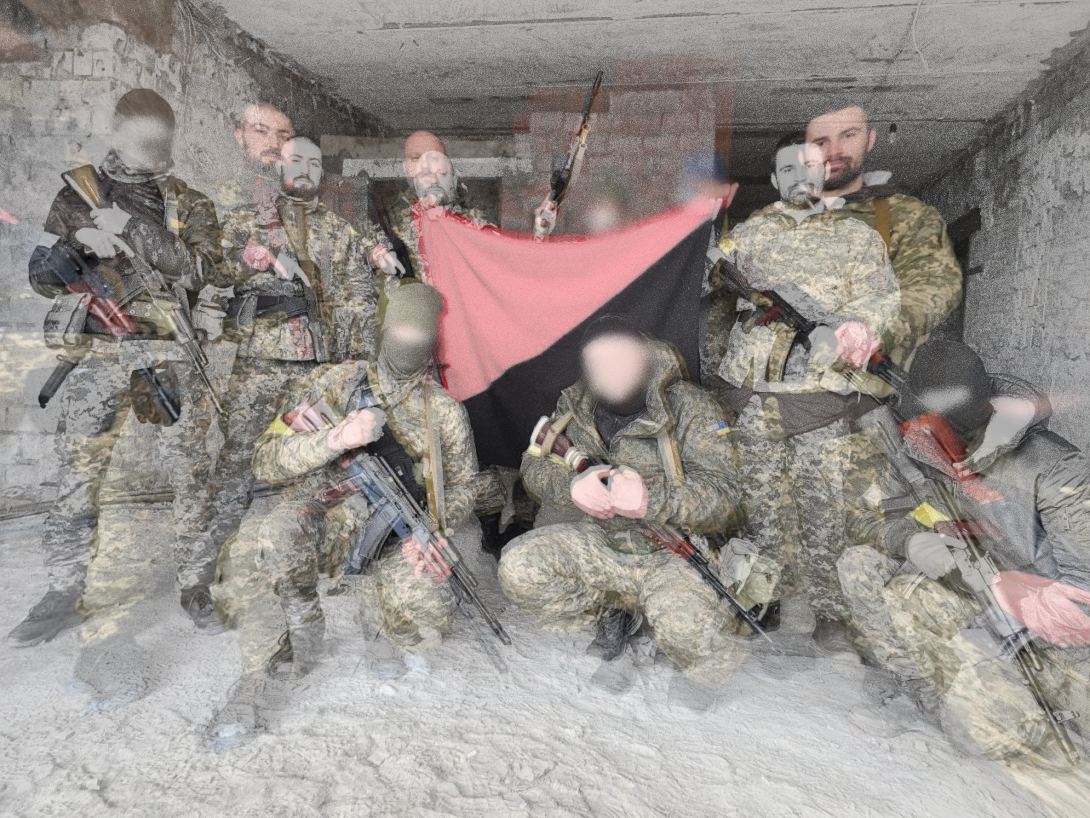
My focus here is on the fact that the war in Ukraine has drawn thousands of foreign fighters from regions affected by Russian imperialism. Beyond that, it has sparked widespread mobilization among those who oppose colonialism and stand in solidarity with colonized peoples. Thus, it mobilized both domestic and foreign RLAA networks more than any other conflict in the past three decades. Indeed, many left-wing political activists are being recruited into the Ukrainian army, volunteering, or are helping to assist and support both civilians and combatants on the front lines. The indigenous RLAA organization we hear most about is Solidarity Collectives (SolCol), a Kyiv-based initiative that has been coordinating solidarity efforts at the local and international levels since the start of the conflict. Their decision to fully participate in Ukraine’s community-based self-defense—given their reality and their genuine lack of choice as indigenous people directly threatened by Russian occupation and colonization—is politically courageous in a context where war abolishes all political freedom and suspends democratic rights. Furthermore, their choice to maintain a critical stance toward the established order and not to limit themselves to humanitarian action out of a concern for neutrality stems from a collective strength made possible by the effective support they have received from their Ukrainian, Belarusian, and Russian comrades exiled in Europe. This unwavering solidarity stands in contrast to the repeated attacks from several factions of the RLAA in Europe, which, in addition to producing wordy texts to cast discredit on SolCol‘s actions, have gone so far as to ban the collective from supposedly internationalist gatherings and events. The collective is thus prevented from explaining its position and from even having the opportunity to convince others of the righteousness of its actions. What is striking about this resort to the practice of “calling out” for political reasons is that it follows the same logic as counterterrorism, nullifying conflict and debate by ostracizing individuals or collectives and labeling them as internal enemies or aggressors from whom the community must be protected. But protected from what? From its own empathy? What this reveals is the inability of a large part of the contemporary RLAA to confront political contradictions and to engage in a conflict that might force it out of its comfort zone. It should be noted, by the way, that Ukrainian men of fighting age are prohibited from leaving Ukrainian territory, so SolCol’s sidelining from European political forums applies particularly to women, who already suffer from being colonized among the colonized. All this for what? Because SolCol does not judge or condemn its comrades sent to the front as traitors to their cause, and worse, provides them with equipment that slightly increases their chances of survival. The RLAA would prefer that all Ukrainian men hide in the forests of Transcarpathia while women bring them provisions at nightfall and their loved ones are crushed under bombs at home. What a lovely imagery of the maquis. In any case, the RLAA seems to have absolutely no idea what it means when your home region is struck by 600 suicide drones a day. Suffice it to say that in this situation, you don’t exactly have the luxury of writing texts questioning SolCol’s alleged complicity with NATO. I’ll stop my cynicism there.
There is no need to multiply the examples to assert that the European RLAA circles systematically miss the mark when it comes to supporting indigenous communities fighting for their independence or autonomy, or simply for their survival, especially if their struggle does not strictly adhere to the codes of 20th-century Marxist or post-Marxist guerrilla warfare—let alone anti-authoritarianism. Worse still, this left has consistently offered Putin the same kind of excuses that have allowed authoritarian and reactionary leaders such as Ali Khamenei, Hugo Chávez, Bashar al-Assad, Hassan Nasrallah, Ismail Haniyeh, or more recently Ibrahim Traoré—as well as other despots before them—to pass themselves off as champions of anti-imperialism under the pretext that they openly declare themselves enemies of the United States and Zionism. It should be noted here that this syllogistic thinking—the enemies of my enemies are my friends—is one aspect of what is known as campism. This line of reasoning is neither left-wing nor right-wing; it is either red-brown or simply politically confused.
War: A Definition
I promised to discuss war and community self-defense after providing an overview of the war zones that generally interest the European RLAA, so here we are.
As the saying goes, “war is the continuation of politics by other means.” This definition could not be more accurate, for it captures the complete inability of nation-states to resolve social conflicts through mediation and public consultation. War is the armed violence that emerges when dialogue has been rendered impossible. It therefore goes beyond conflict itself; rather, it is the negation or abolition of conflict by those who know no other way to communicate than through violence. It should be noted that this rarely begins with the targeted killing of a political leader, but rather with the opening of fire on civilians or military personnel who hold no decision-making authority. And this declaration of war is often accompanied by a sudden, even unexpected, movement of troops across a demarcation line separating two territories in conflict or against a population refusing to be oppressed. Thus, an occupation by force. If the military operation targets a foreign territory, it is a war. If it targets an indigenous population, it is either a massacre or counterinsurgency, with the massacre potentially accompanying a counterinsurgency operation. If the targeted population resists with arms, it is self-defense or resistance. And if this resistance becomes organized over time and militarizes, it turns into a civil war. Finally, if the rebel groups thus formed depend on human or material support from a foreign state, they become proxies or mercenaries, and their struggle loses its legitimacy. If, on the other hand, they receive support from foreign non-military volunteers, it remains an act of international solidarity, even if the motivations and analyses of these foreign fighters are confused or mistaken.
If the question now is to distinguish between an act of aggression and a defensive response, there is certainly no need for lengthy deliberation to determine whether or not a state’s regular army has intervened on its own initiative on the territory of another state or against an indigenous community on its own territory. This is then a war of aggression. If, on the other hand, this army intervened to protect a community seriously threatened by armed groups or by the regular army of its country of residence and at its request—and thus not on its own initiative—then it is difficult to speak of aggression, but we can speak of interference. Finally, if the regular army of a state defends its territory against the intervention of another state’s army—and without invading the territory of that state in question—then this constitutes a response that can be considered legitimate. The question is not about who is right or wrong, or about distinguishing the good from the bad, because no war is just; rather, it is simply a matter of establishing who is the aggressor and who is the victim. And it is certainly not a matter of determining whether the victim provoked the aggressor, as that would lend credence to the aggressor’s rhetoric. Finally, armed intervention cannot be justified merely on the grounds of having been “provoked” if that “provocation” does not take the form of a prior act of violent armed aggression. The Ukrainian case helps illustrate this point: the Maidan uprising against Ukraine’s pro-Russian elites, or even the desire for separatism among ethnic Russians in eastern Ukraine, are in no way legitimate grounds for justifying Russian military intervention in Ukraine. If these communities had been the targets of ethnic violence directed against them by other communities in Ukraine or by the Ukrainian state, the question would be framed differently. But that is not the case.
In any case, from RLAA’s perspective— which has a pacifist and anti-militarist ethos—it is always necessary to condemn war regardless of its motivations. On the other hand, it seems entirely inappropriate to pass judgment on the acts of self-defense by populations directly impacted by these wars, particularly if the territory where they live has been the target of external aggression. One may despise Nations and Borders, but that does not change the fact that the peoples they enclose are bound to their territory by ties of interdependence that transcend the mere question of the nation-state.
Participation in the war effort or community self-defense?
Once we have agreed on this fairly basic definition of war, we can address the issues of community self-defense and self-determination, as well as pacifism. The examples from Ukraine and Syria detailed above will help illustrate my point. Both peoples are united by the similar fate they have endured: first, because they rose up in the early 2010s against the corruption and totalitarianism of the political system that had governed their daily lives for decades; and second, because the social conflict was quashed by the launch of military operations in which they were the primary targets. Suddenly, Ukrainians and Syrians woke up one morning to bombardment followed by the armed invasion of civilian residential areas. Finally, both people were killed through the use of Russian military forces, with Russia intervening exclusively to defend its geostrategic and economic interests. At this stage, the analysis is simple from the perspective of the targeted populations: their community is being targeted, their world risks being wiped off the map, and everything that makes up their lives can be destroyed overnight, just because one or another Empire benefits from it. This is an “imminent danger of death,” and the very notions of choice or consent are immediately nullified by the use of force.
It is at this very moment that the theoretical positions of the RLAA—from which we must exclude part of the anarchists and libertarian communists—become extremely problematic, because they are generally unable of taking into account the lack of choice and the state of necessity faced by the communities concerned, which alone then guide popular self-defense. Whatever one may think of war or weapons is relegated to the shelf of relics, which one can retrieve and polish as much as wished once the war is over. All well-meaning concepts of pacifism cease to have any place the very moment conflict has been abolished and replaced by a state of war. Since the outbreak of war in Ukraine, an army of campist and pacifist ideologues—often from the white middle class of Western Europe—has thus declared war on the indigenous people of Ukraine who have taken up arms against the Russian occupier, accusing them of being militarists and accomplices of imperialism, or even fascism. Beyond the outrageous nature of this criticism, which serves to harass and intimidate communities already affected by violence, terror, and grief, we see here one of the hallmarks of ethical relativism that plague Western European societies. By embracing this guilt-inducing rhetoric, the RLAA displays a narcissistic perversity that matches its lack of empathy and its detachment from colonial reality. For the RLAA, only desertion and sabotage are legitimate means of action, confining its analysis to an intellectual straitjacket made up of mythological interpretations and historical fantasies, in which it would suffice for masses of Ukrainians to desert or sabotage the military machine for the war to end. Not only is this belief absurd, because it would result in Russia’s total occupation and ethnic cleansing of Ukrainian territory—as was the case in Chechnya and as is the case in Crimea and the Donbas—but also, and above all, it denies the fact that it is first and foremost up to the Russian people to desert and sabotage their state’s military machine. Why, then, are these attacks targeting Ukrainian resistance fighters if not to prop up Putin’s dictatorship? If it weren’t so tragic, one might find it ironic that left-wing activists find themselves on the same side as the European far right.
Is it truly pacifism that drives the critics of Ukraine’s “anarchists at war”—who, as we recall, are accused of “participating in the war effort”—or rather their refusal to support armed resistance and community self-defense if these do not strictly fit within the fantasized frameworks of revolutionary guerrilla warfare? Would they have harassed the fighters of the Durutti Column and the POUM in the same way during the Spanish Civil War against the Spanish fascists in 1936? Are they attacking the Kurdish socialist movement engaged on multiple fronts against Turkish fascists and Syrian, Iraqi, and Iranian Islamists? One might counter that the comparison does not hold, that the contexts are different, or that the Spanish Republicans and the Kurdish socialists did not join the regular army of a state, but defended projects of popular autonomy. Nevertheless, strictly speaking, both groups took up arms to defend their lands, which were threatened with occupation, and were forced to make compromises in order to survive. The former participated in the Spanish government and thus made compromises with the USSR, while the latter received military support from the United States and Europe, while maintaining neutrality toward Assad’s army. People can think whatever they want about the Spanish social revolution of 1936 or the revolutionary project in Rojava, just as they can think whatever they want about SolCol’s political positions; the fact remains that all of them were or are equally threatened with extinction by the spread of fascism. In this case, it is no longer a question of being for or against war, but of fighting or dying as a human community on the one hand, and as a political collective on the other. This point is extremely important, because it pinpoints the fundamental problem that divides the RLAA even beyond the cleavages between violence and non-violence or between freedom and authority: the divide between individualism/libertarianism and communism/collectivism. The individualist stance defends only the deserter, while the collectivist position also defends the fighter. The second view considers individual action to be dependent on its impact on the collective, whereas the first is essentially libertarian: it takes into account only the preservation of a Self disconnected from others and views collective action merely as the sum of selfish decisions. Abstention/desertion may work against an opponent who seeks to defeat you at the ballot box, but not against an enemy whose victory means your crushing defeat or physical elimination by force. Abstention/desertion is an option in the realm of choice and democracy, not in the realm of coercion, tyranny, and war. Let’s take an example more familiar to these pseudo-pacifists of the European RLAA: demonstrations. As long as the police do not attack the demonstration, you can defend the non-violent stance of your choice, but as soon as it uses force against the radical activists on the front lines, what is the most appropriate or expected reaction from the latter? Flight or collective defense? It is certain that the near-unanimity of those who launch heated rhetoric against SolCol’s so-called militarism also praises popular self-defense during demonstrations. Consequently, this clearly demonstrates that the pacifist and non-violent stance—which favors submission or flight over resistance—is a privilege of those who actually do not experience violence.
This text does not aim to over-legitimize or delegitimize either indigenous struggle, but to point out the contradictions and inconsistencies in the discourse of those within the RLAA and the DI who believe they can judge and condemn one side or the other from the couch of their community center located in the heart of Meloni’s Italy, Macron’s France, or Merz’s Germany. Before engaging in any theoretical considerations, one must first be able to analyze the power dynamics at play, as well as which parties to the conflict—and here I am referring to peoples, not states—are in the position of aggressors or victims. And if one has never experienced war, it is undoubtedly better to remain silent and express solidarity with the victimized and colonized populations, rather than waste time writing pamphlets to undermine them. You have the choice to remain silent; the indigenous people have no choice but to find the means of defense and survival available to them. At last, you can easily choose to support only deserters or resistance fighters—or even both – if you’re 1,200 kilometers away, but you cannot choose whether or not to be caught up in the war when you’re at ground zero.
