Mustafa al-Bakour in Suwayda: Ethnic Cleansing That Goes Unspoken

Mustafa al-Bakour in Suwayda: Ethnic Cleansing That Goes Unspoken

Levant

by Fajawat Collective | Aug 9, 2026

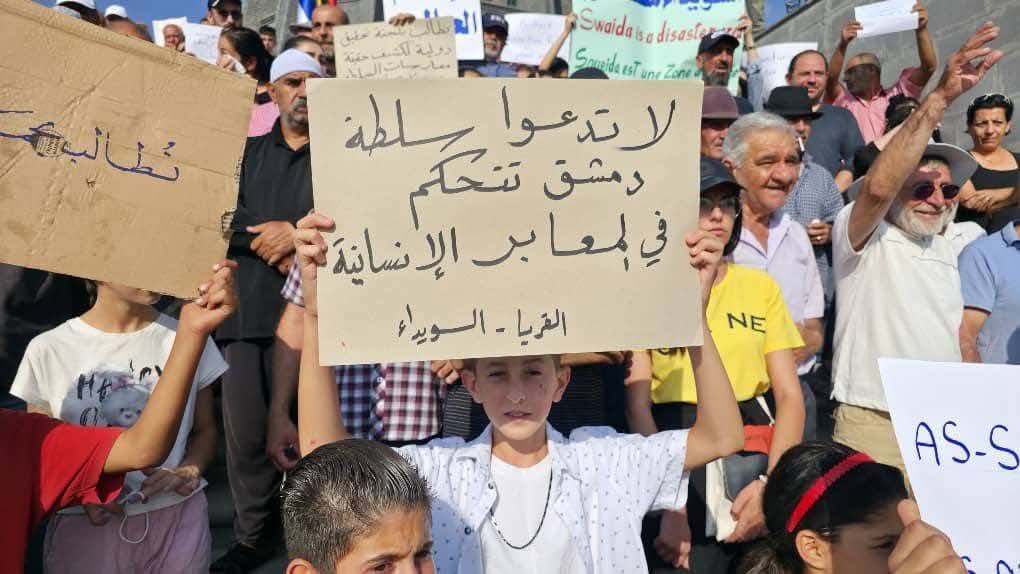
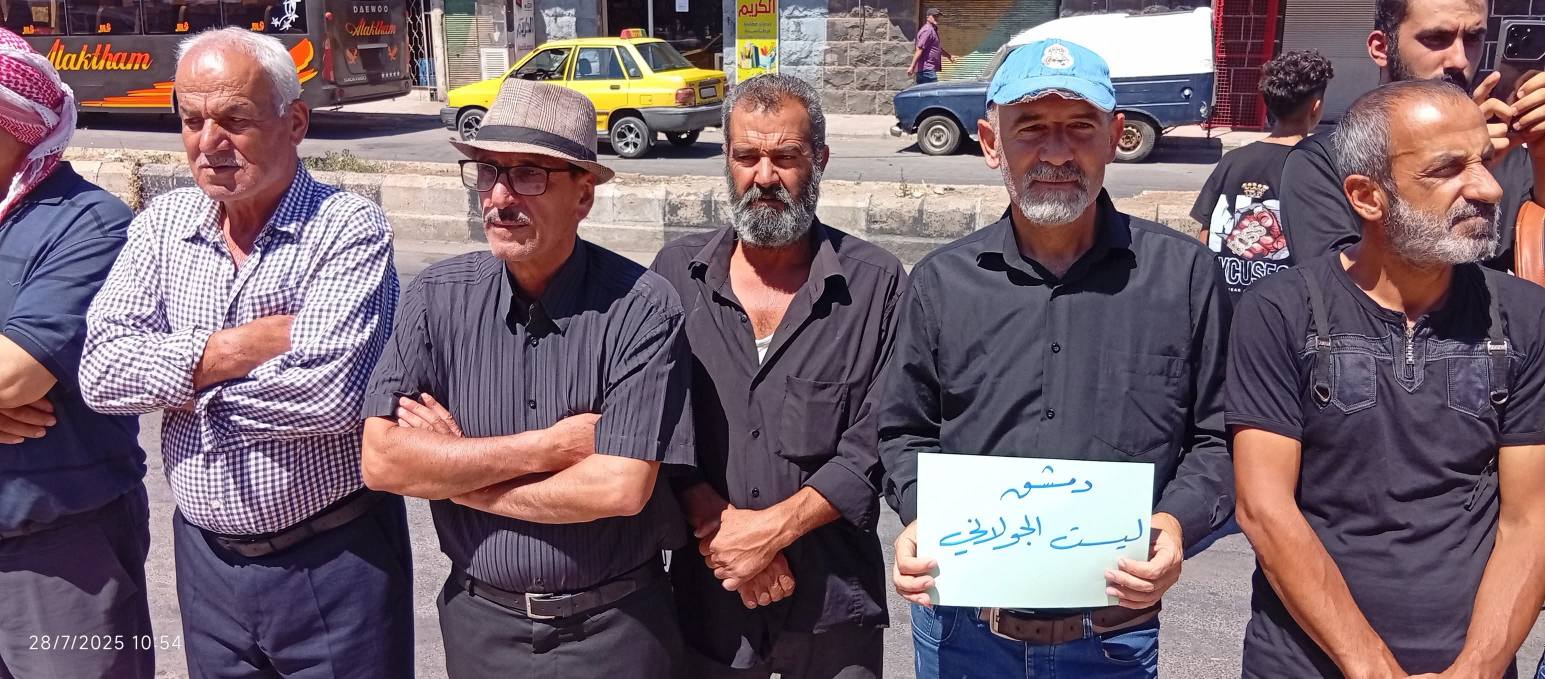
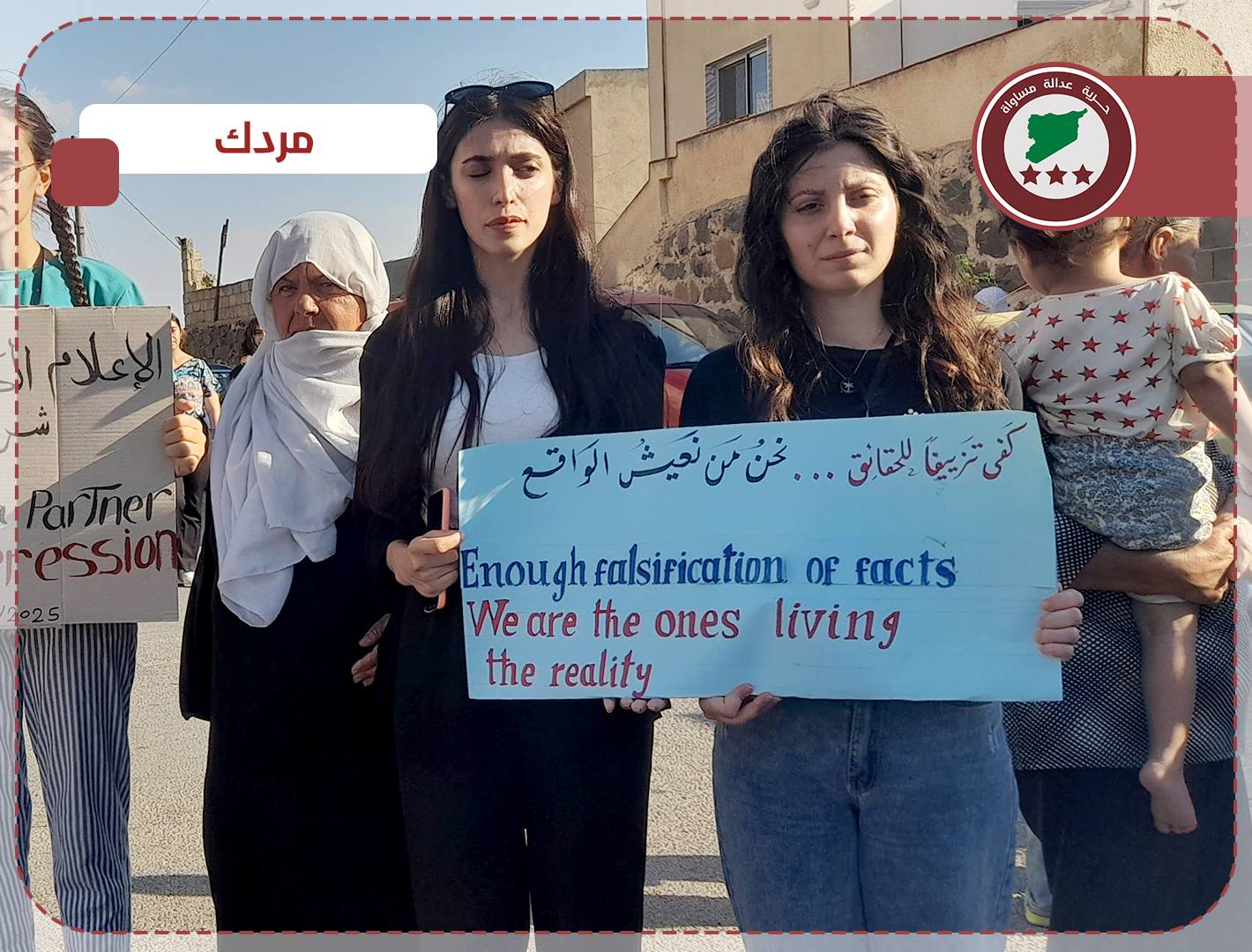
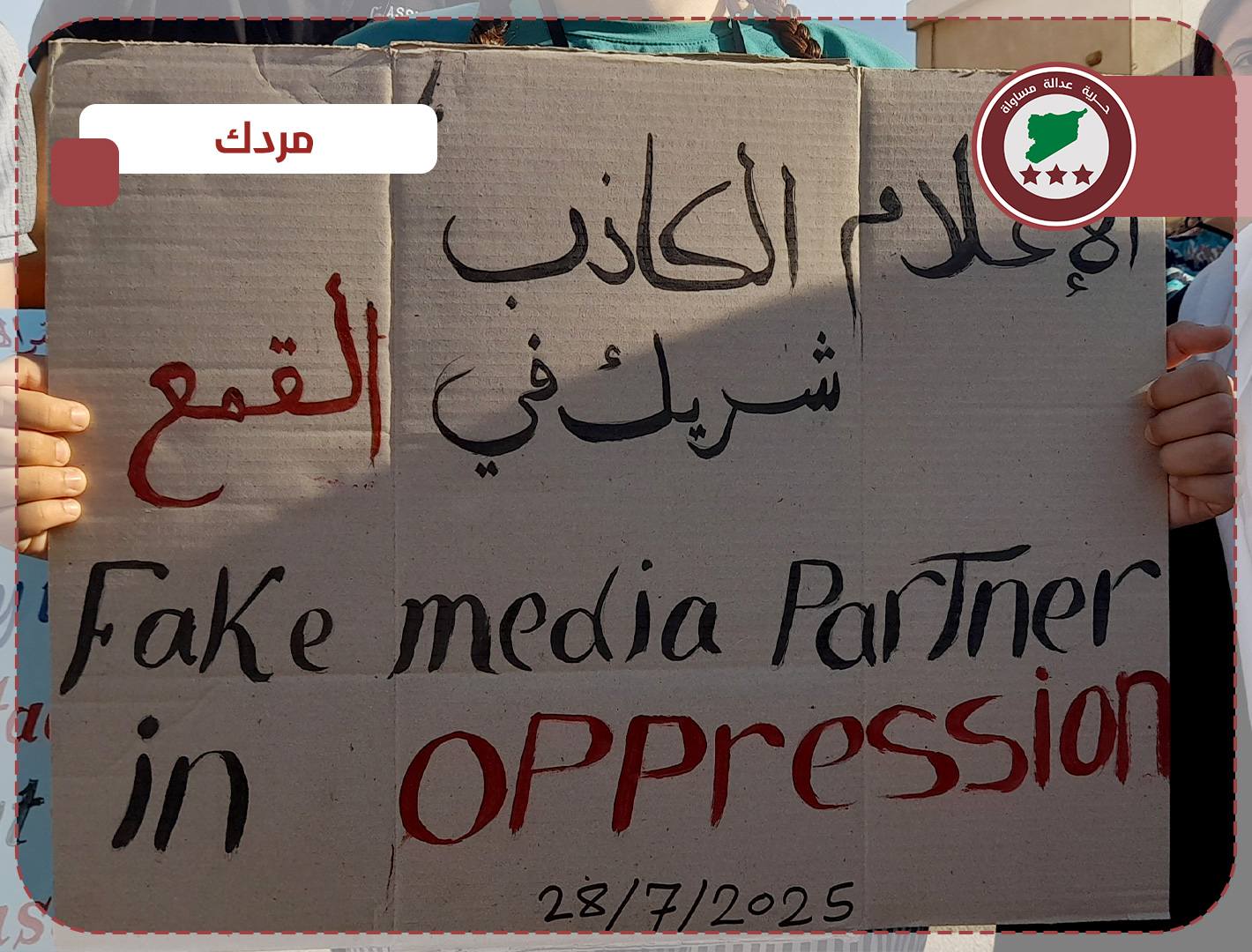
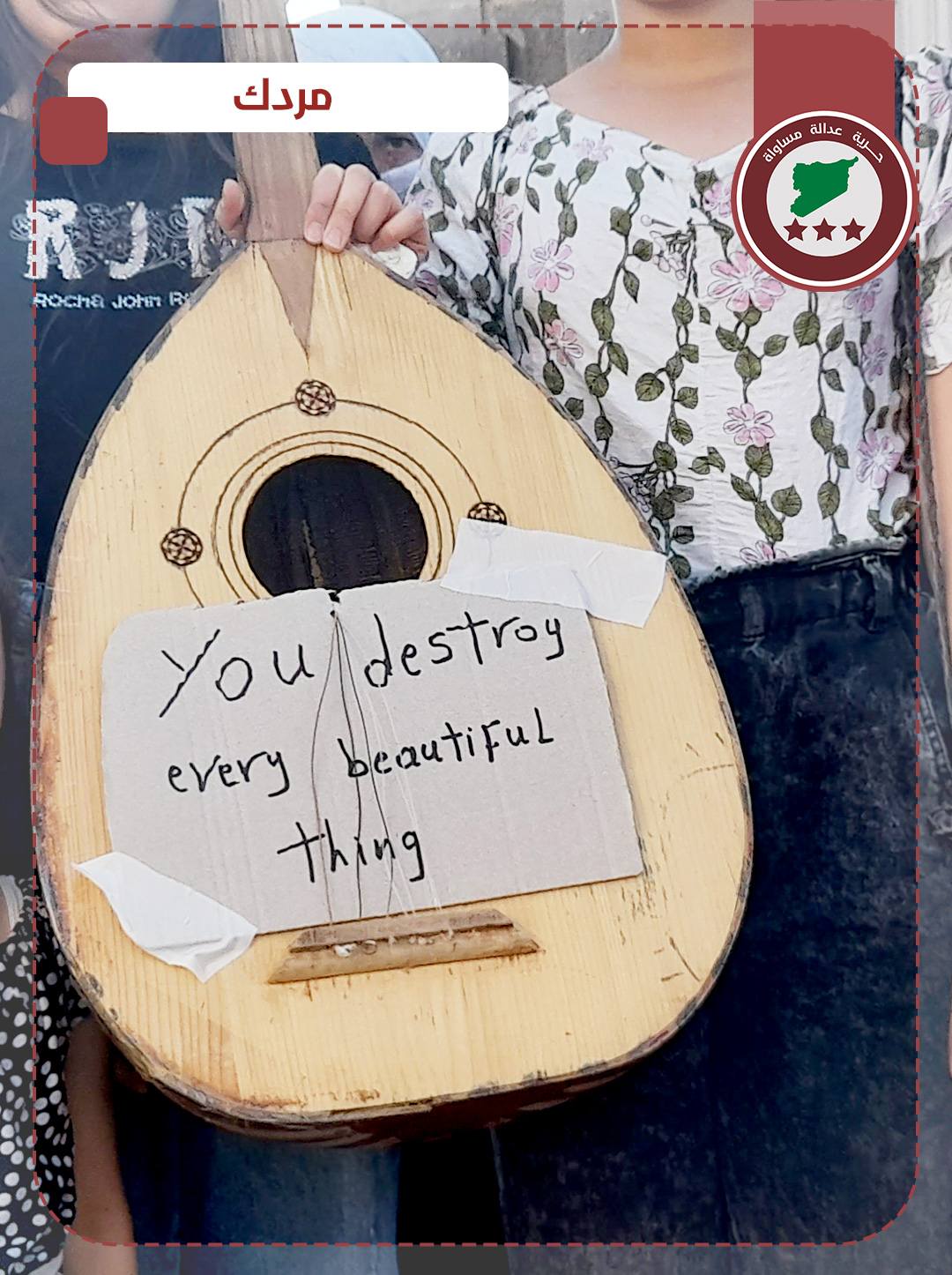
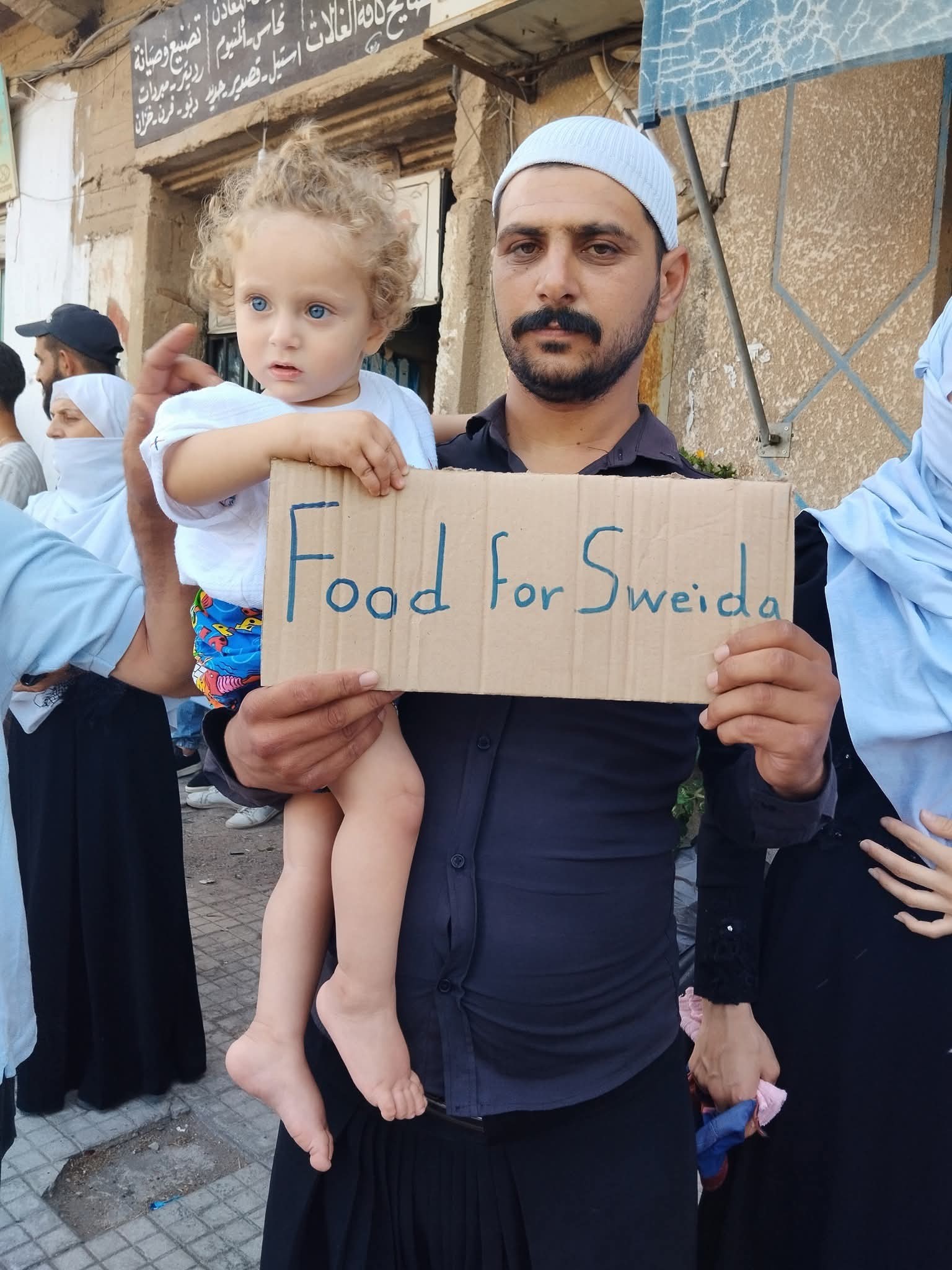
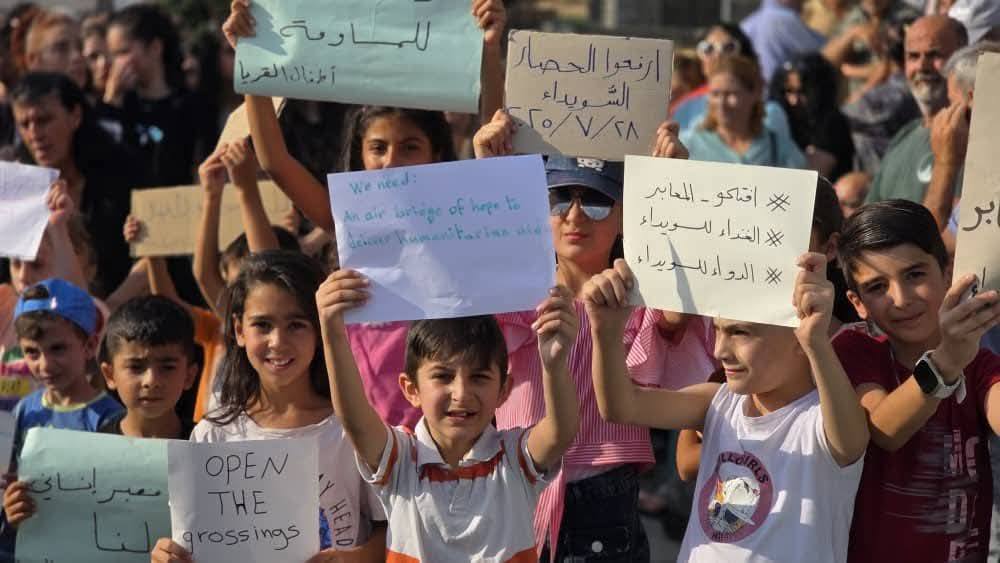
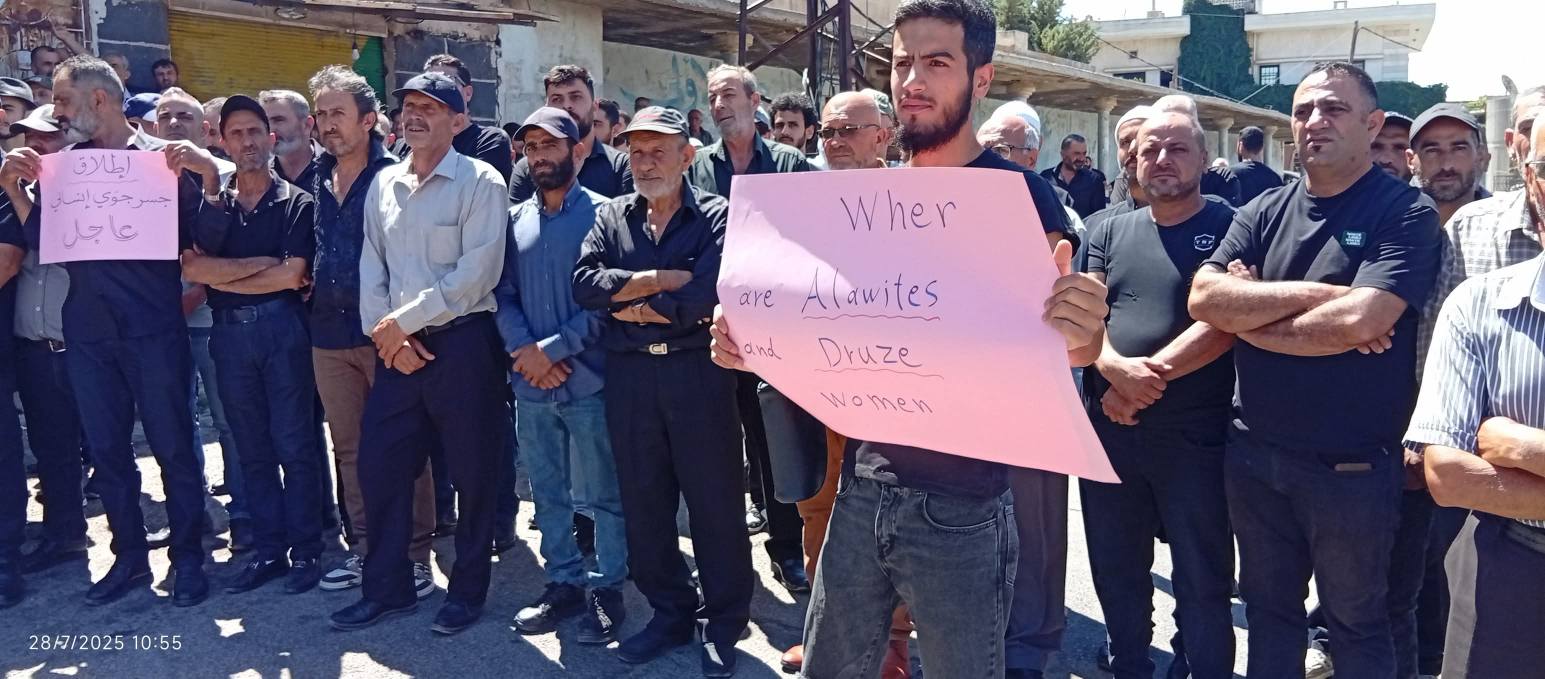
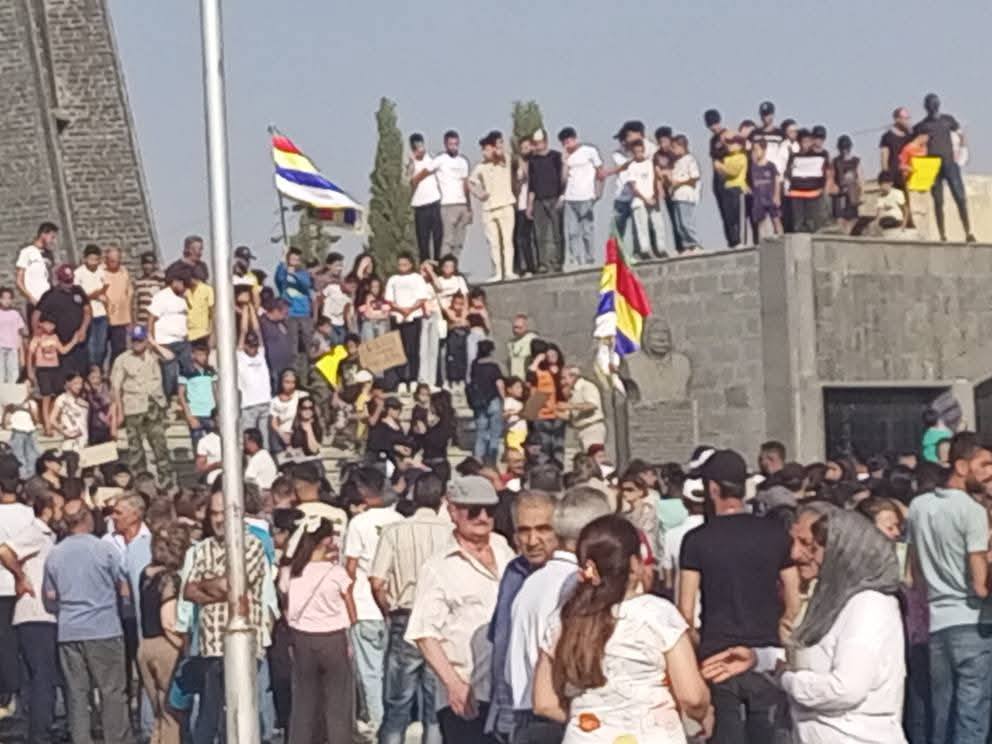
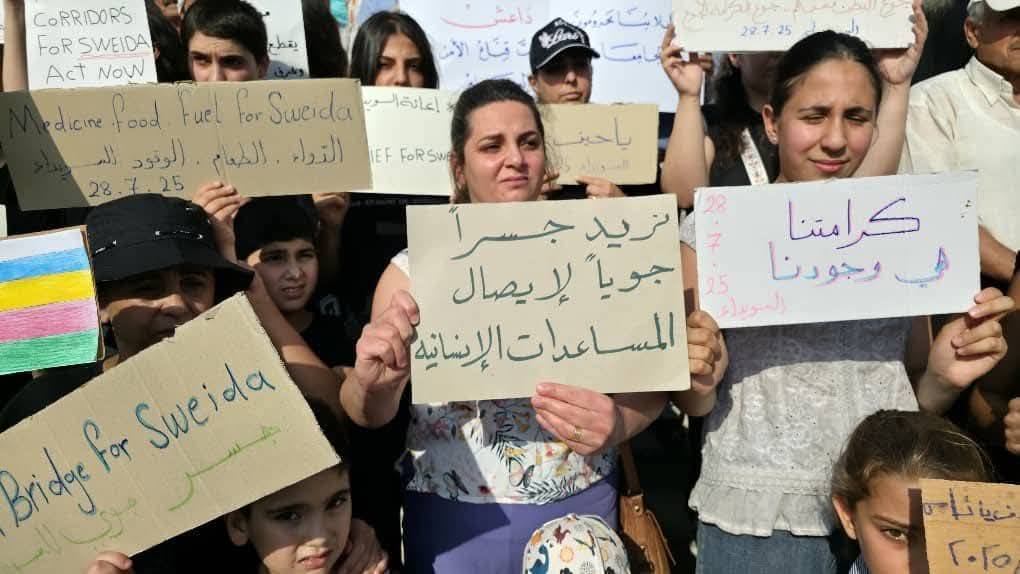
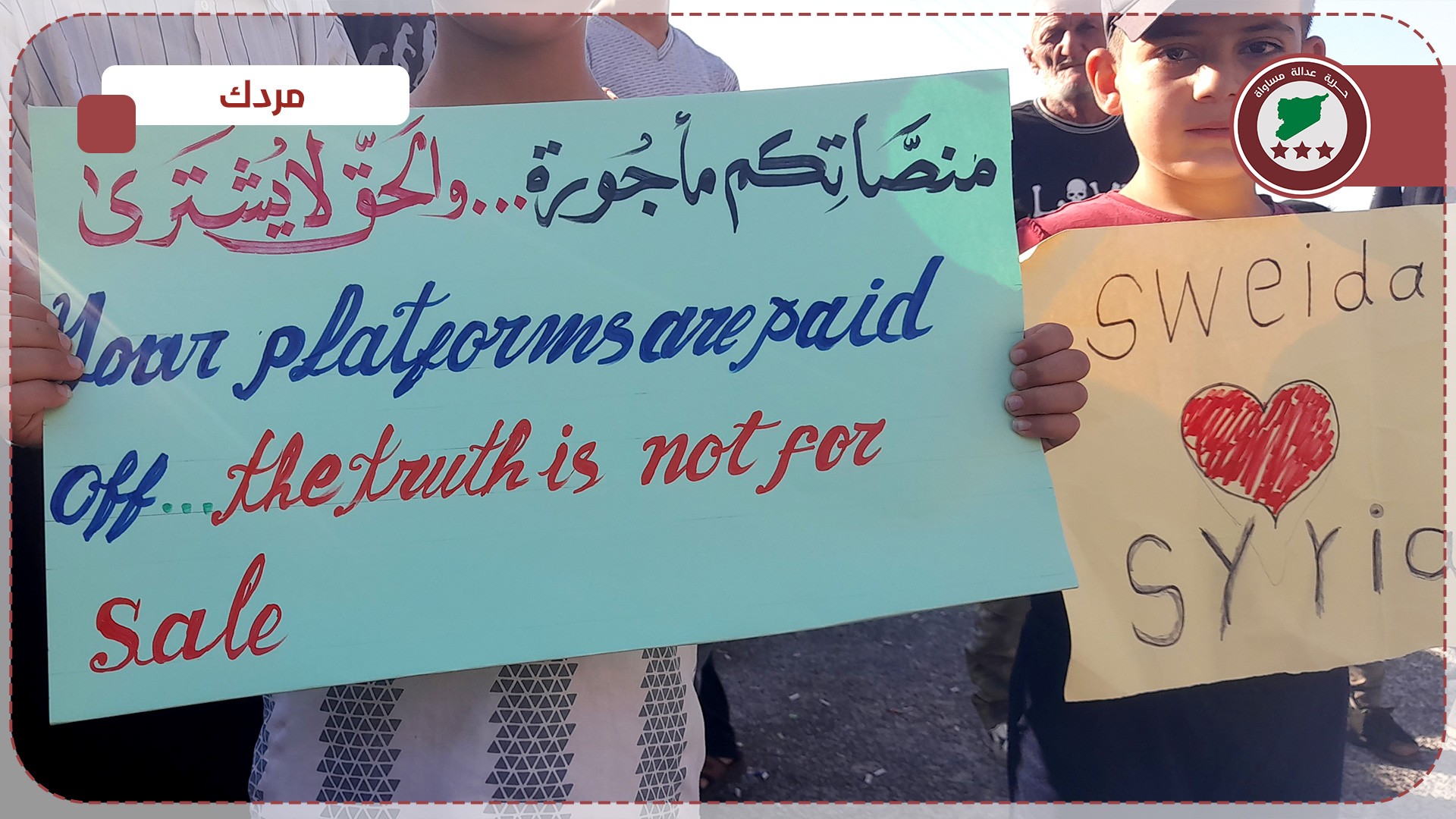
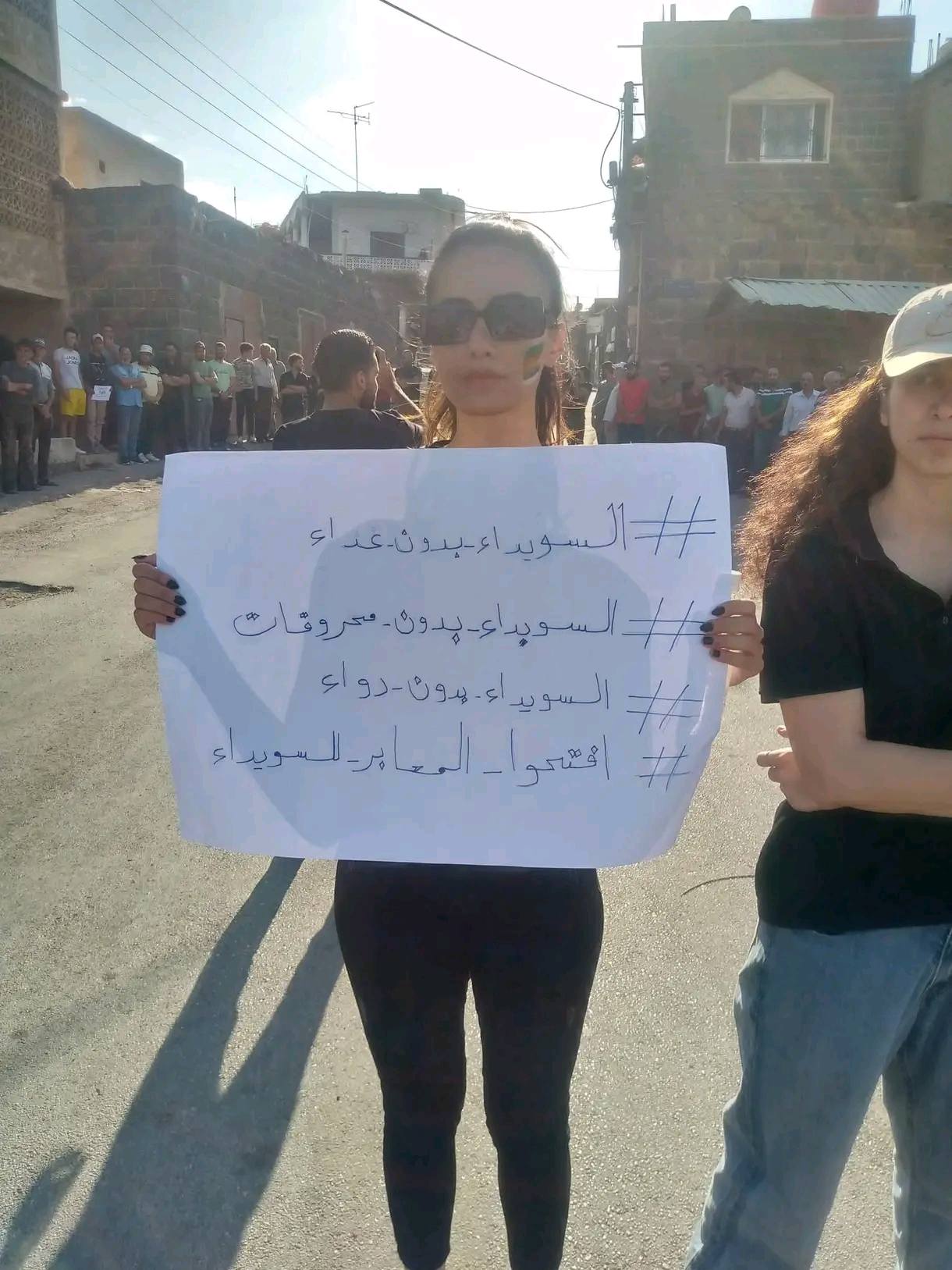
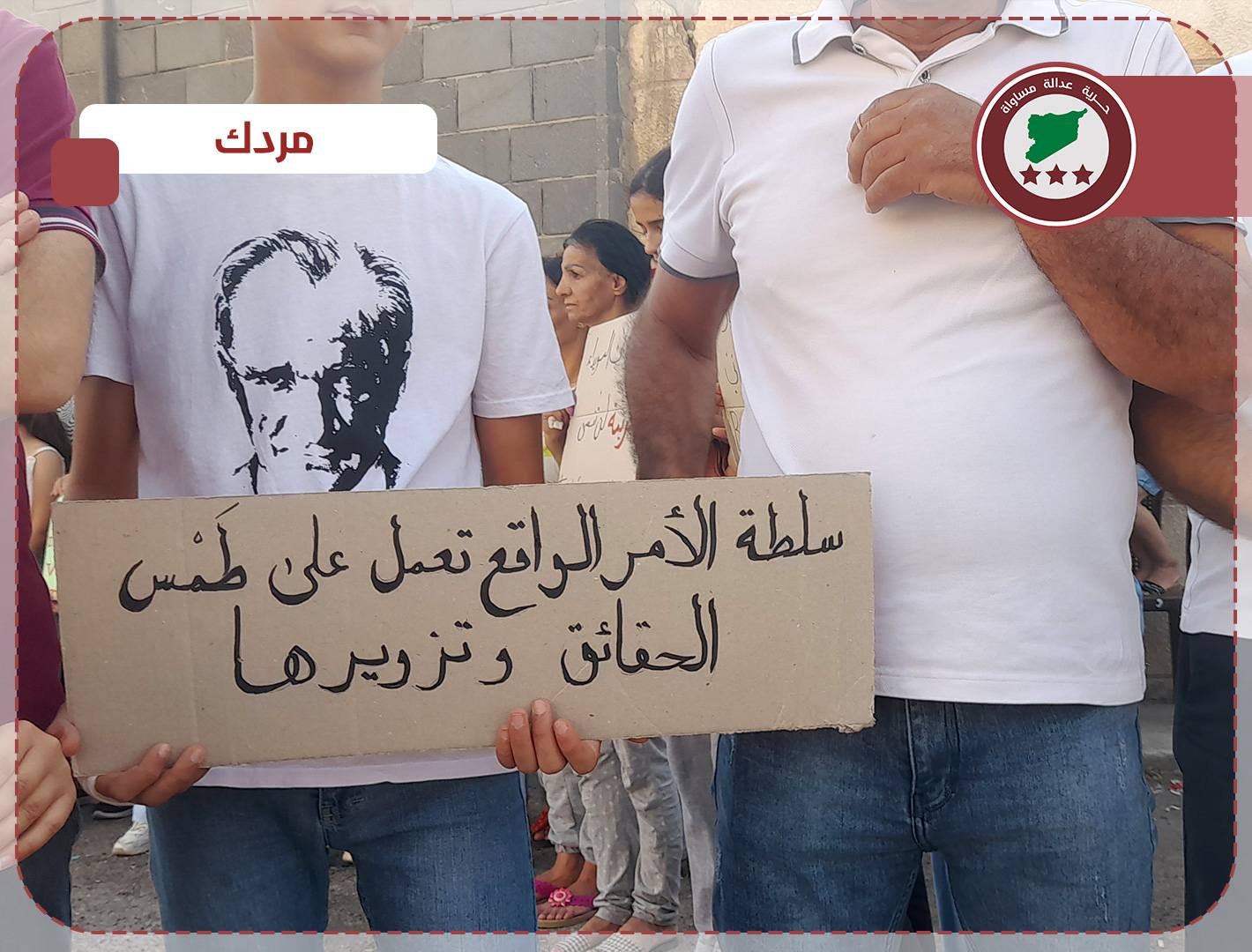
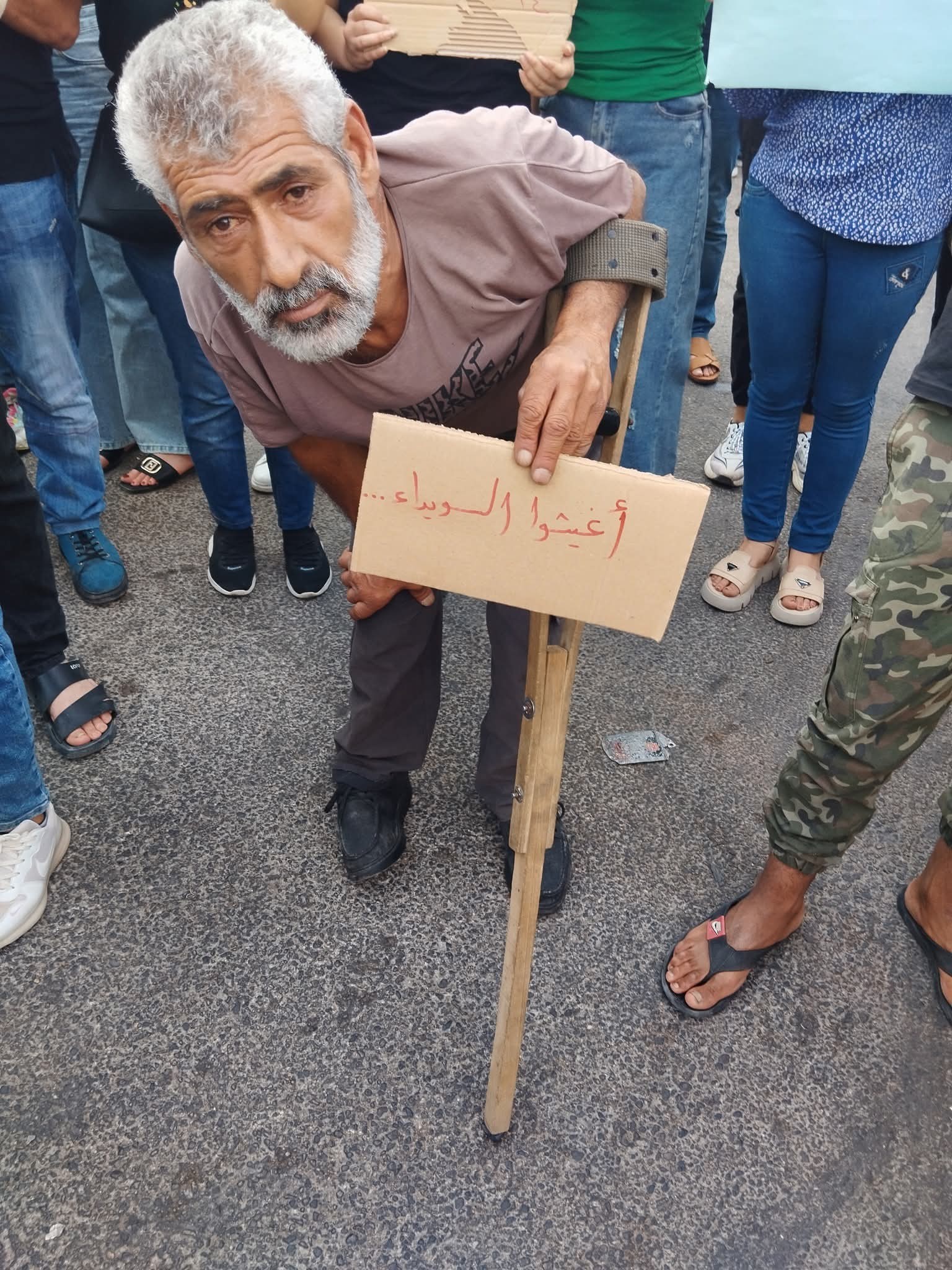
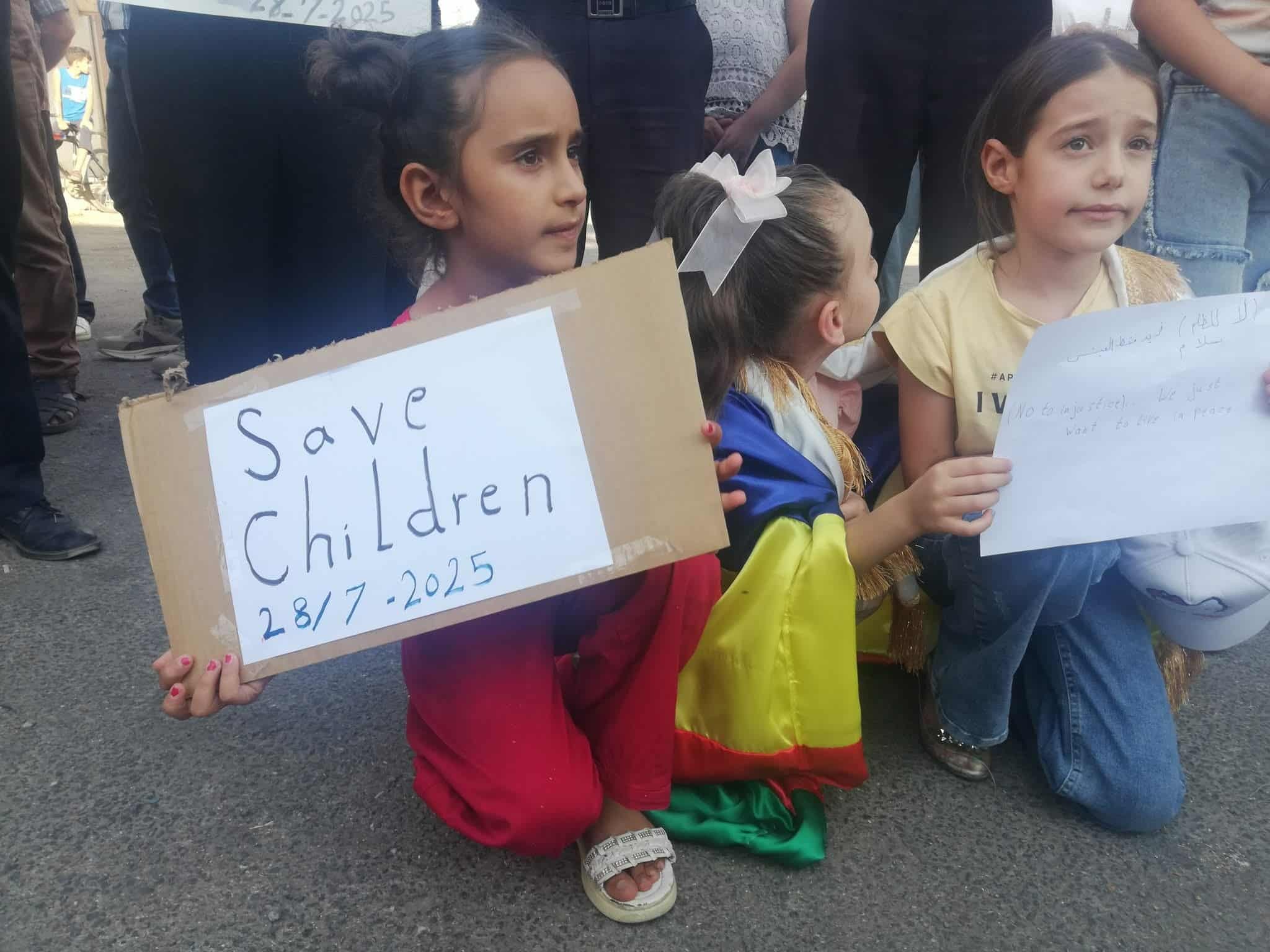
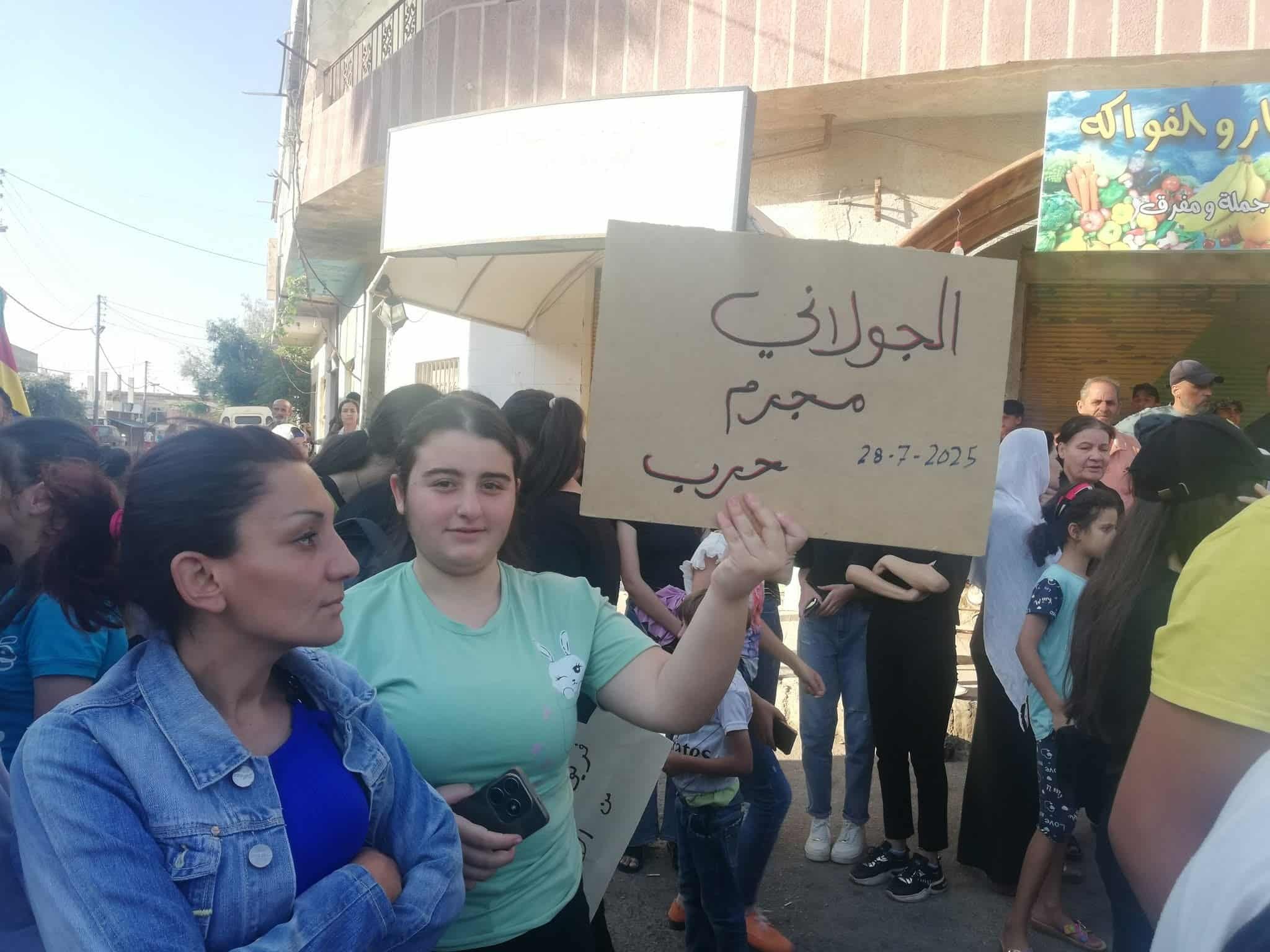
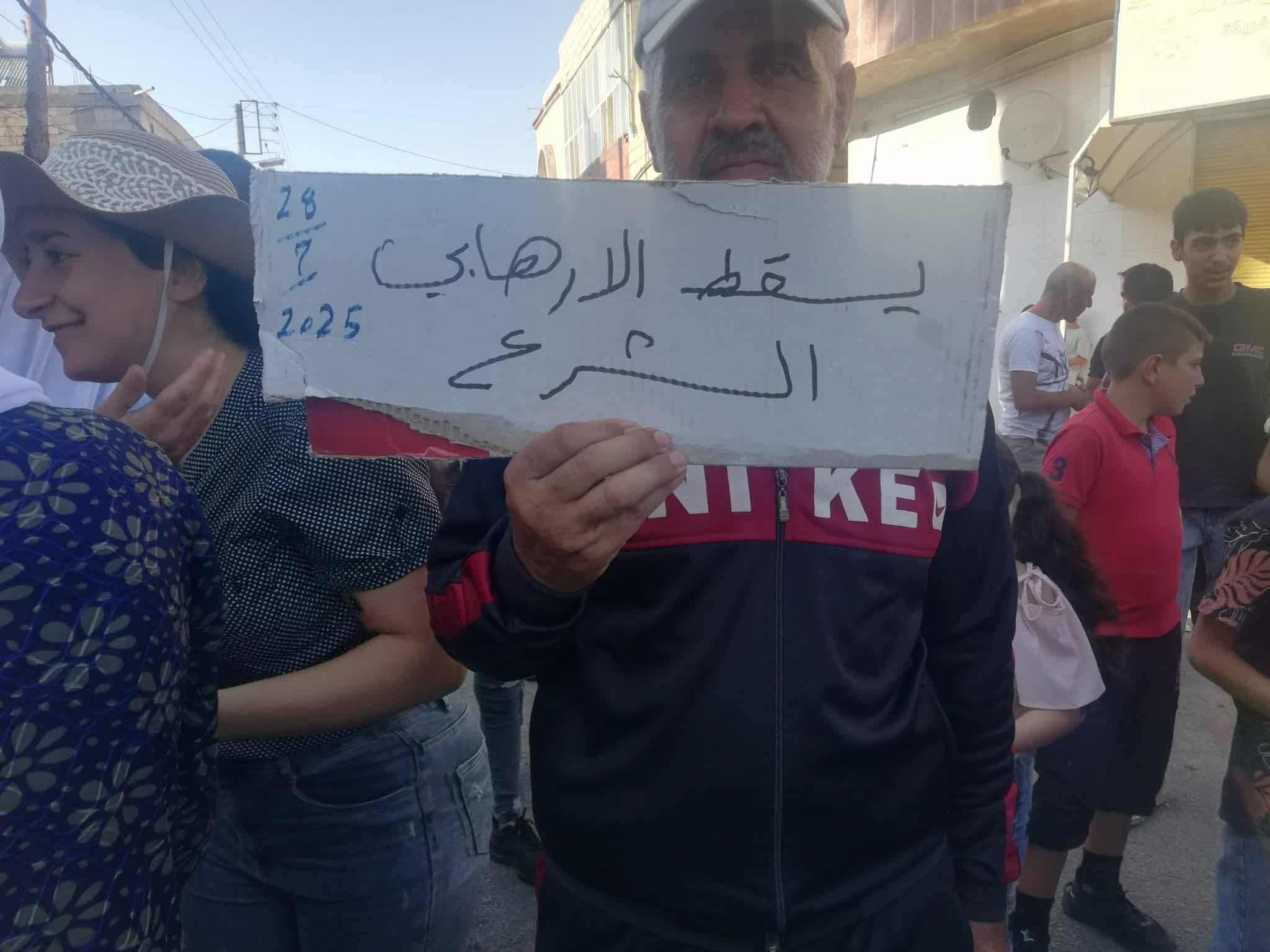
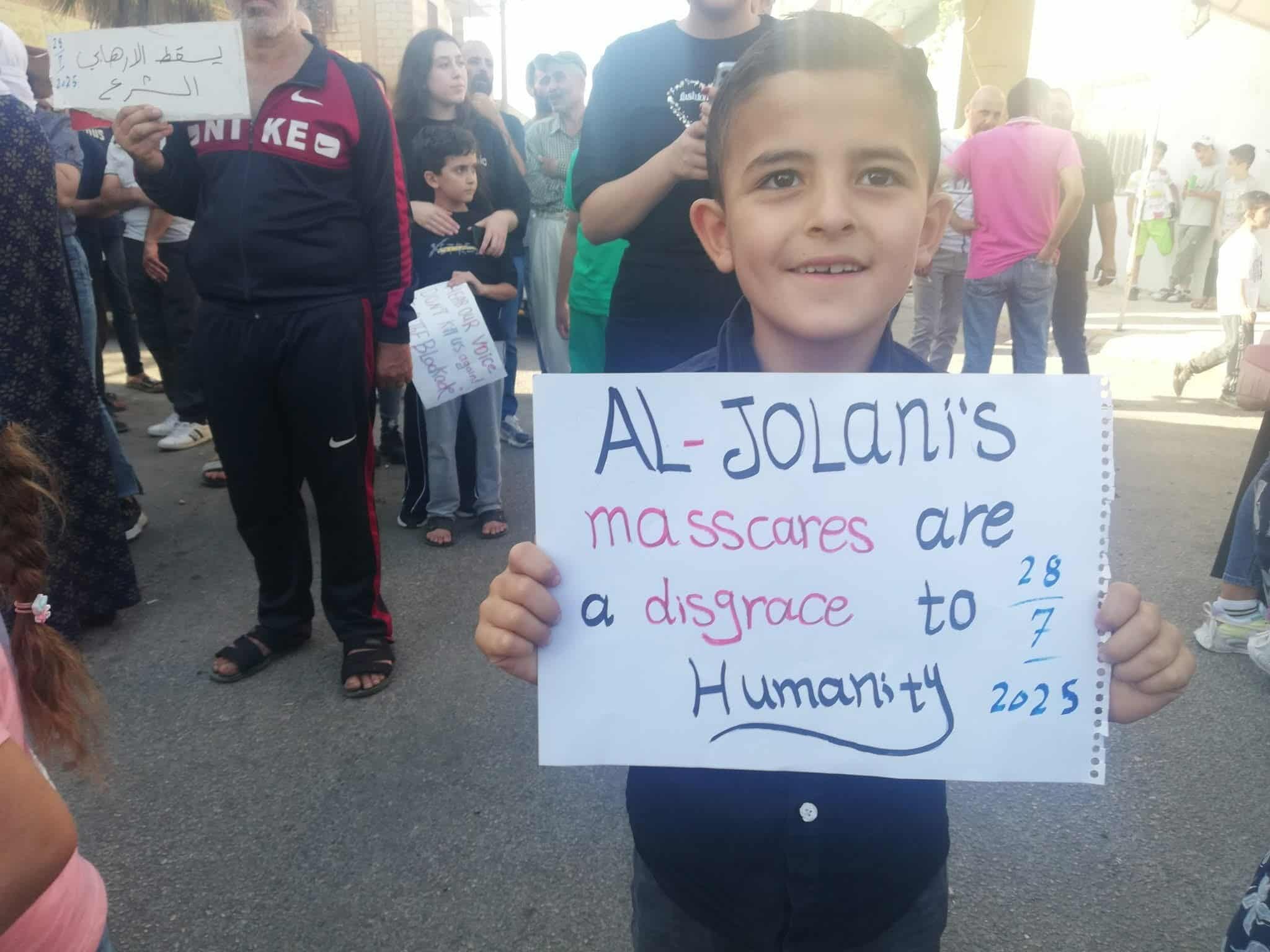
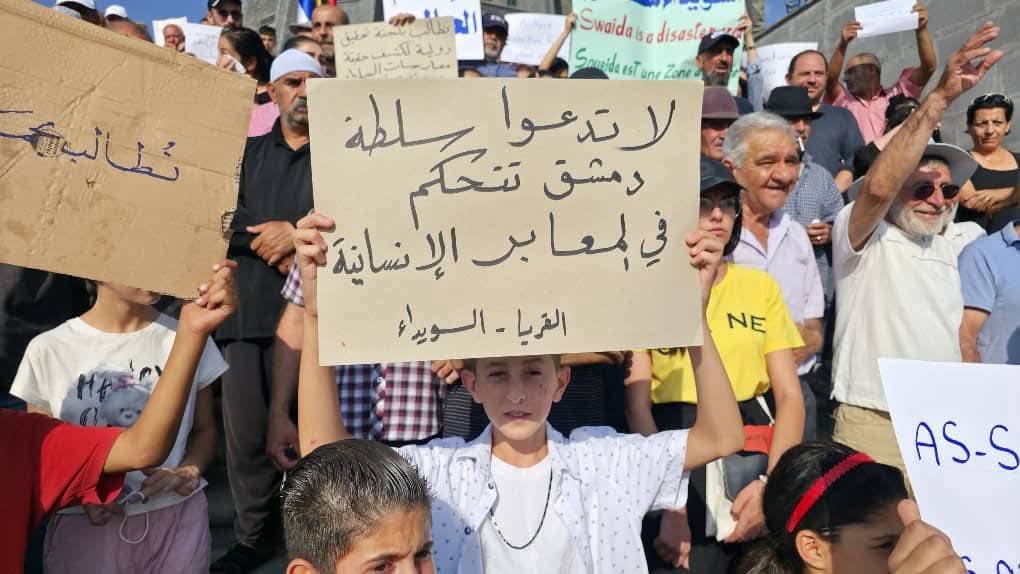
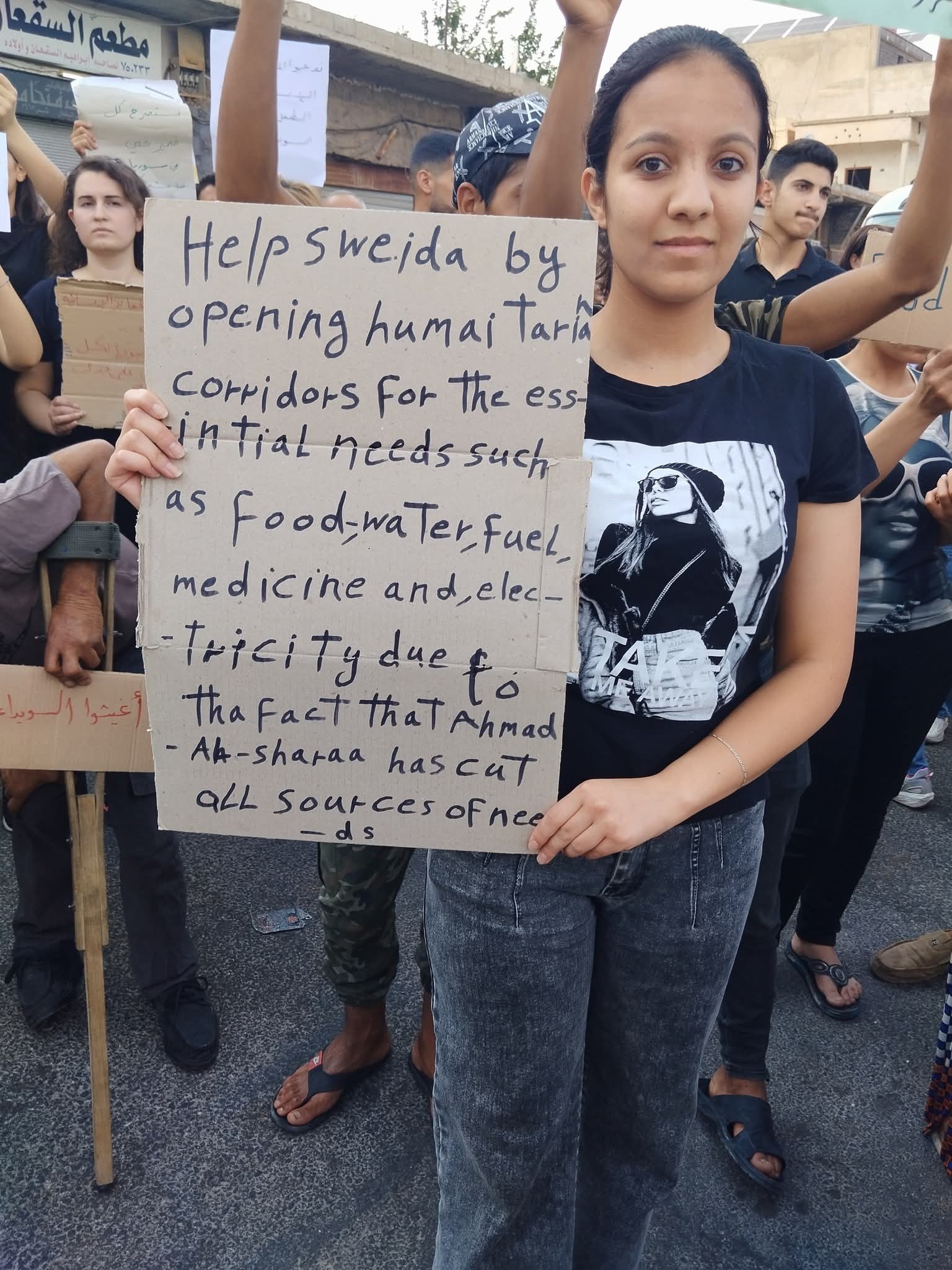
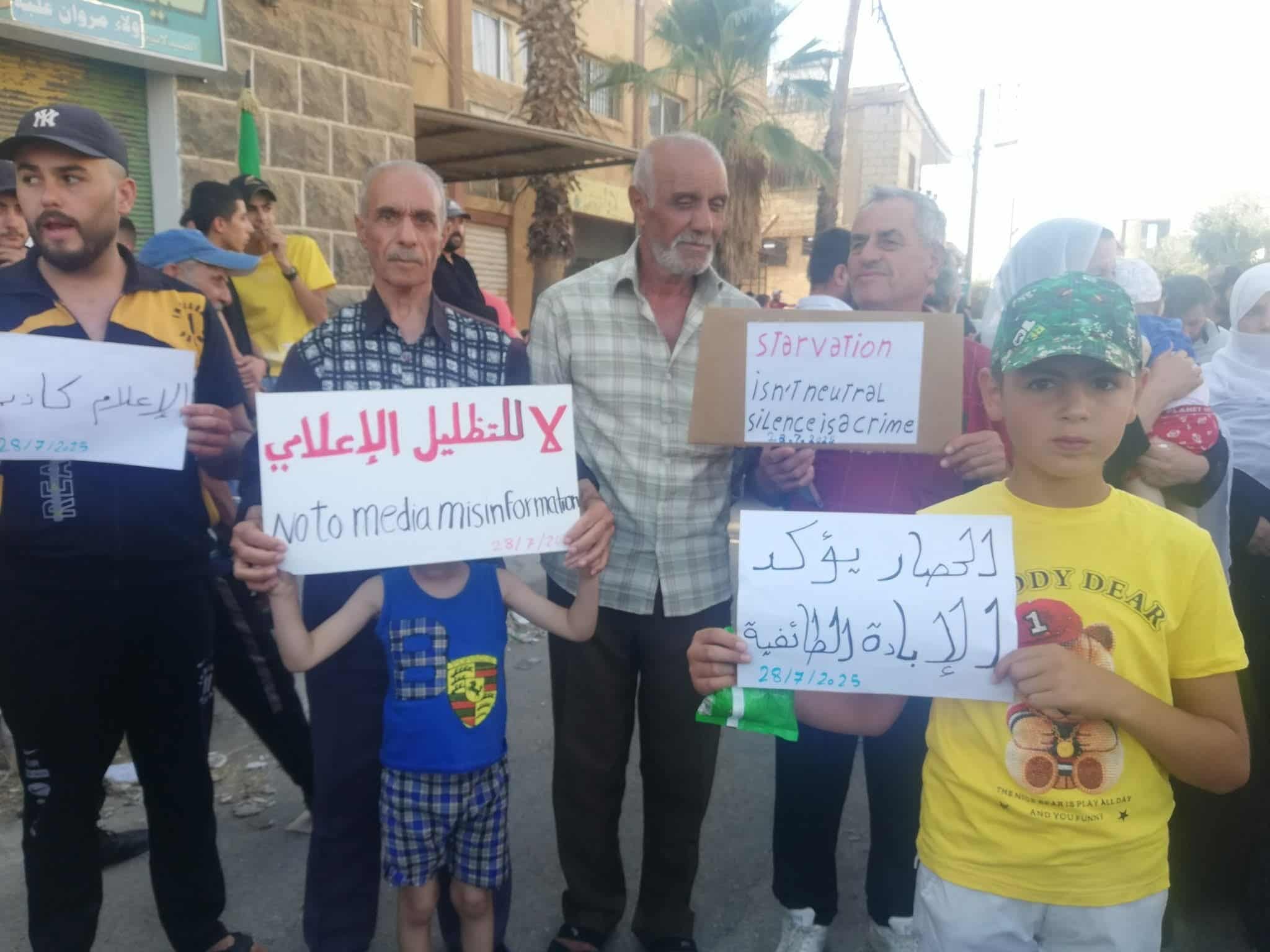
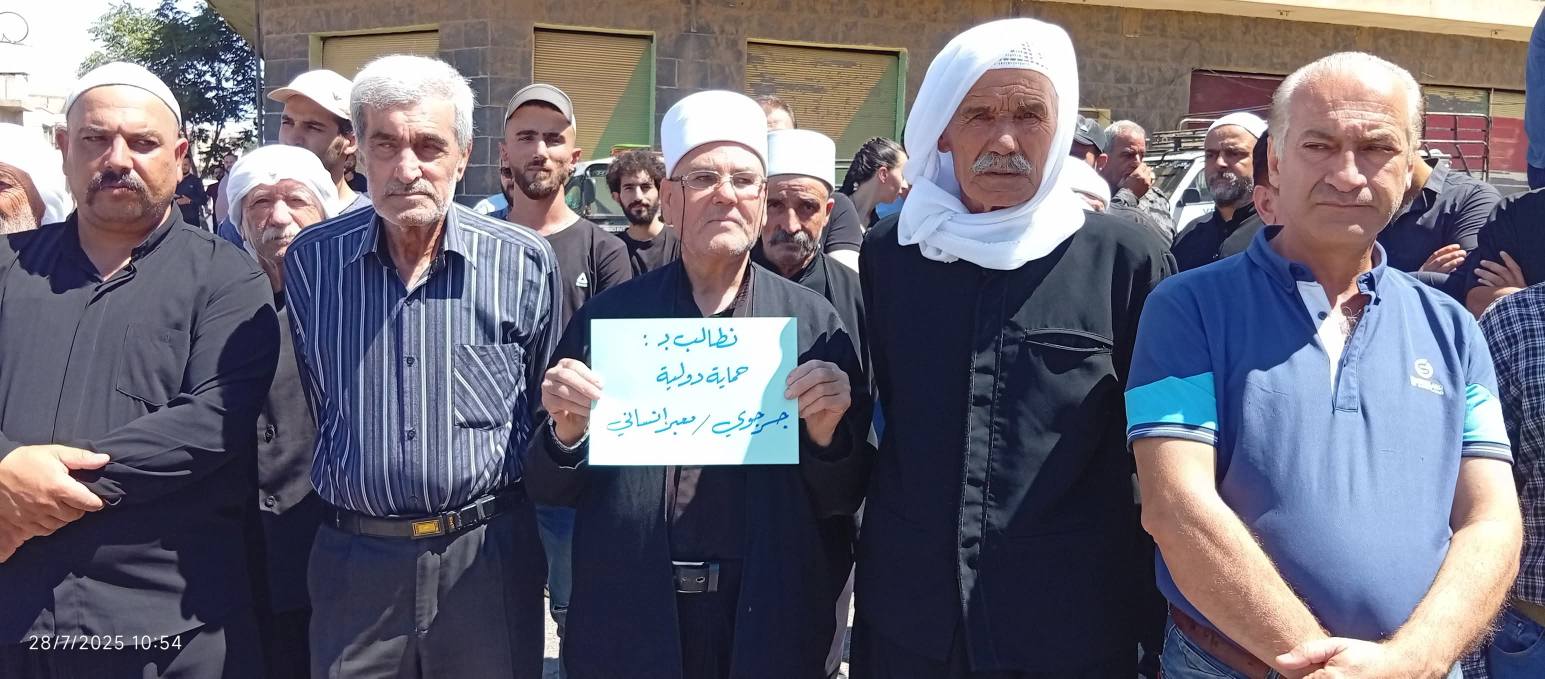
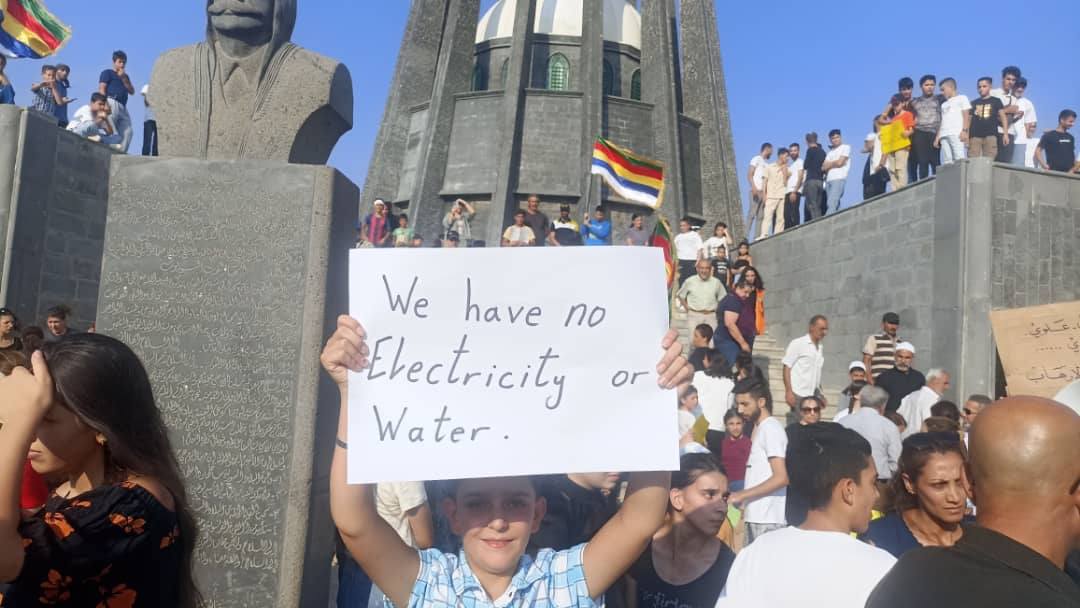
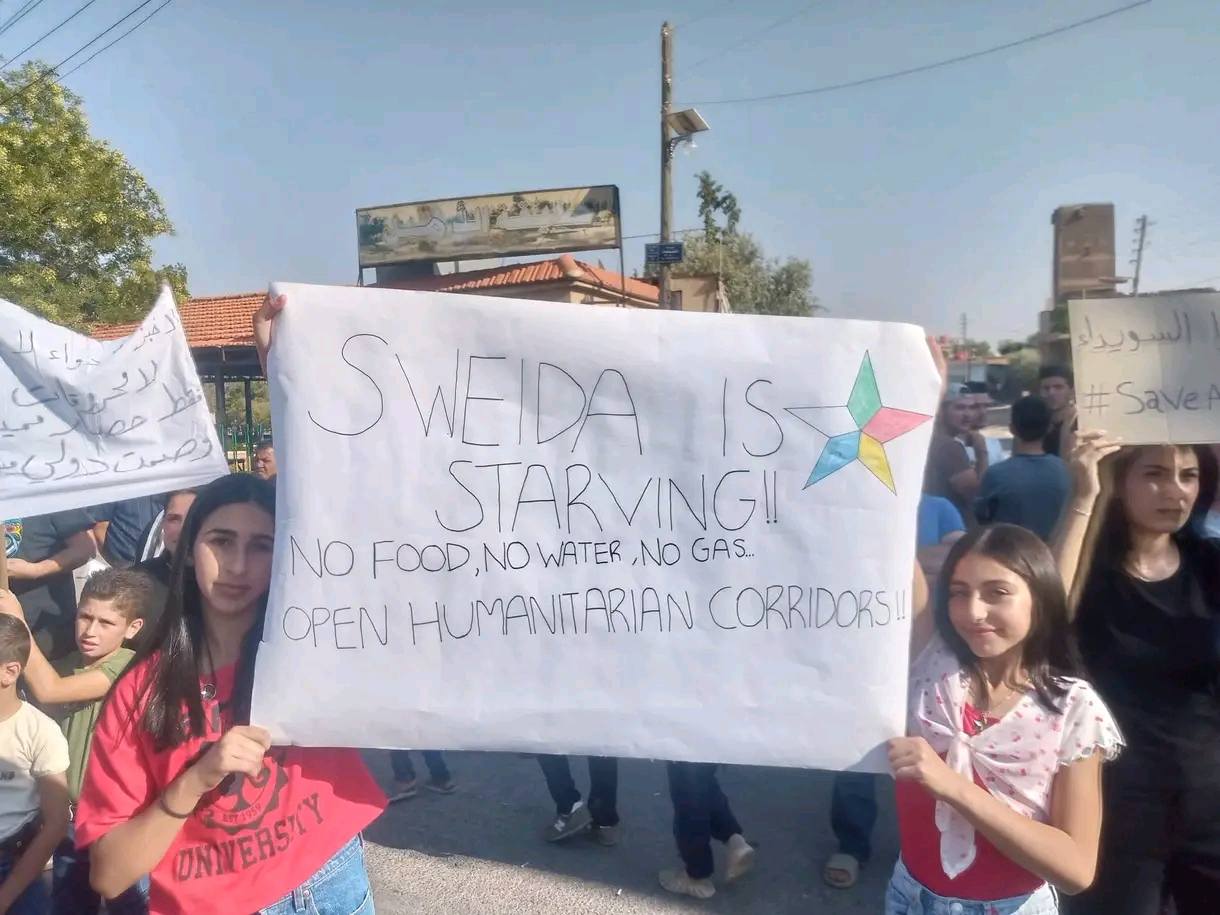
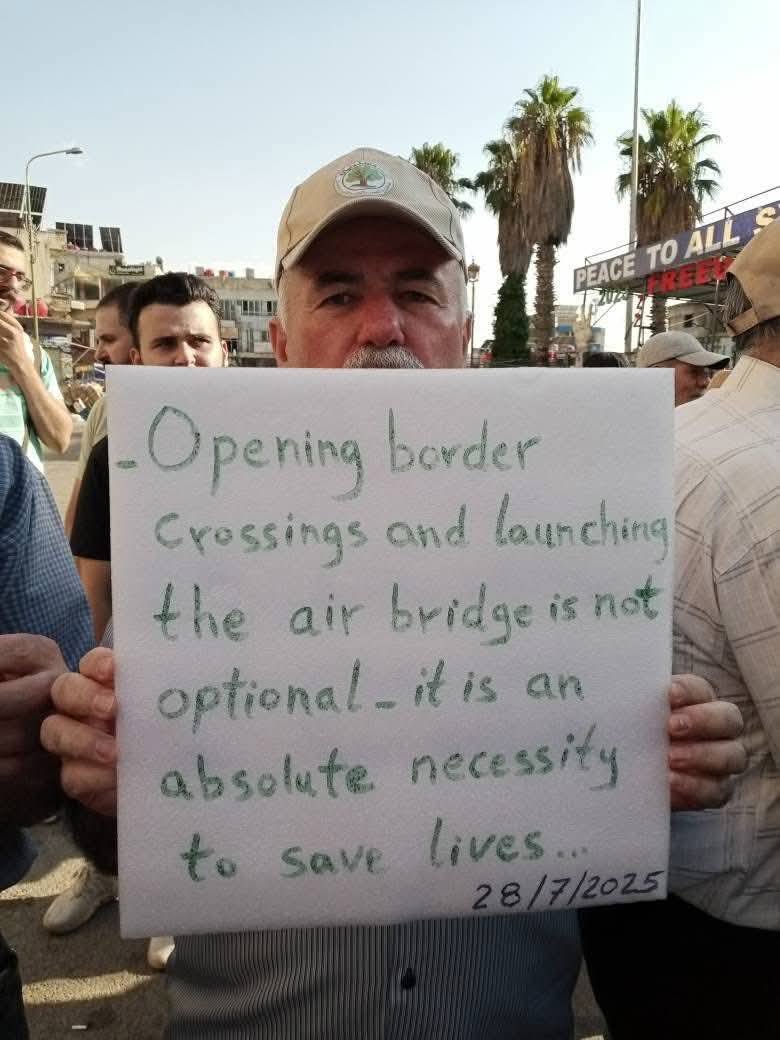
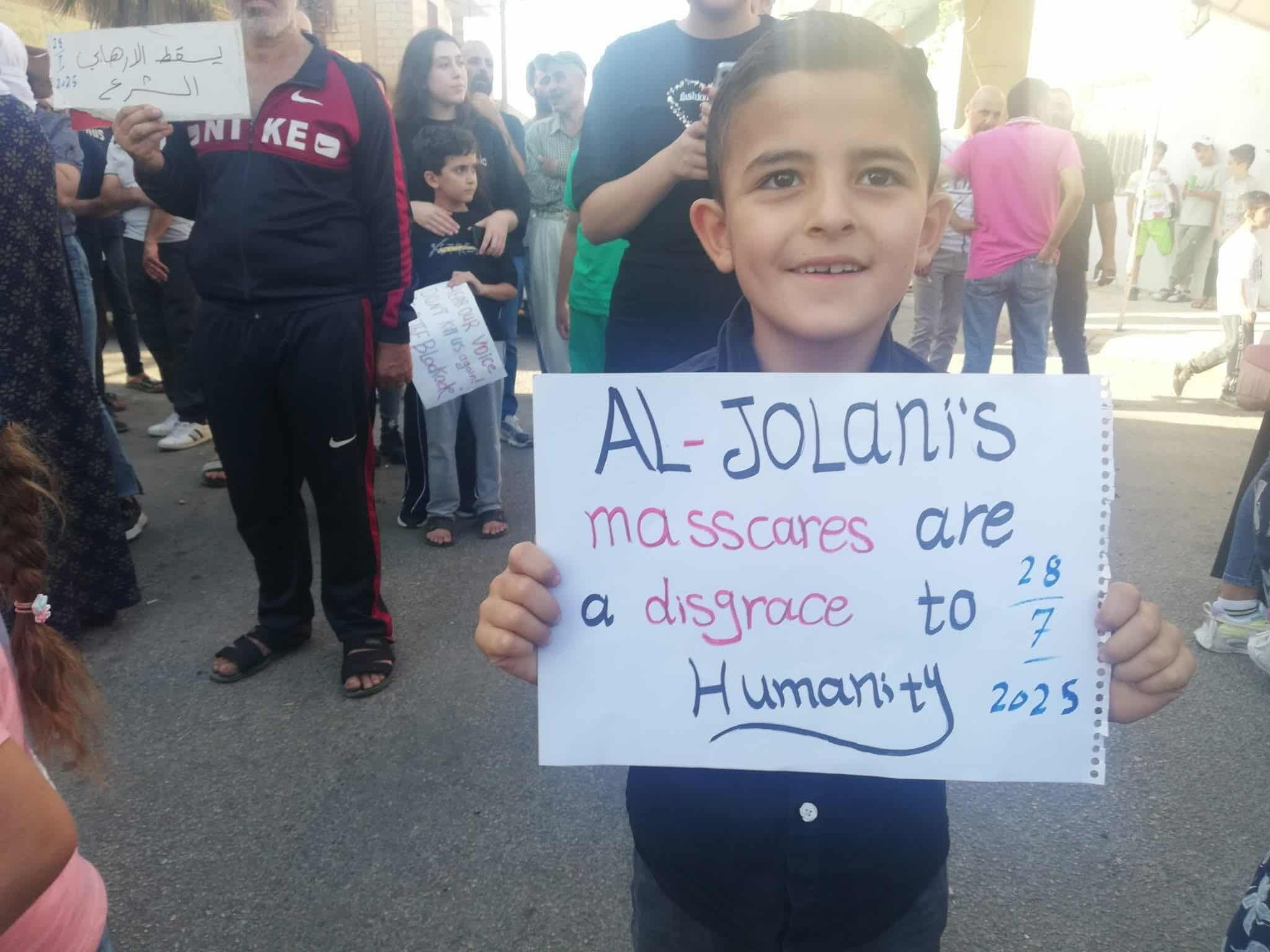
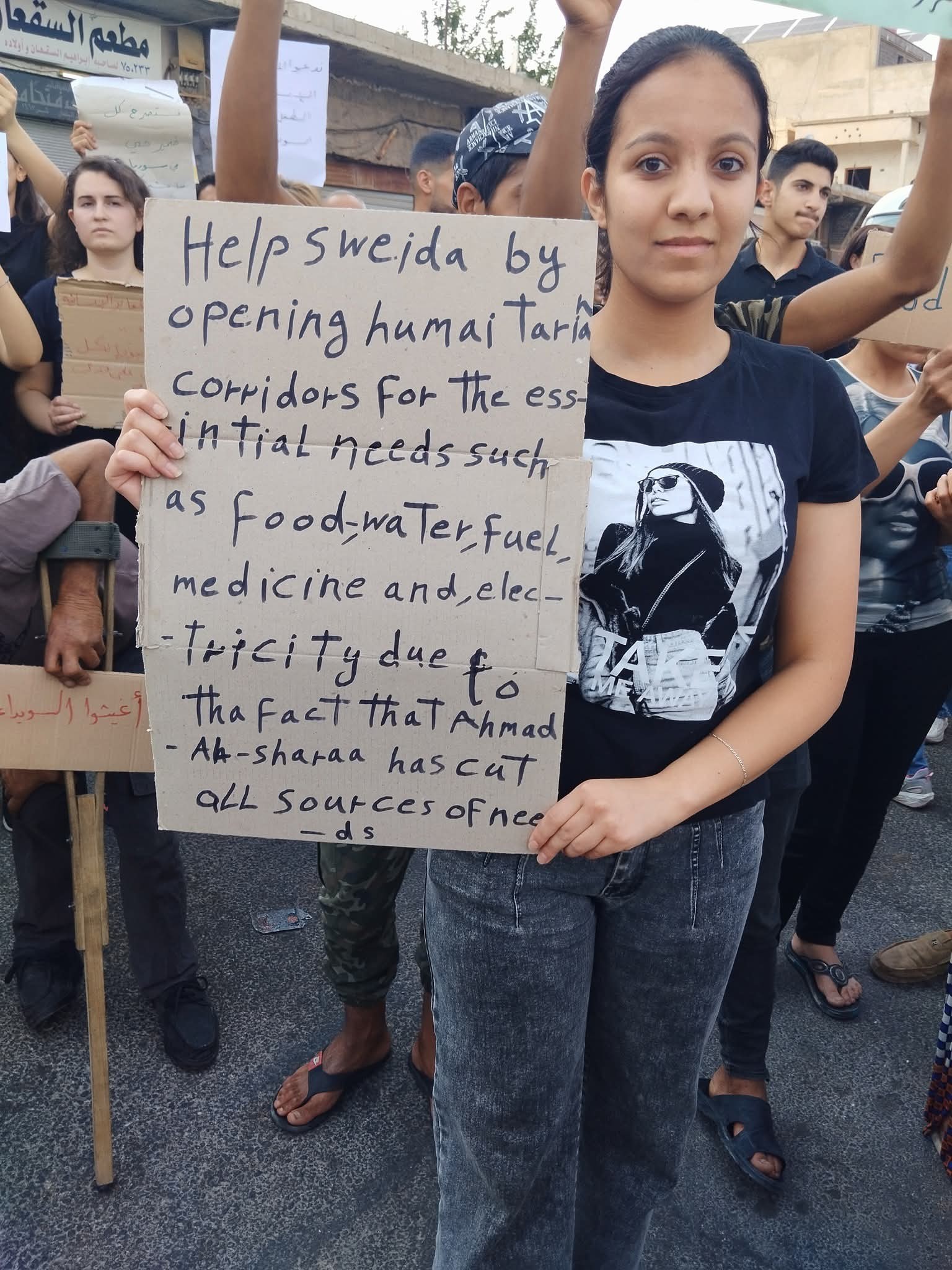
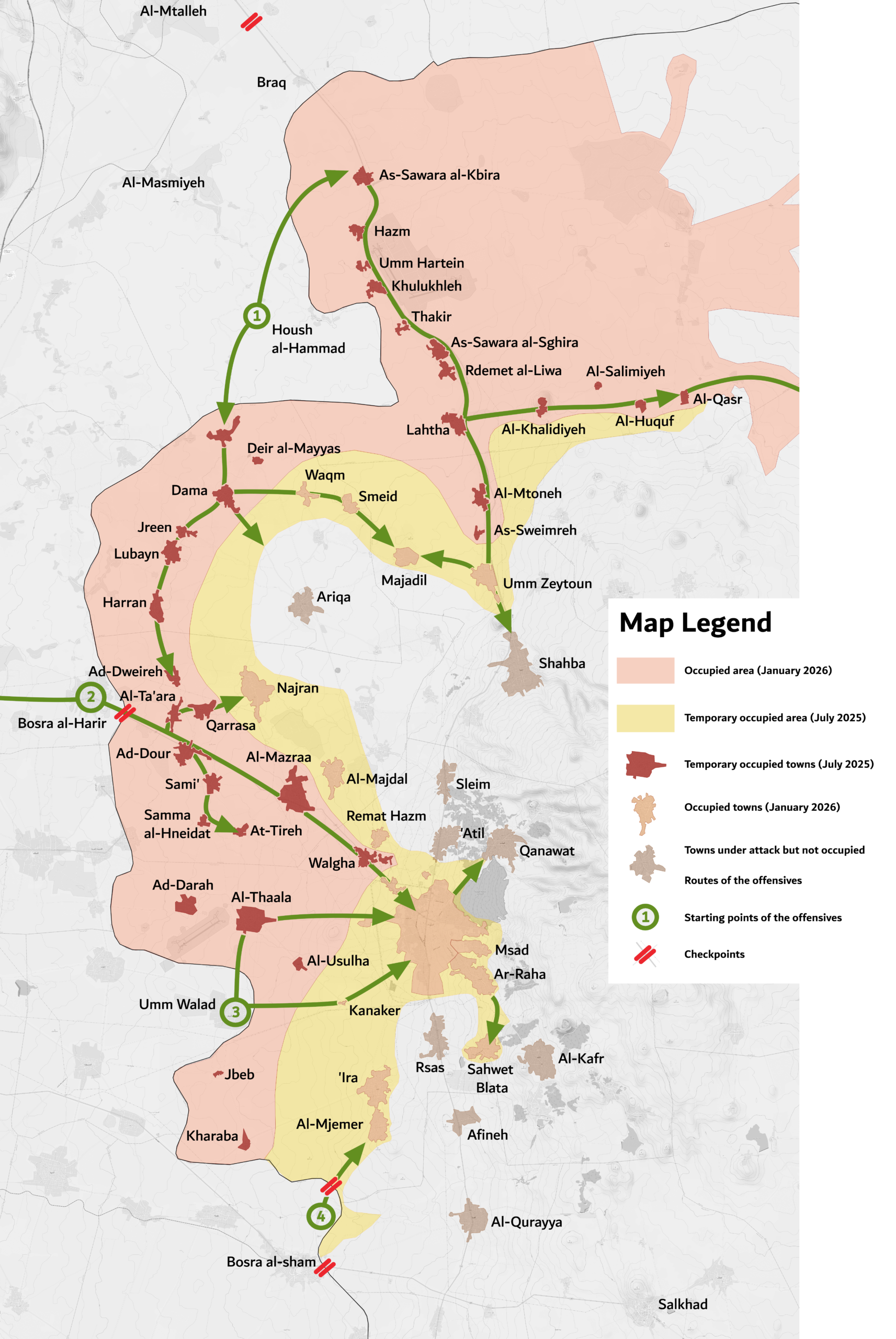
Four months after Assad’s fall, the Military Operations Command of Hay’at Tahrir al-Sham sent one of its envoys to the predominantly Druze province of Suwayda. Mustafa al-Bakour, until then an obscure official of the Syrian Salvation Government in the Harem district of Idlib, arrived in Suwayda on January 6, 2025, and was tasked with governing the province. In the absence of a democratically elected parliament or provincial council, he has spent the last eighteen months governing Suwayda on Damascus’ behalf: erasing the Central Authority’s fingerprints from two waves of sectarian violence, and after the July 2025 massacres, overseeing a systematic campaign to renovate, repaint, and repopulate the very crime scenes his government had helped create.

The Radical Left, war and self-defense

The Radical Left, war and self-defense

Levant

by Cedric Domenjoud | Apr 25, 2026

This article examines war and the stance on war taken by European radical left and anti-authoritarian circles (RLAA), as well as by some decolonial and indigenist movements (DI). The author subscribes to an anti-authoritarian and internationalist perspective that prioritizes popular self-defense and struggles for self-determination over the often-detached theoretical assumptions of a middle class radicalized by capitalist violence, yet one that typically lacks any empirical understanding of war and its implications.

Introductory note: Behind the acronym RLAA, which I have chosen to employ, lies a complex and multifaceted reality, comprising numerous movements whose political radicalism varies greatly. It ranges from the left wing of institutional social-democratic and socialist parties to the far left, and even beyond the traditional political spectrum modeled on political representation within conventional parliamentary assemblies. It therefore includes anti-parliamentary and anarchist movements that situate their thinking and action outside of party politics and issues of representation. It should also be noted that this analysis focuses primarily on European movements, excluding those in the Balkans, the Caucasus, and more generally the former USSR, unless otherwise specified in the text.

The Cold Wars of the Radical Left

Since the late 19th century, heated debates have divided the European RLAA whenever a war breaks out within 1,200 km of its home territory. This was particularly true during World War I and World War II, but much less so during the Balkan and Chechen wars of the 1990s. It would appear that the RLAA no longer viewed those wars as anti-colonial struggles, and that the collapse of the USSR a few months earlier had suddenly deprived the peoples fighting for self-determination of the support of the internationalist left. Furthermore, it would appear that the RLAA’s ideological framework failed to keep pace with the times, leaving it unable to grasp the religious and sectarian dimensions mobilized since the mid-1980s by armed groups fighting against white and Western colonial domination. In particular, the RLAA does not seem to have been able to analyze the emergence of Islamist radicalism as the combined result of the failure of socialism and the success of counterinsurgency on a global scale. Consequently, we have seen the RLAA gradually sink into political confusion and campism, supporting here and there ultra-reactionary and authoritarian states and movements under the pretext of anti-imperialism. It should be noted that imperialism is generally viewed by the RLAA—entangled in the binary analytical framework inherited from the Cold War—as unilateral and embodied exclusively by the United States and its “lackeys” (Israel, NATO members, etc.). This development occurred in parallel with the emergence of decolonial movements—intellectual rather than militant—led by a radical left with immigrant roots and influenced by both U.S. academic circles and postcolonial humanitarianism, which I refer to as “NGO-ism.” In France, these groups add to their analytical framework the specific ideological contradictions faced by the descendants of colonized Algerians—caught between nostalgia and fascination for the Algerian independentist National Liberation Front (FLN) from the era when Algiers was still the “Mecca of Revolutionaries” (1960–1970)—and entangled in the identity conflicts characteristic of postcolonial immigration. Their ideology lies at the intersection of interventionist leftism and what some people may call "Islamic socialism".

Before delving further into the issue of war, it is worth noting that over the past three decades, the RLAA has undergone a significant transformation. Even beyond the issue of war, it has become notably divided on decolonial issues, on issues of race and gender, as well as on the appropriate stance to adopt toward religion in general and Islam in particular. Without reducing anyone to their political affiliation, we can nevertheless identify the major current trends as follows:

- The radical left, which emerged from the traditional socialist and communist parties, as well as from the New Left and the Revolutionary Left, has largely become more liberal and now forms a more cohesive bloc within the establishment left—which is traditionally interventionist, secular, and aligned with campism;

- Antifascist circles—generally the heirs of the workerist and Maoist left—have split between a more institutional tendency close to the interventionist left on the one hand, and decolonial and indigenist networks on the other, both of which have a fairly limited interest in gender issues—and particularly LGBT issues—and a vision of internationalism that is notably campist. While the former tendency may adopt secular positions, the latter, on the contrary, displays a certain animosity toward secularism, perceived solely as a smokescreen for Islamophobia;

- A significant portion of anarchist circles has chosen to abandon criticism of religion and adopt a form of neutrality toward political Islam, while throwing themselves wholeheartedly into controversies surrounding race and gender identities, as well as issues related to speciesism, psychophobia, and ableism. When it comes to international and decolonial issues, these circles are often out of touch or fundamentally insurrectionist, meaning that they support—and romanticize—any popular uprising without necessarily understanding the stakes involved ; The other faction of the Anarchists, now a minority, has partially embraced issues related to gender, but has remained conservative on matters of race and religion, and more broadly on decolonial issues, where its positions are most often campist and ideologically pacifist, as they are rooted in a bygone revolutionary past, when their movements—and the society in which they thrived—were almost exclusively white;

- Finally, a last fringe of the extra-parliamentary radical left, which I would describe as autonomous and internationalist, emerging from a fusion of anarchism, libertarian communism, situationism and maoist spontaneism, seems to be the only one to truly reject campism and all kinds of colonialism, embracing issues of race and gender, while including (as much as possible) non-European non-marxist left-wing or anarchist activists in its movements;

Let us first review some of the most significant armed conflicts of the past half-century before delving into a theoretical examination of war in general, and community self-defense in particular.

Lebanon and Syria, 1980s

Context: Following the outbreak of the Lebanese civil war between Christian conservatives and the Palestinian-aligned Lebanese left in 1975, the Syrian army entered Lebanon the following year to support the Christian Phalangists and limit the presence of Palestinian fighters from the PLO. The Syrian dictator Hafez al-Assad made no secret of his support for the imperialist concept of “Greater Syria,” which would unite Syria, Lebanon, and Palestine. The Syrian occupation of Lebanon lasted from 1976 to 2005.

It is important to note that the Islamist movements Islamic Jihad, Hezbollah, and Hamas emerged between 1982 and 1988 following the end of the armed resistance of the Palestine Liberation Organization (PLO), which had by then been politically weakened and expelled from the Levant. Prior to this period, the struggle against Israeli colonialism—the bridgehead of Western imperialism in the Levant—was almost exclusively embodied by the radical left-wing movements united within the PLO and behind Yasser Arafat, which had themselves been supported by the USSR since 1970. For the European RLAA, the framework for understanding the situation was much simpler at the time, as it was shaped by the binary US versus USSR narrative and promoted worldwide by thousands of revolutionary armed groups supported by or affiliated, directly or indirectly, with socialist Russia. The latter, moreover, was already well-established militarily in Syria, where since the 1960s it had been a privileged partner of the regime embodied by the Arab Socialist Ba’ath Party under Salah Jadid and later Hafez al-Assad. Yet it was the regime of Hafez al-Assad—which must be regarded as a fully-fledged model of Arab National Socialism, and thus of fascism—that ultimately destroyed the PLO before allowing the Islamic Republic of Iran to divert the resistance against Israel from its original goal: the decolonization of Palestine. Let us recall that the two objectives of Hezbollah—which is nothing more than an offshoot of the Iran’s Islamic Revolutionary Guard Corps—are “resistance against Israeli occupation in Lebanon and the establishment of an Islamic state.” This is therefore a far cry from the PLO’s program. The alliance between Syria and Iran, set in stone as early as 1982 to defeat their shared enemies in Lebanon and Iraq, has since served as the cornerstone of a system of political terror that gave rise to the first - Shia - Islamist suicide bombings in modern history and, exactly thirty years later, would enable Assad’s son to crush the progressive Syrian popular uprising of 2011. This alliance is perfectly embodied by the partnership between Hezbollah and the Syrian Social Nationalist Party, a far-right Syrian militia that views Palestine as the “occupied south of Greater Syria” and whose 16-year-old member, Sana’a Mehaidli, is considered the first woman to have carried out a suicide bombing (in 1985). Despite this, the RLAA—joined by the Decolonialists and Indigenists (DI) starting in the 2010s—has never ceased to view the Assad regime and the Iranian Islamist militias—among which Hamas must be included, as it would not exist without Syria and Iran—as “the axis of resistance” to Western imperialism. This demonstrates that the RLAA and the DI have never understood that this so-called “axis of resistance” politically neutralized the PLO after orchestrating the massacre of Palestinian refugees in the Tel al-Zaatar camp (1976) and the assassination of revolutionary activists close to the PLO, such as the Druze socialist Kamal Jumblatt (1977), before allowing Israel to continually justify the genocide of the Palestinians under the guise of the “war on terror.” The struggle for the self-determination of the Palestinian people—an eminently leftist cause—has in fact been indefinitely compromised by Syrian-Iranian fascism and terror.

Chechnya, 1990s

Context: At the dawn of the 1990s, the Russian Empire refused to be completely dismantled by denying the right to self-determination to the peoples of the Caucasus. In 1991, Chechen independence leader Dzhokhar Dudaev was elected the first president of the Chechen Republic of Ichkeria, which he immediately declared independent, prompting a military response from the Kremlin. After the failure of an initial airdrop operation in 1991, Russian President Boris Yeltsin launched a full-scale war in 1994.

Still reeling from the collapse of the USSR, the RLAA had not mobilized to take up the cause of the Chechen separatists. Yet the latter—particularly due to their anti-imperialist nature—had many traits in common with the Irish separatists of the Irish Republican Army (IRA) or the Basque separatists of the Euskadi Ta Askatasuna (ETA), for whom the RLAA had shown far greater revolutionary enthusiasm over the past two decades. In the first two years of the Chechen war, there was indeed fertile ground for an international anti-imperialist mobilization, especially given how the Russian economic system of the time embodied capitalist plunder in its most aggressive and deregulated form. The slightest opportunity to inflict a defeat on it should have been seized by leftist forces, especially given that one of Russia’s main pipelines—cynically named “Friendship” (Druzhba)—was already crossing the region to supply Europe with oil. Unfortunately, as early as 1995, international indifference—with the exception of human rights NGOs, which cannot be considered political organizations—turned a blind eye to the rapid spread of Wahhabi ideology, which, under the leadership of the nine Chechen salafist Akhmadov brothers and the Saudi jihadist Ibn al-Khattab, very quickly crushed the Chechen independence movement. As mentioned above, the RLAA flatly refused then—and still refuses thirty years later—to view Russia as an empire with expansionist (colonialist) ambitions. Furthermore, it also refuses to see Russia as part of globalized capitalism, even though Russian president Boris Yeltsin had aggressively liberalized the Russian economy as early as the year following the dissolution of the USSR, and his successor Vladimir Putin has fully aligned his policies with the imperialist logic of the market economy, starting from the moment he took power in 1999.

It is worth noting, incidentally, that the elimination of progressive forces from within the Chechen independence movement through the importation of Salafist militants—which must be viewed for what it is: a far-right movement—already bore a strong resemblance to the counterinsurgency tactics that would be replicated many times over in various regions of the globe in the decades that followed. Created and/or exploited by colonial powers, this ideological and religious radicalization offers nothing but advantages to empires seeking a free hand to crush a region over which they wish to gain or maintain control. It effectively allows counterinsurgency to be disguised as counterterrorism, thereby gaining legitimacy: it is no longer a matter of crushing a popular uprising, but of eliminating “dangerous lunatics” allied with “barbaric zealots.”

During the second Russian offensive against the people of Chechnya in 1999—this time orchestrated by Putin to legitimize his seizure of power under the guise of the very same “war on terror”—once again, the RLAA did not appear to be radically opposed to Russian imperialism. As noted above, I do not include in this critic the RLAA of countries directly affected by Putin’s totalitarianism, including the Russian left itself. Unfortunately, the Russian RLAA’s support for the Chechen rebels—which only emerged in the 2000s, by which time most of their remnants had become religiously radicalized—was not necessarily much more relevant from an anti-authoritarian perspective: some of Russia’s anti-fascists, for example—in a dynamic that was, unfortunately, more confused than truly political—expressed their support for the Chechen guerrillas by posing in photos with their fingers raised toward the sky, as the mujahideen usually do. It is worth noting that this can be seen as a foretaste of what would become commonplace twenty years later with the support of a significant portion of the RLAA for reactionary and Islamist movements in the Levant. We will return to this later. In any case, criticism of Russian authoritarian rule still did not seem to have taken root in the European left’s consciousness, while decolonial thought was still finding its feet on this side of the Atlantic.

That was thirty years ago. One might think that a lot has happened since then, and that it took time to understand what a society under Putin’s rule might look like. So let’s fast-forward a bit to see if something changed.

Ukraine, 2014

Context: In November 2013, a mass popular movement emerged in Ukraine to oppose the corruption of Viktor Yanukovych’s pro-Russian government, as well as his decision to postpone the association agreement between Ukraine and the European Union in favor of a trade agreement with Russia. The occupation of Independence Square in Kyiv (Euromaidan) by protesters continued until February 22, 2014, and ended in a violent confrontation in which 120 people were killed. Yanukovych was forced to resign, while Russia, which had been backing the formation of armed separatist groups in the east of the country, launched a military intervention in the wake of what Putin had called a "coup d’état".

When, in 2014, Russia decided to annex Crimea and then part of the Donbas—a clear act of aggression—we didn’t see many impassioned texts from the European RLAA denouncing its distinctly colonial nature. We do not recall, for example, that anti-authoritarian and now also decolonial activists—the concept of decolonialism having finally crossed the ocean alongside Critical Race Theory and identity politics—took up the cause of the Tatars, Ukrainians, Belarusians, Armenians, Jews, and Karaites—even though these groups constitute minorities whose forced assimilation into the Russian ethnic majority was by no means a foregone conclusion. It is also clear that most of those who have been voicing strong opinions on the war in Ukraine since 2022 are not even aware of this ethnocultural diversity or of the potential for it to serve as fertile ground for indigenous struggles for self-determination. At most, some within the RLAA movements were dazzled by the Maïdan uprising that preceded the invasion of Crimea by Putin’s little green men, as it ticked all the boxes of the insurrectionary and revolutionary imagination while serving as a genuine laboratory for mass popular self-organization. Alas, very quickly, the patriotic takeover of the insurrectionary movement on the one hand and Russia’s declaration of war on the other put an end to the RLAA’s spell. A few well-orchestrated media campaigns were enough to give credence to Putin’s propaganda regarding the supposed fascisation of Ukrainian society: thanks to the Russian propaganda media Russia Today—among others—the “Tsar of All Russia” was portrayed almost as a left-wing, anti-fascist, and anti-imperialist leader, while the entire Ukrainian people were equated with the nationalists of the Pravyï Sektor and Svoboda parties or the Azov paramilitary unit, which together, however, represent little more than 30,000 members and 892 elected officials out of the 43,122 that Ukraine had in 2020—or 2.07% of the votes cast in regional elections. That is to say, ten to fifteen times fewer than the far-right parties in Europe. The European RLAA, as confused and disoriented as ever, thus once again succumbed to the pathological campism that has defined it since the Cold War. Since his grand entrance on the red carpet at the Saint Andrew’s Hall in the Kremlin in 1999, Putin has always enjoyed the indulgence of both the left and the right. Not that opposition from the European radical left is a decisive factor in curbing the expansionism of empires, but there was nevertheless a time when it was better able to identify—and support—popular liberation struggles and anti-imperialist guerrilla movements. So to speak: at least in the past, the left’s campism benefited popular left-wing or progressive and liberating movements rather than right-wing oppressive tyrants.

Syria, 2015

Context: In power since 1970, the Assad clan had ruled the country with an iron fist for 40 years when the Syrian people, weary of the permanent state of emergency and the lack of freedom, rose up in February 2011. The uprising unfolded in three phases: the first (February–March) primarily called for the lifting of the state of emergency, the release of prisoners, and political reforms (demands for justice); the second (March–June) saw massive demands for the regime’s downfall and a democratic transition; the third (following the Jisr ash-Shugur massacre on June 12), which led to the creation of the Free Syrian Army and the formation of islamist armed groups, definitively transformed the democratic revolution into a civil war. 

When the Syrian National Socialist regime received military support from Iran and Hezbollah (2011) and then from Russia (2015) to crush the Syrian people’s resistance, the RLAA and the DI either said nothing or applauded this alliance against “Western imperialism,” which was accused of being solely responsible for the Islamization of the rebellion and the rapid expansion of the Islamic State. Once again, this binary assessment chose to ignore or deny what all analysts had clearly understood as early as May 2011, when Assad released thousands of Islamists from his prisons: that the major powers (Syria, USA, UK, Jordan, Qatar, Turkey, Saudi Arabia, Israel…) had all funded, trained and/or manipulated the Salafists, participating in crushing the Syrian progressive resistance—including that of the Palestinian Yarmouk camp in Damascus—from within. The proof is that we saw Russia and the United States divide up the Syrian skies under the pretext of “fighting terrorism” as early as 2015, then Russia and Israel agreed to have the Russian military police participate in the “disarmament” of southern Syria in 2018, and finally, Russia and Turkey coordinated to establish a cordon sanitaire around the Islamists in the Idlib enclave after 2020. And finally, 2015 was the year in which the Kurdish Democratic Union Party (PYD) of northeastern Syria declared the region’s autonomy while creating a US-backed armed force—the Syrian Democratic Forces (SDF)—under the pretext of “fighting terrorism.” We then witnessed a subtle American soft power maneuver concealed behind a hard power operation: the Kurdish socialist movement renounced its role as the embodiment of Syrian revolutionary aspirations against the Assad regime in order to redirect its military resources against the product of American imperialism in Afghanistan and Iraq—Al-Qaeda and its avatar, the Islamic State. This compromise is particularly sad given that the very first act of the Syrian uprising against Assad in 2011 took place in the Kurdish stronghold of Hasakeh. It should be noted that that this refusal to become further embroiled in the civil war and the acceptance of a compromise with Western imperialism was motivated primarily by the need for all communities in northeastern Syria to survive in the face of a genocidal enemy that was then nearly unstoppable.

The RLAA has largely failed to grasp the stakes of the Syrian civil war and has generally contented itself with viewing the 2011 uprising as a plot by Western imperialism against the “axis of resistance,” while remaining divided on the issue of the Kurdish autonomist movement. This did not prevent certain left-wing campists—in their utter confusion—from supporting both the socialist PYD and islamist Hezbollah, while justifying Russian airstrikes in Syria under the pretext of fighting "western-backed islamic fascism" (sic). Unlike the RLAA, the far right has never been mistaken in identifying its friends and allies: the regimes of Putin and Bashar al-Assad are among them. Moreover, neither of them has ever made a secret of the fact that they support the European far right, particularly the French one. We are familiar with the ties between Putin and the National Front fascist party, but we know much less about the ties established by the same party with the Assad regime since the mid-1990s. At the time, the man who would become the National Front’s secret financier, Frédéric Châtillon, had in fact begun to forge lasting ties with Syrian Defense Minister Mustafa Tlass, known in particular for orchestrating the massacre of 20,000 to 40,000 people in Hama in 1982. This mass crime, committed under the pretext of quelling the long-standing and violent Muslim Brotherhood insurgency, constitutes a profound trauma in the Syrian collective consciousness and largely explains the massive popular support among the city’s residents for the Islamist rebels who seized power in Damascus in 2024. It is worth noting in passing that Mustafa Tlass, who is ideologically aligned with the Syrian Social Nationalist Party mentioned above, regards Jordan as “Southern Syria.” Given that nearly half of Jordan’s population is of Palestinian origin, this speaks volumes about the colonialist mindset that pervades the Assad clan’s supporters. It should also be noted that the Groupe Union Défense (GUD)—one of the most violent French fascist splinter groups—founded by the same Frédéric Châtillon mentioned just above, has never ceased—out of pure anti-Semitism—to claim support for the Palestinian cause, while denying to Palestinians any political freedom outside of Palestine. Just like Assad and Hezbollah.

In any case, by continually denying the counterinsurgency violence of the Syrian regime, as well as that of the Russian and Iranian regimes, the Radical Left and the DI—here I do not include most anarchists and anti-authoritarians—have thus objectively placed themselves on the same side as the far right they claim to fight.

Ukraine, 2022

When Putin finally relaunched the invasion of Ukraine in March 2022—which, let us recall, was not the start of the war, since it had begun eight years earlier—it suddenly became more difficult for the RLAA to deny the colonial and authoritarian nature of Russia’s actions. It is also telling that this military aggression mobilized more than 12,000 Chechen mercenaries loyal to Putin’s lackey Ramzan Kadyrov—within the Ahkmat units—while Ukraine, for its part, is recruiting numerous foreign volunteers—and mercenaries—motivated by their desire to settle scores with Russian imperialism. Among the latter, there are also a number of Chechens, serving notably in the Sheikh Mansour, Dzhokhar Dudayev, and Khamzat Gelayev units, including fighters from Ajnad al-Kavkaz, a battalion of Chechen jihadists known for its involvement in numerous war crimes in Syria. On both sides, there are also Syrian Arabs as well as Arab and Black Africans—some serving as volunteers or mercenaries, others as forced recruits (particularly on the Russian side). What this “internationalism” reveals is precisely the imperialist continuum that leads colonial wars to systematically remobilize the ghosts and survivors of previous conflicts: one need only distinguish which side is mobilizing yesterday’s victims and which is mobilizing the former perpetrators to estimate, with little risk of error, which is the victim and which is the aggressor. It should be noted, however, that this rule is not mathematical, for one thing, and that the victims and colonized are not necessarily good people, for another. In any case, it shows a great deal of bad faith to claim that in Ukraine, Russia is not in the position of aggressor, as it was in Chechnya and Syria. Islamist extremism, for its part, is merely one of the consequences of these interventions, not the cause; this is something many people in the West still struggle to understand. It should also be noted that one of the very first jihadist uprisings—the Afghan mujahideen affiliated with the Hezb-i-Islami party—was the result of the colonial war waged by Russia in Afghanistan between 1979 and 1989, before its American counterpart enabled it to spread throughout the rest of the world: Jihadists have always been both the product and the useful idiots of imperialism. It is also worth pointing out that, following the collapse of socialism, jihadism is the political and religious movement that has benefited most from globalization.

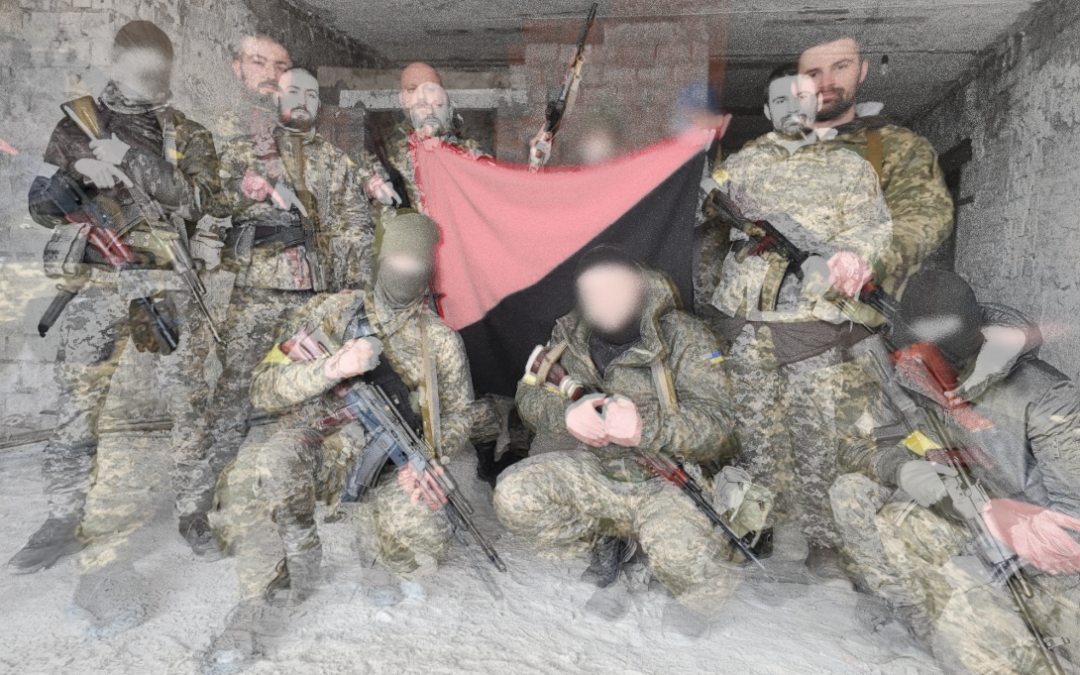
My focus here is on the fact that the war in Ukraine has drawn thousands of foreign fighters from regions affected by Russian imperialism. Beyond that, it has sparked widespread mobilization among those who oppose colonialism and stand in solidarity with colonized peoples. Thus, it mobilized both domestic and foreign RLAA networks more than any other conflict in the past three decades. Indeed, many left-wing political activists are being recruited into the Ukrainian army, volunteering, or are helping to assist and support both civilians and combatants on the front lines. The indigenous RLAA organization we hear most about is Solidarity Collectives (SolCol), a Kyiv-based initiative that has been coordinating solidarity efforts at the local and international levels since the start of the conflict. Their decision to fully participate in Ukraine’s community-based self-defense—given their reality and their genuine lack of choice as indigenous people directly threatened by Russian occupation and colonization—is politically courageous in a context where war abolishes all political freedom and suspends democratic rights. Furthermore, their choice to maintain a critical stance toward the established order and not to limit themselves to humanitarian action out of a concern for neutrality stems from a collective strength made possible by the effective support they have received from their Ukrainian, Belarusian, and Russian comrades exiled in Europe. This unwavering solidarity stands in contrast to the repeated attacks from several factions of the RLAA in Europe, which, in addition to producing wordy texts to cast discredit on SolCol's actions, have gone so far as to ban the collective from supposedly internationalist gatherings and events. The collective is thus prevented from explaining its position and from even having the opportunity to convince others of the righteousness of its actions. What is striking about this resort to the practice of “calling out” for political reasons is that it follows the same logic as counterterrorism, nullifying conflict and debate by ostracizing individuals or collectives and labeling them as internal enemies or aggressors from whom the community must be protected. But protected from what? From its own empathy? What this reveals is the inability of a large part of the contemporary RLAA to confront political contradictions and to engage in a conflict that might force it out of its comfort zone. It should be noted, by the way, that Ukrainian men of fighting age are prohibited from leaving Ukrainian territory, so SolCol’s sidelining from European political forums applies particularly to women, who already suffer from being colonized among the colonized. All this for what? Because SolCol does not judge or condemn its comrades sent to the front as traitors to their cause, and worse, provides them with equipment that slightly increases their chances of survival. The RLAA would prefer that all Ukrainian men hide in the forests of Transcarpathia while women bring them provisions at nightfall and their loved ones are crushed under bombs at home. What a lovely imagery of the maquis. In any case, the RLAA seems to have absolutely no idea what it means when your home region is struck by 600 suicide drones a day. Suffice it to say that in this situation, you don’t exactly have the luxury of writing texts questioning SolCol’s alleged complicity with NATO. I’ll stop my cynicism there.

There is no need to multiply the examples to assert that the European RLAA circles systematically miss the mark when it comes to supporting indigenous communities fighting for their independence or autonomy, or simply for their survival, especially if their struggle does not strictly adhere to the codes of 20th-century Marxist or post-Marxist guerrilla warfare—let alone anti-authoritarianism. Worse still, this left has consistently offered Putin the same kind of excuses that have allowed authoritarian and reactionary leaders such as Ali Khamenei, Hugo Chávez, Bashar al-Assad, Hassan Nasrallah, Ismail Haniyeh, or more recently Ibrahim Traoré—as well as other despots before them—to pass themselves off as champions of anti-imperialism under the pretext that they openly declare themselves enemies of the United States and Zionism. It should be noted here that this syllogistic thinking—the enemies of my enemies are my friends—is one aspect of what is known as campism. This line of reasoning is neither left-wing nor right-wing; it is either red-brown or simply politically confused.

War: A Definition

I promised to discuss war and community self-defense after providing an overview of the war zones that generally interest the European RLAA, so here we are.

As the saying goes, “war is the continuation of politics by other means.” This definition could not be more accurate, for it captures the complete inability of nation-states to resolve social conflicts through mediation and public consultation. War is the armed violence that emerges when dialogue has been rendered impossible. It therefore goes beyond conflict itself; rather, it is the negation or abolition of conflict by those who know no other way to communicate than through violence. It should be noted that this rarely begins with the targeted killing of a political leader, but rather with the opening of fire on civilians or military personnel who hold no decision-making authority. And this declaration of war is often accompanied by a sudden, even unexpected, movement of troops across a demarcation line separating two territories in conflict or against a population refusing to be oppressed. Thus, an occupation by force. If the military operation targets a foreign territory, it is a war. If it targets an indigenous population, it is either a massacre or counterinsurgency, with the massacre potentially accompanying counterinsurgency. If the targeted population resists with arms, it is self-defense or resistance. And if this resistance becomes organized over time and militarizes, it turns into a civil war. Finally, if the rebel groups thus formed depend on human or material support from a foreign state, they become proxies or mercenaries, and their struggle loses its legitimacy. If, on the other hand, they receive support from foreign non-military volunteers, it remains an act of international solidarity, even if the motivations and analyses of these foreign fighters are confused or mistaken.

If the question now is to distinguish between an act of aggression and a defensive response, there is certainly no need for lengthy deliberation to determine whether or not a state’s regular army has intervened on its own initiative on the territory of another state or against an indigenous community on its own territory. This is then a war of aggression. If, on the other hand, this army intervened to protect a community that is seriously threatened by armed groups or by the regular army of its country of residence and at its request—and thus not on its own initiative—then it is difficult to speak of aggression, but we can speak of interference. Finally, if the regular army of a state defends its territory against the intervention of another state’s army—and without invading the territory of that state in question—then this constitutes a response that can be considered legitimate. The question is not about who is right or wrong, or about distinguishing the good from the bad, because no war is just; rather, it is simply a matter of establishing who is the aggressor and who is the victim. And it is certainly not a matter of determining whether the victim provoked the aggressor, as that would lend credence to the aggressor’s rhetoric. Finally, armed intervention cannot be justified merely on the grounds of having been “provoked” if that “provocation” does not take the form of a prior act of violent armed aggression. The Ukrainian case helps illustrate this point: the Maidan uprising against Ukraine’s pro-Russian elites, or even the desire for separatism among ethnic Russians in eastern Ukraine, are in no way legitimate grounds for justifying Russian military intervention in Ukraine. If these communities had been the targets of ethnic violence directed against them by other communities in Ukraine or by the Ukrainian state, the question would be framed differently. But that is not the case.

In any case, from RLAA’s perspective— which has a pacifist and anti-militarist ethos—it is always necessary to condemn war regardless of its motivations. On the other hand, it seems entirely inappropriate to pass judgment on the acts of self-defense by populations directly impacted by these wars, particularly if the territory where they live has been the target of external aggression. One may despise Nations and Borders, but that does not change the fact that the peoples they enclose are bound to their territory by ties of interdependence that transcend the mere question of the nation-state.

Participation in the war effort or community self-defense?

Once we have agreed on this fairly basic definition of war, we can address the issues of community self-defense and self-determination, as well as pacifism. The examples from Ukraine and Syria detailed above will help illustrate my point. Both peoples are united by the similar fate they have endured: first, because they rose up in the early 2010s against the corruption and totalitarianism of the political system that had governed their daily lives for decades; and second, because the social conflict was quashed by the launch of military operations in which they were the primary targets. Suddenly, Ukrainians and Syrians woke up one morning to bombardment followed by the armed invasion of civilian residential areas. Finally, both people were killed through the use of Russian military forces, with Russia intervening exclusively to defend its geostrategic and economic interests. At this stage, the analysis is simple from the perspective of the targeted populations: their community is being targeted, their world risks being wiped off the map, and everything that makes up their lives can be destroyed overnight, just because one or another Empire benefits from it. This is an “imminent danger of death,” and the very notions of choice or consent are immediately nullified by the use of force.

It is at this very moment that the theoretical positions of the RLAA—from which we must exclude part of the anarchists and libertarian communists—become extremely problematic, because they are generally unable of taking into account the lack of choice and the state of necessity faced by the communities concerned, which alone then guide popular self-defense. Whatever one may think of war or weapons is relegated to the shelf of relics, which one can retrieve and polish as much as wished once the war is over. All well-meaning concepts of pacifism cease to have any place the very moment conflict has been abolished and replaced by a state of war. Since the outbreak of war in Ukraine, an army of campist and pacifist ideologues—often from the white middle class of Western Europe—has thus declared war on the indigenous people of Ukraine who have taken up arms against the Russian occupier, accusing them of being militarists and accomplices of imperialism, or even fascism. Beyond the outrageous nature of this criticism, which serves to harass and intimidate communities already affected by violence, terror, and grief, we see here one of the hallmarks of ethical relativism that plague Western European societies. By embracing this guilt-inducing rhetoric, the RLAA displays a narcissistic perversity that matches its lack of empathy and its detachment from colonial reality. For the RLAA, and especially some self-proclamed anarchists, only desertion and sabotage are legitimate means of action, confining its analysis to an intellectual straitjacket made up of mythological interpretations and historical fantasies, in which it would suffice for masses of Ukrainians to desert or sabotage the military machine for the war to end. Not only is this belief absurd, because it would result in Russia’s total occupation and ethnic cleansing of Ukrainian territory—as was the case in Chechnya and as is the case in Crimea and the Donbas—but also, and above all, it denies the fact that it is first and foremost up to the Russian people to desert and sabotage their state’s military machine. Why, then, are these attacks targeting Ukrainian resistance fighters if not to prop up Putin’s imperialism and dictatorship? If it weren’t so tragic, one might find it ironic that left-wing activists find themselves again on the same side as the European far right.

Is it truly pacifism that drives the critics of Ukraine’s “anarchists at war”—who, as we recall, are accused of “participating in the war effort”—or rather their refusal to support armed resistance and community self-defense if these do not strictly fit within the fantasized frameworks of revolutionary guerrilla warfare? Would they have harassed the fighters of the Durutti Column and the POUM in the same way during the Spanish Civil War against the Spanish fascists in 1936? Are they attacking the Kurdish socialist movement engaged on multiple fronts against Turkish fascists and Syrian, Iraqi, and Iranian Islamists? One might counter that the comparison does not hold, that the contexts are different, or that the Spanish Republicans and the Kurdish socialists did not join the regular army of a state, but defended projects of popular autonomy. Nevertheless, strictly speaking, both groups took up arms to defend their lands and homes, which were threatened with occupation, and were forced to make compromises in order to survive. The former participated in the Spanish government and thus made compromises with the USSR, while the latter received military support from the United States and Europe, while maintaining neutrality toward Assad’s army. People can think whatever they want about the Spanish social revolution of 1936 or the revolutionary project in Rojava, just as they can think whatever they want about SolCol’s political positions; the fact remains that all of them were or are equally threatened with extinction by the spread of fascism. In this case, it is no longer a question of being for or against war, but of fighting or dying as a human community on the one hand, and as a political collective on the other. This point is extremely important, because it pinpoints the fundamental problem that divides the RLAA even beyond the cleavages between violence and non-violence or between freedom and authority: the divide between individualism/libertarianism and communism/collectivism. The individualist stance defends only the deserter, while the collectivist position also defends the fighter. The second view considers individual action to be dependent on its impact on the collective, whereas the first is essentially libertarian: it takes into account only the preservation of a Self disconnected from others and views collective action merely as the sum of selfish decisions. Abstention/desertion may work against an opponent who seeks to defeat you at the ballot box, but not against an enemy whose victory means your crushing defeat or physical elimination by force. Abstention/desertion is an option in the realm of choice and democracy, not in the realm of coercion, tyranny, and war. Let’s take an example more familiar to these pseudo-pacifists of the European RLAA: demonstrations. As long as the police do not attack the demonstration, you can defend the non-violent stance of your choice, but as soon as it uses force against the radical activists on the front lines, what is the most appropriate or expected reaction from the latter? Flight or collective defense? It is certain that the near-unanimity of those who launch heated rhetoric against SolCol's so-called "militarism" also praises popular self-defense during demonstrations. Consequently, this clearly demonstrates that the pacifist and non-violent stance—which favors submission or flight over resistance—is a privilege of those who actually do not experience violence.

This text does not aim to over-legitimize or delegitimize either indigenous struggle, but to point out the contradictions and inconsistencies in the discourse of those within the RLAA and the DI who believe they can judge and condemn one side or the other from the couch of their community center located in the heart of Meloni’s Italy, Macron’s France, or Merz’s Germany. Before engaging in any theoretical considerations, one must first be able to analyze the power dynamics at play, as well as which parties to the conflict—and here I am referring to peoples, not states—are in the position of aggressors or victims. And if one has never experienced war, it is undoubtedly better to remain silent and express solidarity with the victimized and colonized populations, rather than waste time writing pamphlets to undermine them. You have the choice to remain silent; the indigenous people have no choice but to find the means of defense and survival available to them. At last, you can easily choose to support only deserters or resistance fighters—or even both - if you’re 1,200 kilometers away, but you cannot choose whether or not to be caught up in the war when you’re at ground zero.

About the author: Cédric Domenjoud is an independent researcher and activist based in Europe. His research areas focus on exile, political violence, colonialism, and community self-defense, particularly in Western Europe, the former USSR, and the Levant. He is investigating the survival and self-defense of Syrian communities and developing a documentary film about Suwayda, as part of the Fajawat Initiative.
From Camp Bucca to Mount Qasioun: how the US coalition paved the way for Al-Sharaa

From Camp Bucca to Mount Qasioun: how the US coalition paved the way for Al-Sharaa

Levant

by Cedric Domenjoud | Mar 20, 2026

The career of Ahmad al-Sharaa, aka Abu Muhammad al-Jolani, raises questions and fascinations, and since he seized power by force, many would like to see him as a providential man, a repentant jihadist who has become a pragmatic statesman. Reexamining his career through the prism of the power struggles and relationships that shaped the Syrian civil war opens up the possibility of another, less mythological view of the man.

Jabhat al-Nusra, a product of US detention camps

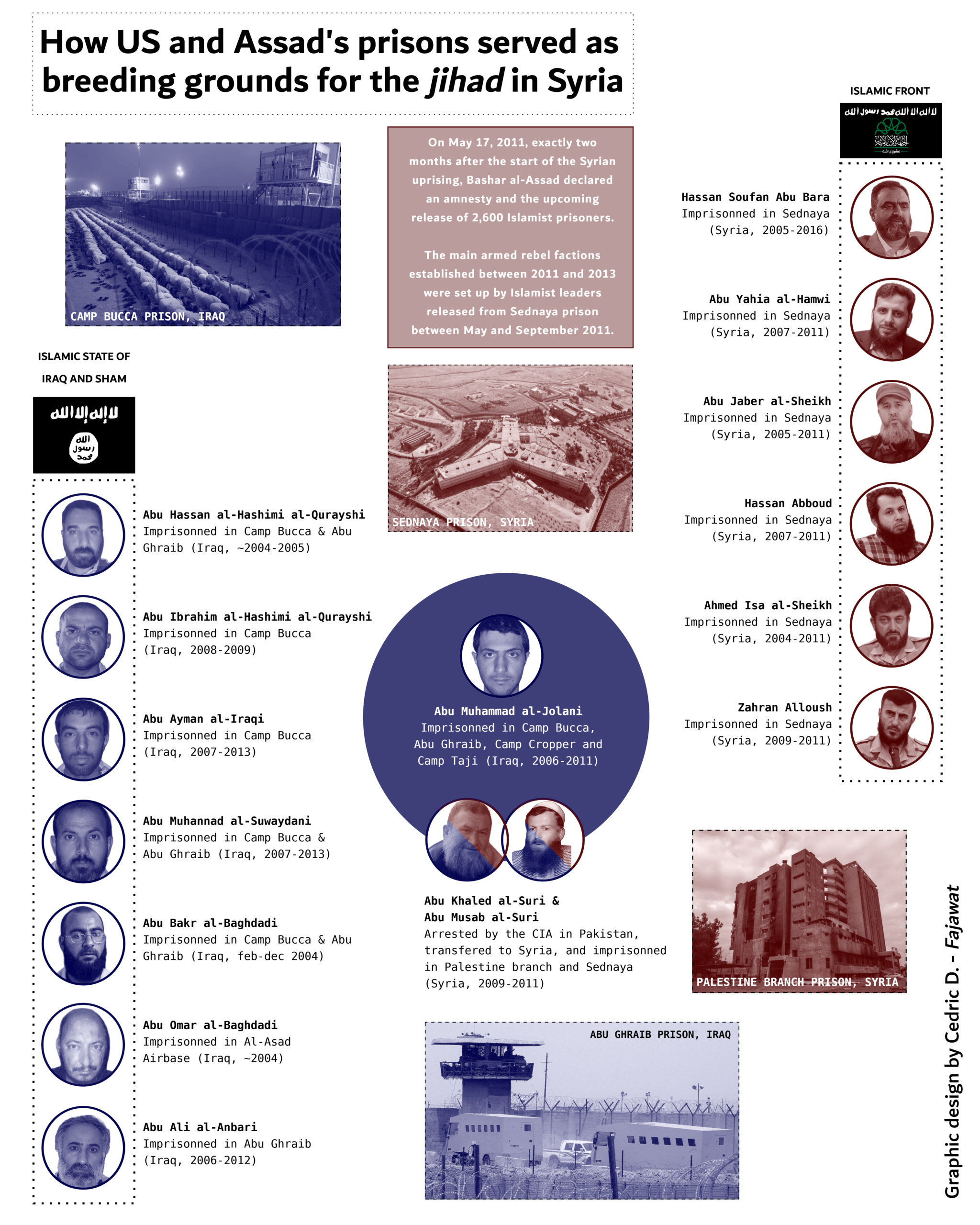
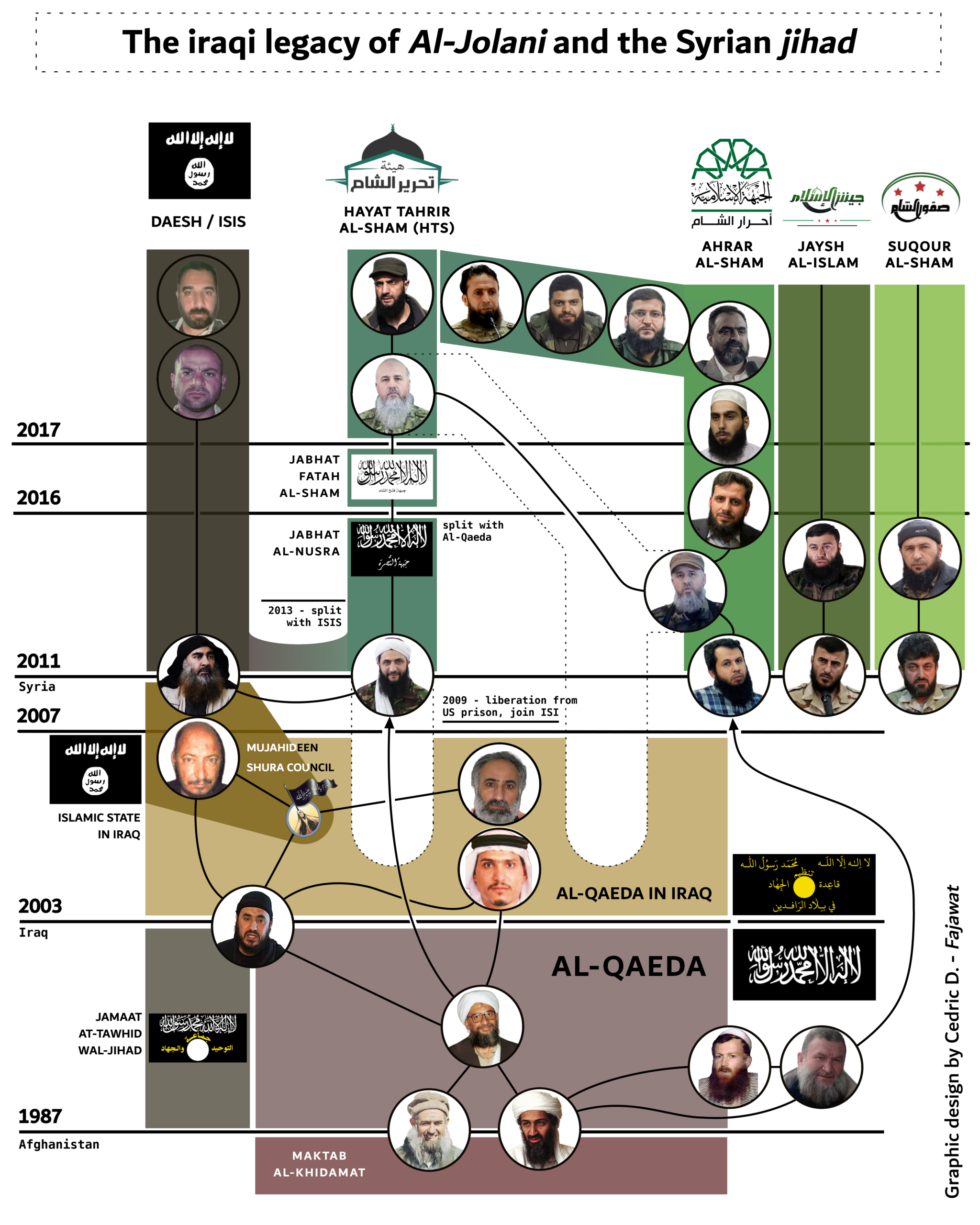
Abu Muhammad al-Jolani began his career at Camp Bucca, the detention facility (and incubator) for jihadists established by the US Army in 2003 near the port of Umm Qasr in Iraq. While he was just a young, inexperienced militant, possibly recruited in Damascus by the preacher Mahmoud al-Aghasi (Abu al-Qaqaa), he is believed to have been held in this prison between May 2005 and April 2010 alongside Abd al Rahman Mustafa al-Qaduli (Abu Ali al-Anbari), a Salafist ideologue close to the founder of Al-Qaeda in Iraq, Abu Musab al-Zarqawi, and favored by the organization's leadership as his successor. As such, Al-Anbari was what could be called a “leader maker.” While the circumstances and reasons for Al-Jolani's capture in Mosul remain unclear, it was behind bars—and through Al-Anbari—that he became someone of importance within the international jihad ecosystem. It should be noted that another of Al-Jolani's fellow prisoners was then knighted by Al-Anbari: former Iraqi military intelligence officer Fadel Ahmed al-Hiyali (Abu Muslim al-Turkmani / Abu Mutaz al-Qurayshi).

The latter became his accomplice and together they allegedly devised a plan to set up the Syrian branch of Al-Qaeda, a project that Al-Hiyali submitted for approval to the emir of the Islamic State, Abu Bakr al-Baghdadi, upon his release from prison in 2010. Consequently, immediately after his release on March 13, 2011 (when the Syrian popular uprising had just broken out), Al-Jolani was doubly endorsed by Ayman Al-Zawahiri—Bin Laden's deputy who became his successor three months later—and by Al-Baghdadi, to go and implement the Al-Qaeda branch in Syria. With a monthly budget of $60,000, Al-Jolani crossed the Syrian border into Hasakeh with six companions in July 2011, before meeting with several Salafist leaders who had been conveniently released from prison by Assad in the preceding weeks. Finally, after making its debut with a few bomb attacks on Syrian intelligence buildings in Damascus during the winter, the Syrian branch of Al-Qaeda was finally born on January 23, 2012, under the name Jabhat Nusrat Ahl al-Sham, or Al-Nusra Front. This is what you might call an operational project.

Assad and the Islamization of the Syrian rebellion

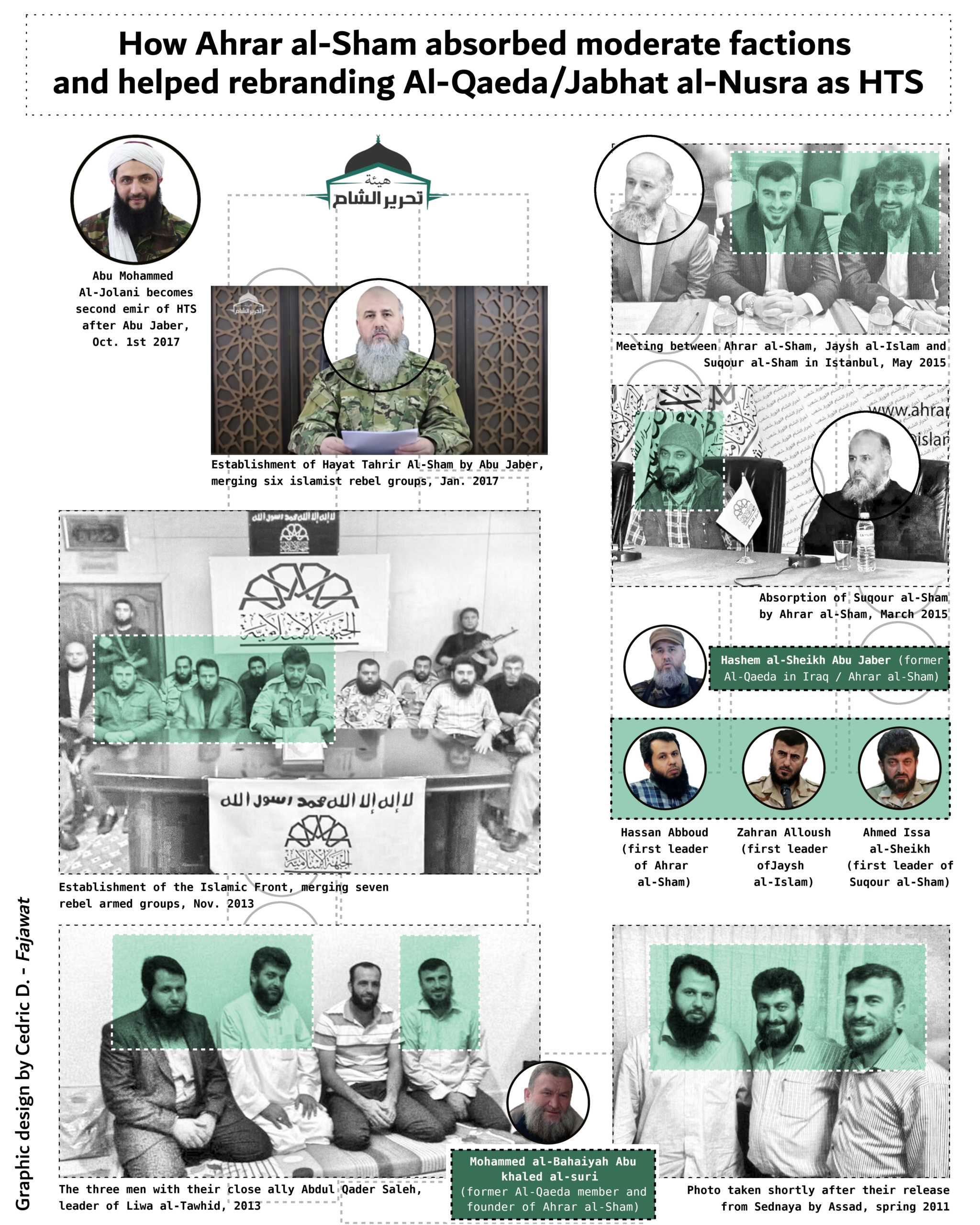
One might wonder about this surprising leniency on the part of the American and Syrian authorities, which led to the release without prosecution of dozens of Islamist leaders at the dawn of the Syrian uprising, on the pretext that their intelligence services were unable to identify them or pin any serious crime on them. Apart from Al-Jolani, those lucky ones include his mentor Abu Ali al-Anbari and Abu Bakr al-Baghdadi himself, as well as Abu Hassan al-Hashimi al-Qurayshi, Abu Ibrahim al-Hashimi al-Qurayshi, Zahran Alloush, Ahmed Isa al-Sheikh, Abu Khaled al-Suri, Abu Musab al-Suri, Hassan Abboud, Abu Jaber al-Sheikh, Abu Yahia al-Hamwi, Amer al-Absi Abu Atheer, Abu Muhannad al-Suwaydani, and Abu Ayman al-Iraqi. It is important to name them because, in the year following their release, they all became leaders of the most radical Salafist groups involved in the Syrian civil war, but also the fiercest competitors within the regional jihadist network. Let us add—and this is what will be of particular interest to us later on—that they are also the main architects of the fragmentation of the Syrian rebel forces, which was achieved through the radical purge of its most secularist and progressive components. At the head of this counter-revolutionary movement were Al-Jolani's Al-Nusra Front, Hassan Abboud's Ahrar al-Sham, Zahran Alloush's Jaysh al-Islam, Ahmed Isa al-Sheikh’s Suqour al-Sham and all the groups affiliated with Abu Bakr al-Baghdadi's Islamic State.

The empowerment of Jabhat al-Nusra

Just a few months after establishing Jabhat al-Nusra, Al-Jolani was already beginning to break away from his parent organization, prompting Al-Baghdadi to send his former mentor Al-Anbari to keep an eye on things. Al-Anbari exchanged several letters with the emir of Mosul to share his observations, and in one of them, his description of Al-Jolani is damning: "He is a sneaky person with two faces. He loves himself and does not care about the religion of his soldiers. He is willing to sacrifice their blood just so he is mentioned in the media. He flies with joy like a child when his name is mentioned on TV channels." In 2013, the split between the Al-Nusra Front and Islamic State was complete, while Al-Jolani maintained a tactical cooperation with the seven main Syrian Salafist organizations grouped within the Islamic Front (Ahrar al-Sham, Suqour al-Sham, Jaysh al-Islam, Liwa al-Tawhid, Liwa al-Haqq, Ansar al-Sham, and the Kurdish Islamic Front), despite their differences over the relationship to be maintained with Turkey. It was this last point of disagreement that led part of the leadership of Ahrar al-Sham, at the time Jabhat al-Nusra's main rival, to defect and align itself with Jabhat al-Nusra between 2014 and 2015. This was particularly the case for Abu Jaber al-Sheikh, whom we will discuss further below. At the same time, Al-Jolani thoroughly crushed the driving forces of the Syrian revolution, starting with the Syrian Revolutionary Front, the Hazm Movement, and the 13th Division of the Free Syrian Army, gradually strengthening his hegemonic position within the armed opposition to the Assad regime.

Foreign intervention, localization, and rebranding

The year 2015 marked a turning point. The Islamic State expanded rapidly on the fertile ground of the combined counterrevolutionary actions of the Assad regime and of Jabhat al-Nusra, which enabled it to seize the province of Idlib and the Palestinian camp of Yarmouk on the outskirts of the capital that same year. This second victory was also the result of a temporary tactical alliance with the Islamic State, the strategic implications of which remain unclear to this day, unless we consider that it was mainly a matter of removing the Free Syrian Army and the Islamic Front (already in decline) from the front line with the regime's forces. It should also be noted that prior to the Islamic State's takeover of the camp, Jabhat al-Nusra had prepared the ground by methodically assassinating nearly fifteen Palestinian community leaders and civil society activists. But the pivotal event that year was the Russian military intervention in the fall, which would allow Assad to recapture Aleppo and push Al-Jolani to adopt a whole new strategy to keep Idlib in the face of the rapidly deteriorating situation. It should be noted that at the time, one of the main threats to Jabhat al-Nusra was the potential cooperation between the United States and Russia to eradicate it, as would soon show the memorandum of understanding the two powers signed on October 20, 2015, in the name of fighting ISIS. It was therefore necessary to prove one's credentials in order to benefit from the support of states allied to the United States, in particular by rallying rebel groups that had hitherto been reluctant to associate themselves with an organization affiliated with Al-Qaeda and therefore with international jihad. Thus, Jabhat al-Nusra reconciled with Ahrar al-Sham to seize control of Idlib, forming an alliance backed by Saudi Arabia, Qatar, and Turkey, before officially dissociating from Al-Qaeda and rebranding itself as Jabhat Fatah al-Sham on July 28, 2016. The change was to be accompanied by a merger with Ahrar al-Sham, but Al-Jolani's proposal to this effect was rejected.  Everything comes in its own time.

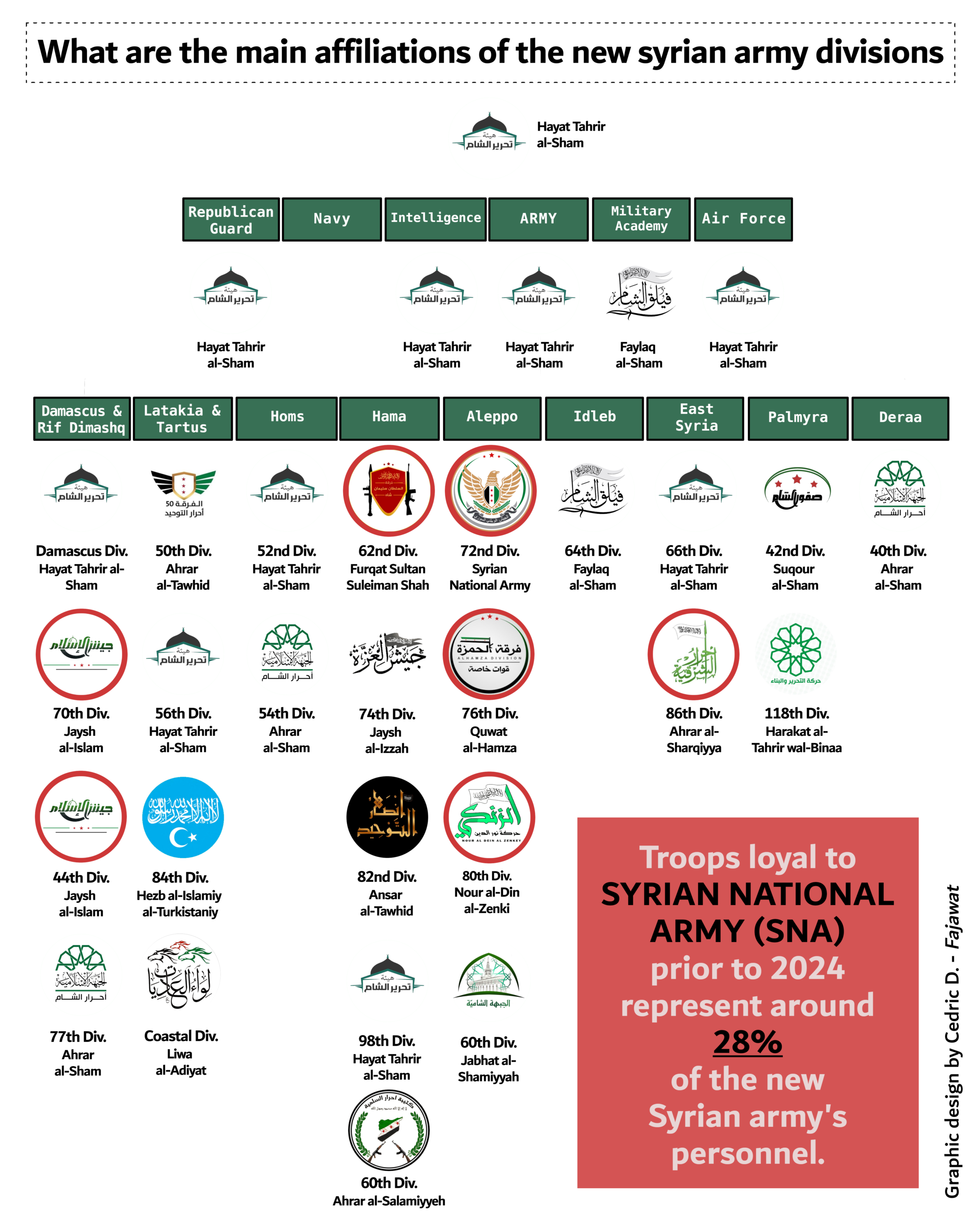
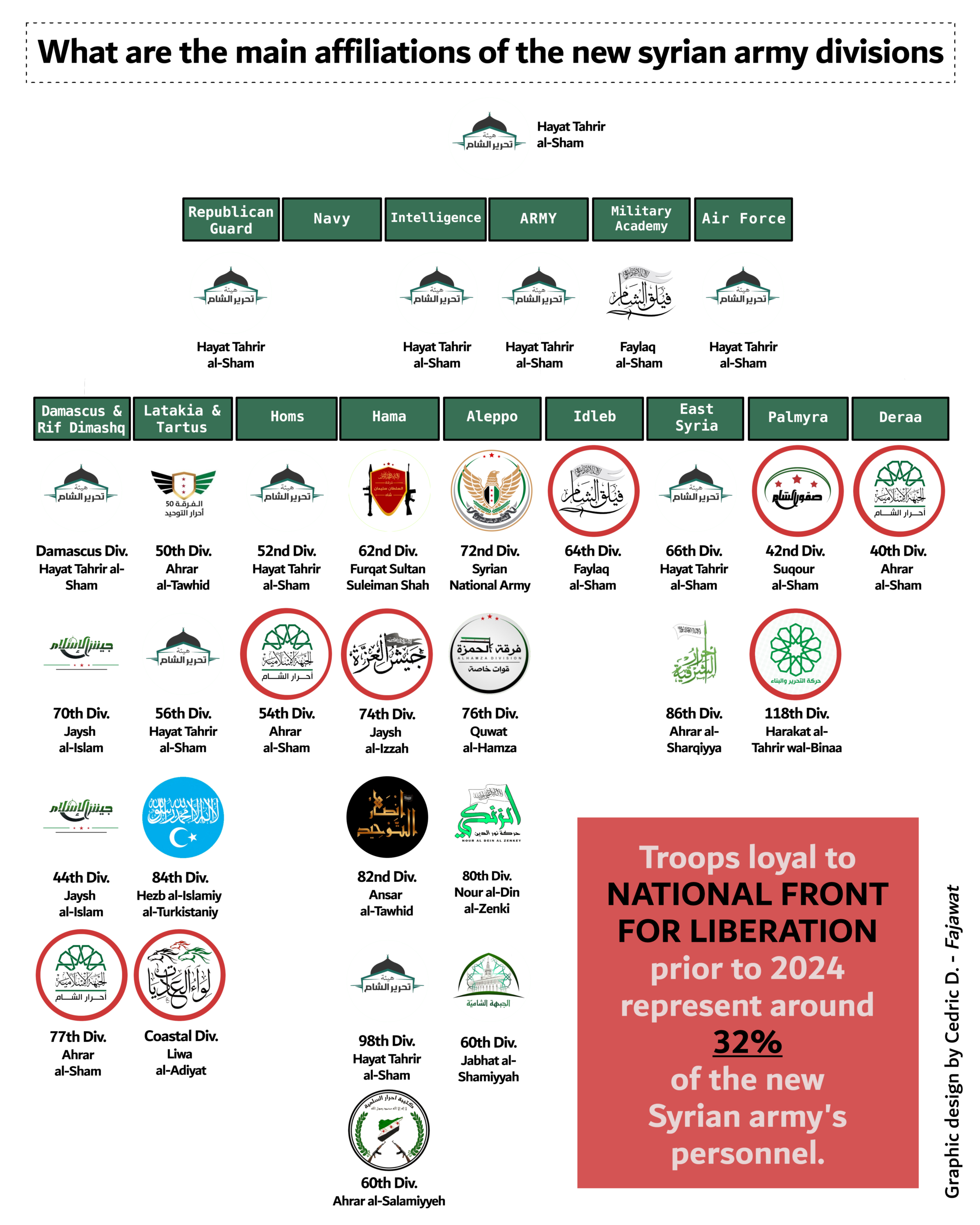
It was from this moment, coinciding with the launch of the Astana talks initiated by Russia and the Turkish Euphrates Shield offensive (August 2016–March 2017) leading to the occupation of northern Syria by a coalition of rebel forces under Turkish leadership, that Al-Jolani began to claim allegiance to the Syrian revolution and to offer guarantees of “deradicalization” allowing him to navigate between the various foreign powers involved in the civil war through their numerous proxies. The opposition in exile, embodied by the Syrian National Coalition and the Syrian Interim Government (SIG), was funded by the United States to the tune of tens of millions of dollars and would give rise a few months later to the Syrian National Army (SNA), an alliance of 28 factions, 21 of which were supported and armed by the United States via a joint operations room based in Azaz and controlled by Turkey. Although the historical rivals of Jabhat al-Nusra, aka Jabhat Fatah al-Sham, were now included in the Turkish-American project, Al-Qaeda's controversial heir did not yet seem quite ready to embody the “Syrian revolution” as defined and specified by the Coalition. The split with Al-Qaeda was still too recent to be credible in the eyes of most Syrian rebels, especially given that it was carried out with the approval of several prominent Al-Qaeda figures, namely Ahmed Hassan Abu al-Khayr, Abu Muhammad al-Maqdisi, and Abu Qatada al-Falastini. Some sources claim that even Ayman al-Zawahiri himself endorsed this tactical choice.

The hand of Ankara, the elbow of Astana, and the shoulder of Washington

In any case, Al-Jolani methodically placed his pawns on the chessboard, with the aim of becoming the hegemonic leader of a Syrian rebellion in which he had to neutralize both the most uncontrollable elements on his right flank, namely the takfirists without lasting allegiance, and the more moderate factions on his left flank. While the former tended to cluster around Jabhat al-Nusra / Jabhat Fatah al-Sham, the latter had gradually moved closer to Ahrar al-Sham, whose leader Abu Jaber al-Sheikh had just created Jaysh al-Ahrar in December 2016 by incorporating sixteen local factions not yet affiliated with Jabhat Fatah al-Sham. All that remained was to merge the two, which was almost entirely accomplished just one month later with the creation on January 28, 2017, of Hayat Tahrir al-Sham (HTS), whose command was entrusted to this same Abu Jaber al-Sheikh. This appointment of a supposed adversary to lead his own troops, as well as the merge of Ahrar al-Sham into a short-lived entity that lasted merely a month (Jaysh al-Ahrar), strongly suggests that Al-Jolani had reached a prior agreement with Al-Sheikh. The question that remains unanswered is: how long had this been brewing? What is certain is that the reluctant ones of Ahrar al-Sham were subsequently rendered powerless during the summer, when HTS imposed its armed sections in all the localities where the group was still established and its remnants were forced to cede the border crossings with Turkey that had been under their control until then, including that of Bab al-Hawa, which for years served as a crossing point for Salafist fighters coming from Europe with Turkish backing. Finally, in the fall of 2017, more than 30 Salafist hardliners more or less officially affiliated with HTS were assassinated, or arrested by HTS, while Al-Sheikh ceded his position to Al-Jolani and took over as head of the Shura Council, the advisory body that traditionally surrounds the caliph. Al-Sheikh was known for being a supporter of “popular jihad” a form of Islamist populism that prioritizes the support of the people over the establishment of a caliphate (Islamic State). It should be noted that Al-Jolani subsequently established the Syrian Salvation Government to supplant the Syrian Interim Government supported by his competitors (and until then by the United States), before completing the crushing of the latter between 2018 and 2019. By early 2019, the HTS government controlled the entire province and was therefore able to begin playing politics. It finally seemed ready to rule with the approval of the Coalition.

Even though the United States and Turkey may have disagreed on strategy, particularly regarding the management of northeastern Syria and the attitude to adopt towards ISIS and the YPG/SDF, they nevertheless constitute the two cornerstones of the International Coalition in Syria and, as such, must be considered allies on the Syrian issue. When the Coalition ended its intervention in 2019 and the United States withdrew its support for the SDF, Turkey certainly had more freedom to act, but its actions continued to be negotiated with Washington. After promoting—intentionally or unintentionally, only the future will tell for sure when the archives are declassified—the emergence of a multitude of Salafist groups contributing to the fragmentation of the Syrian rebellion between 2011 and 2015, the Coalition was now steering its gradual deradicalization. This development appears to be the culmination of Turkey's takeover of HTS. Throughout the twelve meetings with Russia and Iran in Astana and Sochi between 2015 and 2021, Turkey actively worked to expand its influence and military presence in Syria, by invading the entire area northwest of Aleppo between 2016 and 2018, then by establishing de-escalation zones and a buffer zone in Idlib. The Turkish military presence in Idlib—legitimized by the defense of its 12 observation posts, which were gradually surrounded by regime forces between December 2019 and February 2020—was therefore quickly “imposed” on Al-Jolani.

Turkish forces deployed at this fateful moment to form a protective belt around the rebel forces, which were still insufficiently unified and therefore too vulnerable to offensives by the regime and the Russians. The name of the Turkish operation, “Spring Shield,” is very significant in this regard, and marks a major turning point that allowed the Idlib pocket to hold out and HTS to definitively establish its dominance over the region. This Turkish patronage, accompanied by funding for major reconstruction and development projects and the establishment of civil institutions, enabled the beylerbey Al-Jolani to calmly organize the administrative takeover of the province, thereby setting up a rudimentary state apparatus and gaining access to the threshold of power in the spring of 2023. In May of that year, he therefore publicly announced his intention to retake Aleppo, describing the city as the gateway to Damascus.

The red carpet to Damascus

On December 8, 2024, a broad alliance of rebel groups led by HTS seized power by force of arms and placed its leader at its head. This is what is known as a coup d'état. The day before, the final act of the Astana talks took place in Doha, Qatar, in the presence of five Arab countries and those presented as the three great enemies: Turkey, Russia, and Iran. Unsurprisingly, they agreed on a cessation of hostilities, coinciding with a halt to Russian bombing, as well as a total withdrawal of Hezbollah and Iranian Revolutionary Guard Corps fighters, but also of all the regime's armed forces, which, as we know, have massively thrown down their uniforms before heading back home. During the night, the Assad clan flew out along with the regime's chief negotiator in Astana, Bashar Jaafari, while sunni Prime Minister Muhammad Ghazi al-Jalali obtained a guarantee of amnesty. Before 4:30 a.m. on December 8, when the last flight departing from Damascus airport disappeared from radar just before reaching the Russian air base in Hmeimim (Tartus), more than fifty regime officers had vanished. In the evening, the Kremlin announced that Assad had taken refuge in Moscow with his family and that the matter had been settled. Thus, an escorted exit route was discreetly negotiated between the parties to the conflict with Russian mediation, like when HTS and Islamic State fighters were evacuated from Yarmouk by bus by the regime in spring 2018. Same actors, same methods.

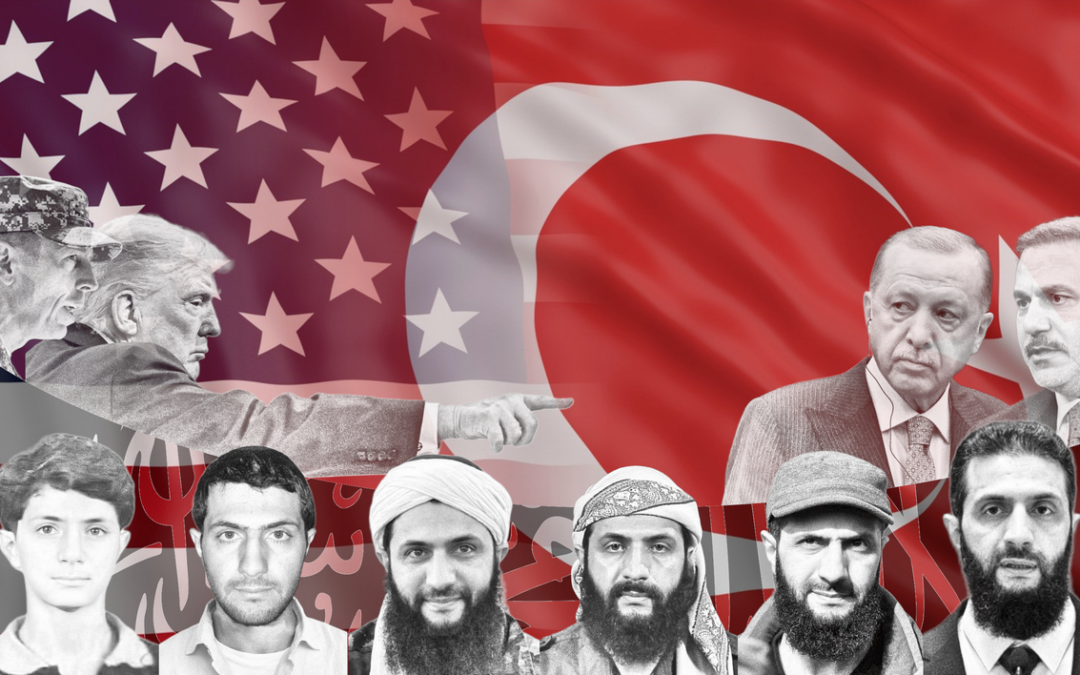
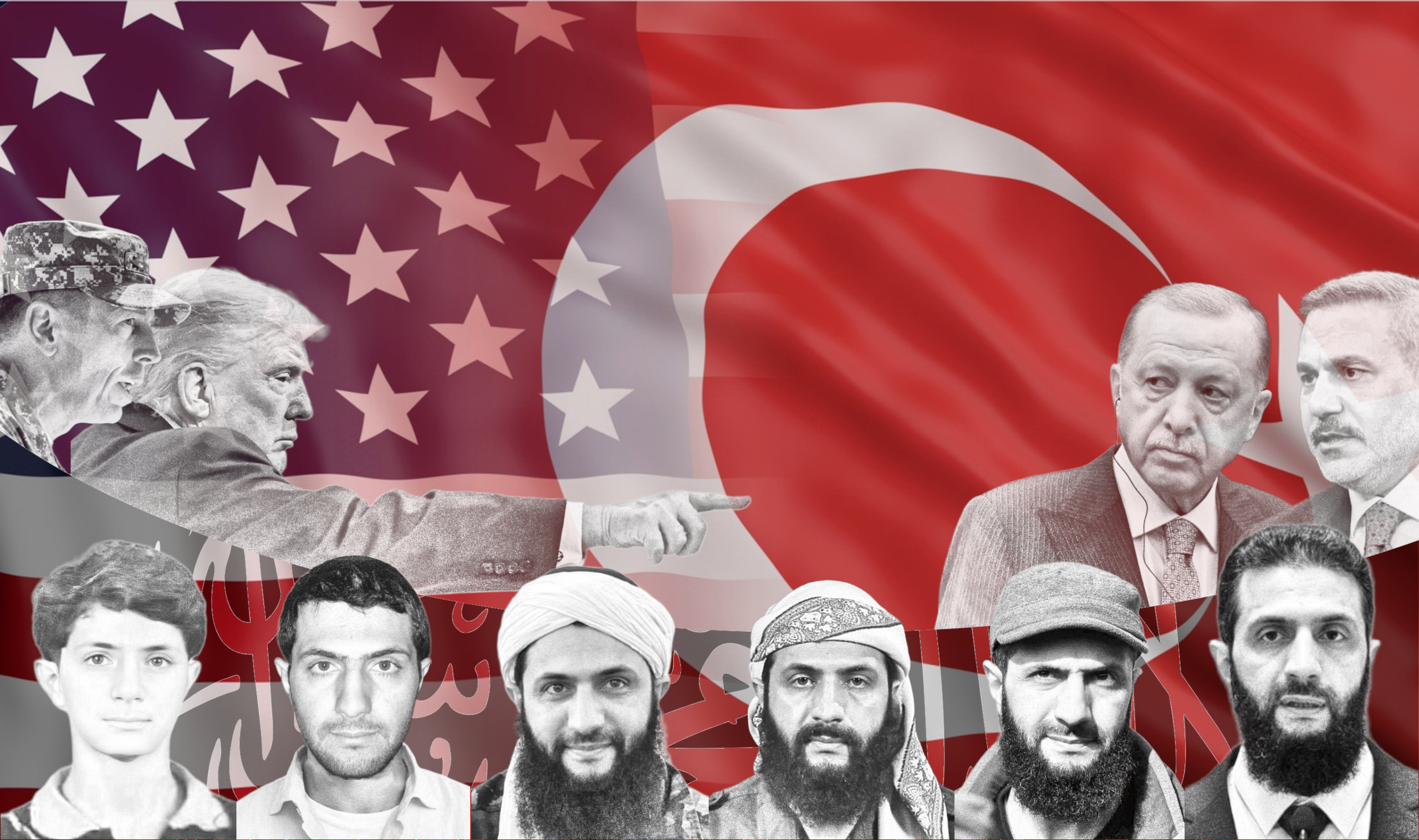
Four days later, the head of Turkish intelligence (MIT) İbrahim Kalın was the first foreign delegate to visit Damascus where he prayed at the Umayyad Mosque and met Al-Jolani, followed ten days later by his predecessor (2010-2023) and current Turkish Minister of Foreign Affairs Hakan Fidan. Al-Jolani and his patron were shown together drinking tea on the terraces of Mount Qasioun, which had been off-limits to the Syrian people since the 2011 uprising. The message could not have been clearer: if HTS's path to Damascus was not blood-stained, it was because a red carpet had been rolled out beforehand by Erdogan's agents with the consent of the other imperialist powers, including Iran. This is what Donald Trump would call a “good deal.” Indeed, the US president was very transparent about it during his first press conference since his reelection, on December 16, 2024: "Turkey's the one behind it. He's [Erdogan] a very smart guy, they've wanted it for thousands of years, and he got it, and those people that went in are controlled by Turkey, and that's OK, it's another way to fight [...] Nobody knows what the final outcome is gonna be in the region. Nobody knows who will rule in the end. I believe it is Turkey. Turkey is very smart, he is a very smart guy and he’s very tough. Turkey did an unfriendly takeover without a lot of lives being lost.”

All these undisputed facts lend credence to the claim that Al-Jolani and his companions are long-standing partners of Turkish intelligence, even though there is no evidence to suggest that this link predates the creation of Jabhat Fatah al-Sham in 2015. The only existing source is the exiled Turkish journalist Abdullah Bozkurt, who claims that Anas Khattab has been linked to MIT since the beginning of the civil war. It is noteworthy that this journalist has been the target of several threats, attacks, and legal proceedings by the Turkish state for this reason, which has also pressured the Swedish government to shut down his research center Nordic Monitor, to no avail. With the necessary hindsight and without giving in to conspiracy theories, we are still entitled to consider that Al-Nusra and what it spawned after it are in fact the fruitful result of the Coalition's strategies in the region. This seems to have been confirmed by the former Commander-in-Chief of US forces in Iraq and then Director of the CIA, David Petraeus, when he warmly praised Al-Jolani's career with these words on September 22, 2025: "Your vision is powerful and clear. Your demeanor is very impressive as well ...We obviously hope for your success, Inshallah, because at the end of the day, your success is our success.” This surreal scene took place at the Concordia Annual Summit, a conservative forum that has been held annually since 2011 with the aim of “Building Partnerships Against Extremism” (sic). In a carefully orchestrated staging in which Petraeus interviewed Al-Jolani, the latter was cordially invited to deploy his “post-jihadist” seduction game on the eve of his historic speech at the United Nations. The enthusiasm of a bridgehead of Western imperialism for the bloody achievements of a Salafist warlord on the list of “specially designated global terrorists” may seem surprising, and the lack of resonance that his statement had in the international press is up to par with the leniency of the international community in the face of Donald Trump's destructive madness. But that is undoubtedly another matter. To understand the unexpected nature of his praise, it should be noted that David Petraeus is known for having been the architect of the counterinsurgency strategies implemented in Mosul in the first year of the war. His fieldwork led him to revive the teachings of David Galula, a French army officer and torturer in Algeria who, in 1962, wrote the seminal work on psychological warfare, ‘Counterinsurgency: Theory and Practice’. Petraeus even wrote the preface to its 2008 French reissue, after publishing his own ‘Counterinsurgency Field Manual’ (FM 3-24) and even as the scandal of the abuse inflicted by the US Army on prisoners at Abu Ghraib had just placed the practices of the US Psychological Operations Teams (PsyOps) on the same level as the atrocities committed by their enemies, each thus becoming the other's terrorist. What we must remember is that Petraeus is the man who “unwittingly” arrested the bomber Al-Jolani in Mosul, before offering him a stay in the jihadist breeding ground of Camp Bucca.

“Ahmad Al-Jolani,” or the success of counterinsurgency

But what success is Petraeus talking about? To answer this question, we need to look at how Al-Jolani has been portrayed by experts and journalists since he took power. Driven by a kind of collective fascination with his character, many analysts seem to agree that the new “interim president” has become “deradicalized”—a term borrowed from the jargon of counterterrorism—over the past decade, and that this process has been the result of a gradual realization of the futility of his previous actions. Reading their comments, it is easy to be convinced that Al-Jolani, the jihadist turned statesman, is a kind of self-made man, a success story promoted in particular by the states that seem to have sponsored him since 2013. But more than just personal self-examination, we are led to believe that this individual process was accompanied as well by a collective realization on the part of his early companions, notably Anas Hasan Khattab (nom de guerre: Abu Ahmad Hudoud), Asaad al-Shaibani (Abu Ammar al-Shami or Zaid al-Attar) and Abd al-Rahim Attoun (Abu Abdallah al-Shami).

Once “most wanted terrorists,” they all would have transformed themselves into skilled strategists and can now be considered pragmatic leaders, their day-to-day management activities in Idlib having suddenly enlightened them to the need to demonstrate Sunni national populism rather than dogmatic Salafist intransigence. Experts cite the writings of renowned Islamologist Olivier Roy on political Islam to explain to us—and no doubt to reassure themselves and the rest of the world who was already comparing Syria to Afghanistan—that radical Islam is doomed to moderation when it finds itself in a position of having to run a state. The media were also quick to ask the rhetorical question, “Has Ahmad Al-Sharaa ceased to be a jihadist?”, even though no one seems to know anything about the man’s biography.

It should be noted that Al-Jolani's true identity was only revealed in the mainstream press after December 5, 2024, following the publication on the HTS Telegram channel of a message congratulating the people of Hama on their liberation and signed with his name, which was picked up by Reuters and the Saudi channel Al-Arabiya. Prior to that, only one TV interview given in February 2021 to journalist Martin Smith for the American PBS program Frontline had publicly mentioned his real identity. The previous TV interview, given eight years earlier to Al-Jazeera journalist Tayseer Allouni, had revealed neither his identity nor his face. It came at just the right moment, as the Islamic State—in rapid ascendance—was attracting hundreds of defectors from Jabhat al-Nusra, forcing Al-Jolani to find new strings to his bow. Like Bin Laden before him, the warlord was able to count on the Qatari channel—and its sympathetic journalist—to offer him a platform. Appearing from behind, he spoke of his rejection of the Geneva talks initiated by the United Nations, arguing that no one had “authorized its participants to represent the people” (sic), and sent a signal to Saudi Arabia to reevaluate its investment in the Syrian conflict.

Between the two interviews, Al-Jolani finally revealed his face during the announcement of the creation of Jabhat Fatah al-Sham on July 28, 2016, in which he appeared alongside ideologue Abd al-Rahim Attoun and Ahmad Salama Mabruk (Abu Faraj al-Masri), one of Al-Qaeda's most aggressive leaders and very close to Ayman al-Zawahiri and his brother Mohammed al-Zawahiri. It should be noted that, as a key figure in Al-Qaeda, Abu Faraj al-Masri's tactical expertise was undoubtedly crucial in the context of such a major reorganization of Jabhat al-Nusra, and his presence symbolized Jabhat Fatah al-Sham's continuing links with the wider Al-Qaeda network, even as the group sought to give assurances of moderation by distancing itself from the official structure of its parent organization. This undeniably reveals a highly controlled communication plan, accompanying a long-term reactionary or counter-revolutionary strategy, in which each public appearance consists of gaining support and backing by offering assurances of good faith to the international community without losing the support of followers and fighters. But these appeals are primarily aimed at states, not other components of the Syrian rebellion. This, at least, is how we should understand Abu Muhammad al-Jolani's fleeting appearances at key moments in the evolution of the political project he was part of, his gradual emergence from the shadows corresponding to the gradual normalization of his organization and its official recognition, followed by the confirmation of his candidacy to succeed Bashar al-Assad. And this project had already begun in December 2013, just eight months after his break with Al-Qaeda in Iraq, aka the Islamic State. Surprisingly quick timing.

If a jihadist is not dead, it means he can still be useful

Abu Faraj al-Masri, after playing his role as Al-Qaeda's guarantor during the creation of Jabhat Fatah al-Sham, was killed by a US drone strike three months later, on October 3, 2016, in the heart of the Turkistani Salafist stronghold of Jisr al-Shughour (Idlib). This very timely death echoes the assassinations of more than a dozen leaders representing the radical wing of HTS in the fall of 2017 and the more sensational assassination of one of Al-Jolani's six first companions, Abu Maria Al-Qahtani, on April 4, 2024. These Al-Nusra veterans, all in conflict with Al-Jolani due to the gradual transformation of their movement under the influence of the major imperialist powers—notably Turkey—were in fact swept away one by one in the whirlwind of highly targeted and precise drone strikes and bombings that effectively rid Al-Jolani of all potential obstacles to his hegemonic conquest of power. The question that should have been legitimately asked at the time was: Why did Al-Jolani survive two decades of counterinsurgency and counterterrorism—two terms that often mean the same thing—carried out jointly by the NATO coalition and the RSII coalition?

Above all, why has the unanimous and almost obsessive focus on ISIS been the subject of so little critical analysis and suspicion on the part of experts and journalists of all stripes, while Jabhat al-Nusra and its ‘turkistani’ mercenaries were gaining significant leverage without being seriously targeted? All parties to the conflict, including the Assad regime and its Iranian ally, have yet legitimized their violence by claiming to be fighting Islamist terrorism, even though they have either financed or exploited Salafist groups to turn the chaos in Syria to their advantage, often in highly fluctuating ways and on a very local scale. If the Syrian civil war is so complex, even impossible to understand, it is because no binary analysis is valid, and any attempt to identify clear alliances or converging interests between two sides on a national or regional scale is doomed to failure. Thus, two parties to the conflict such as Russia and the United States have been able to find points of agreement in sharing the sky above the desert to bomb ISIS or in protecting the border to Jordan and Israel from Iranian militias, while fighting each other through their proxies in the north, even though Russia was US-designated evil Bashar al-Assad's main supporter. At the same time, Russia intensively bombed Turkey's proxies while conducting joint patrols with the Turkish army along the M4 highway between Saraqib and Jisr al-Shughour. Finally, following the same opportunistic logic which is far removed from any ethical or partisan considerations, the Gulf States, Turkey, Jordan, and the United States have cooperated in the four-year Timber Sycamore program aimed at arming and training more than 50 Syrian rebel groups—including the most extremist ones as well as factions fighting each other—while keeping many of their leaders on terrorism watch lists. It should be noted that this program, endorsed by Barack Obama following active lobbying by King Abdullah II of Jordan and Benjamin Netanyahu, was initiated in 2012 by above mentioned CIA Director David Petraeus. While it is true that the weapons supplied easily fell into the hands of Jabhat al-Nusra, as Trump himself admitted in July 2017, it remains difficult to assert that the group or its successors received direct support, although it was claimed by the Kurdish media outlet ANF News in January 2018 based on the confessions of two Turkish MIT agents captured by Kurdish forces a year earlier.

Why, then, was the undisputed leader of Jabhat al-Nusra, who led Al-Qaeda's offshoot for thirteen long years while all of Al-Zawahiri and Al-Baghdadi's lieutenants were assassinated one after the other by surgical strikes carried out in the heart of rebel areas, spared? Why has this mysterious jihadist, with a $10 million bounty on his head, been consistently—but covertly—supported by US allies for at least ten years? Why, finally, is this uncompromising warlord, who has thoroughly wiped out all the rebel groups most in tune with the values of the Syrian revolution, suddenly being presented as the hero of that revolution, while being supported by the most reactionary and sectarian segments of Syrian society? The answer seems fairly obvious: Abu Muhammad al-Jolani is much more of an object than a subject. He is not the master of his own destiny, as his supporters would like him to be. He is merely what Ezzat Baghdadi—an independent diplomat and director of the KMT Center—calls “the man of the hour,” “neither savior nor author of a comprehensive program, but a mediator between chaos and the minimum acceptable.” The latter wrote on his Facebook page: "Al-Jolani's project does not sell a comprehensive political program, does not promise a modern state, and does not demand full sovereign recognition. What he proposes—and what is asked of him—is simpler and more pragmatic: reducing risks. Reducing the risk of security explosions, limiting the export of violence beyond borders, controlling the multiplicity of factions, and offering a single point of contact instead of a multitude of chaotic addresses. In a failed world, this is an attractive offer. […] In such a climate, the “political solution” is no longer a prerequisite for any negotiation, but simply not collapsing becomes the criterion for success. This is the real translation of a phrase we have heard repeatedly from diplomats in closed-door meetings: “Stability takes precedence over democracy.” And Al-Sharaa is in line with this requirement, as he does not open any difficult issues: no transitional justice, no restructuring of the state, no promises of major investments. He presents himself as a temporary political operator, capable of keeping the crisis below the critical threshold. This is not a project, it is a calculated postponement. […] Selling risk reduction is not a solution. But it becomes acceptable when the ability to finance solutions collapses. This is where the moral and political paradox lies: what seems rational in the short term accumulates higher costs in the long term. Because crisis management prolongs its duration, exhausts political time, and delays the reconstruction of a unifying legitimacy. That is why describing Al-Sharaa as “the man of the hour” does not mean conferring historical legitimacy on him, but rather placing him back in his functional role: the product of a global moment that buys time instead of a future and prefers to manage risks rather than confront them. Ahmed al-Sharaa is not the solution for Syria, but a sign of a world that is learning to coexist with crises rather than end them. His existence is linked to the persistence of the current phase, and his end will come as soon as a less costly and more sustainable alternative appears. Al-Jolani is ultimately no more than a racehorse”.

Conclusion

The question of whether Abu Muhammad al-Jolani has ceased to be a jihadist and whether he has been “deradicalized” distracts us from the issue that should concern us all more after half a century of dictatorship: was he democratically elected by the Syrian people, and how does he differ from Bashar al-Assad in this regard? As Ezzat Baghdadi so aptly puts it, it is not a question of Syrians continuing to manage a crisis that has lasted for decades, but of finally achieving what they aspired to when they took to the streets in 2011: social justice and democracy. In other words, a political solution, which means that no peace can be satisfactory unless it is accompanied by a robust transitional justice process. Therefore, a “Trump-style peace” that only allows foreign powers to plunder the country's resources and militarize the territory without ensuring security and equality for all Syrians before the law is not even a temporary solution; it is a guarantee of a new catastrophe in the very short term, of which the massacres on the coast and in Suwayda were only a harbinger. If Al-Jolani is a model of success for world leaders, it is because he resembles them: he is an opportunist who exploits the people's aspirations to serve the interests of his sponsors, as well as his own and those of his clan. After all, his father's cousin, Farouk al-Sharaa, was Bashar al-Assad's vice president, so the status quo he represented required that a member of the family take over and, if it makes him happy, appoint his own brother as secretary to the presidency. In conclusion, one can wonder whether the self-proclaimed president was ever truly a jihadist, or if he was nothing more than just another social climber in the great pantheon of tyrants. In any case, until Ahmad al-Sharaa is democratically elected by a majority of Syrians, including all Syrian communities, it is appropriate to continue referring to him by his nom de guerre: Abu Muhammad al-Jolani.

2025: The deliberate massacre of Syria’s Druze

2025: The deliberate massacre of Syria’s Druze

Levant

by Cedric Domenjoud | Feb 11, 2026

This article was written as part of an investigation into crimes committed in Suwayda during July 2025. It reflects only some of the findings and will be updated at a later date. For more information, visit the page dedicated to our investigation project: https://interstices-fajawat.org/our-projects/investigation-project/

Between July 13 and 21, 2025, the Syrian province of Suwayda in southern Syria was subjected to military aggression by armed groups affiliated with the Syrian de facto authorities, resulting in the deaths of more than 930 civilians and 550 Druze and Christian fighters. While this operation was widely presented as an intervention aimed at restoring order following inter-communal clashes, an in-depth analysis of the causes and circumstances of these events reveals a very different reality and highlights the full responsibility of Ahmad al-Sharaa's non-elected government in what must be considered a war crime.

Context

On December 9, 2024, the day after Bashar al-Assad fled to Russia, Ahmed al-Sharaa (nom de guerre: Abu Mohammad al-Jolani) proclaimed himself head of the Syrian state, categorically rejecting any form of power sharing, decentralization, or federalism, while demanding that all armed groups lay down their arms and join the new national army, placed under the command of dozens of Islamist warlords appointed at the end of December to the highest positions in the army, including several foreign jihadists.

Along with the Kurds, the Druze are the only communities in Syria that enjoy both a form of autonomy within a specific territory and significant armed forces dedicated to the self-defense of their community on ethno-confessional or political grounds. For Al-Sharaa, their subjugation is therefore an important power issue, as only their total surrender can secure his control over the entire Syrian territory. During the first half of 2025, the de facto government proceeded methodically to achieve this goal.

As we publish these lines, the provinces of Deir ez-Zor and Raqqa have been almost entirely retaken by government forces and Bedouin armed groups, while the fate of the province of Hasakeh remains suspended pending the outcome of talks between the government and Kurdish forces. Consistent reports also suggest that US diplomacy is supporting the Syrian government in its efforts to bring the province of Suwayda under its control. It cannot therefore be ruled out that a new deployment of force may take place in the coming weeks.

First phase: negotiations and seeds of discord (January–March)

On January 1st, 2025, a first convoy from the General Security attempted to enter the province of Suwayda without prior coordination with local authorities and factions, who refused them access. The Druze position was very clear: there can be no armed deployment in the province and no disarmament of local factions in the absence of a state, a constitution, and a government, and therefore a minimum of democratic guarantees and concrete commitments to the protection of minorities.

This event prompted one of the three main Druze spiritual leaders (Sheikh Aql or sheikhs of reason) in Syria, Sheikh Hikmat al-Hajari, to clarify his position in two interviews with Syria TV and 963+ on January 8. He shared his vision for the future, calling for national unity and inclusive, decentralized governance within the framework of a civil state. In particular, he emphasized that Suwayda had spoken out against separation since the beginning of the 2011 uprising. His position appeared relatively moderate and echoed that of many Syrians, although his leadership is far from consensual within the Druze community of Suwayda, particularly because of his support for Bashar al-Assad until 2023. It should also be noted that he has been in open conflict for more than twelve years with the two other sheikhs of reason, Youssef Jarbou'a and Hammoud al-Hennawi.

In the first quarter of 2025, rallies continued in Suwayda's Dignity Square, where they had been held regularly since the fall of 2023 in opposition to the Assad regime. By now, these demonstrations were an opportunity to celebrate the fall of the regime and engage in heated discussions about the future. While opinions were divided, particularly on the trustworthiness of Al-Jolani and his armed forces, the majority of participants expressed hope and joy, singing songs of the 2011 insurrection and waving almost exclusively the Syrian independence flag with three red stars, which had once again become the official flag of Syria.

The divide within the Suwayda community widened in February, as the central government held direct negotiations with certain local factions, notably the two controversial Druze sheikhs Laith al-Balous and Suleiman Abdul Baqi, to prepare for the activation of the Ministries of Interior and Defense in Suwayda. Leaders of the micro-factions Madhafeh al-Karameh (Guesthouse of Dignity) and Ahrar Jabal al-Arab (Free Men of the Arab Mountains), the two men have had a troubled history over the past ten years, straddling the line between armed rebellion and banditry. The first, son of the very popular founder of the Rijal al-Karameh (Men of Dignity) movement, Wahid al-Balous, was expelled from the movement in 2016 after his father's death due to his lack of integrity (cases of theft and handling stolen goods), before seeking his place in several factions and finally isolating himself and establishing his own. The second was convicted in 2009 for murdering the young Christian Moses George Francis in an honor killing, before becoming a member of the National Defense Forces, the main pro-Assad militia, and then specializing in mediating kidnapping cases, his role as an intermediary allowing him to take a percentage of each ransom. Both men rose to prominence during the war against gangs that began in 2022, during which Laith al-Balous was seen executing several members of Raji Falhout's gang, a mafia boss close to Hezbollah and Bashar al-Assad's military intelligence, in a public square (Dawar al-Mashnaqa). The images of this summary execution would later be manipulated to legitimize the violence committed against the Druze in 2025.Nevertheless, Al-Balous and Abdul Baqi regularly appeared in close company with senior government officials between February and April, and began to publicly advocate for the integration of factions into the national army, despite any coordination with all armed factions and components of local civil society. It should be noted that only the Rijal al-Karameh and Liwa al-Jabal (Mountain Brigade) factions—which at the time represented the majority position of Suwayda residents—coordinated with other civilian and armed components of the Druze community. During the same period, Colonel Bunyan al-Hariri, commander of the Syrian Army Division covering the three southern provinces of Syria (Suwayda, Deraa, Quneitra), visited armed groups in the neighboring province of Deraa to organize their integration into the national army. On February 19, he visited the Bedouin tribes of the Al-Lajat region, located between Suwayda and Deraa and known to be one of the strongholds of the Islamic State in the region. This area and its residents would play a key role in the July offensive.

In the days that followed, former officer Tareq al-Shoufi officially announced the existence of the Suwayda Military Council, which since December had been bringing together former military personnel and members of factions opposed to the government of Ahmad al-Sharaa and to integration into the national army. Stating its desire to establish a national army that is independent of all foreign influence and inclusive of all ethnic and religious groups, the movement was hoping to unite all Druze factions behind a single banner promoting secularism and federalism, based on the model of the Syrian Democratic Forces in northeastern Syria. A number of small local factions loyal to Sheikh Hikmat al-Hajari pledged allegiance to the Military Council in the weeks that followed, although the sheikh's support for the Council has not been confirmed at this stage. It should be noted that the Military Council's interventions during the protests in Dignity Square appeared to be marginal provocations carried out by a small group of about 15 young men waving portraits of Sheikh al-Hajari and lacking any coherent political discourse. The Military Council was indeed rather poorly perceived, accused by many within the community itself of both bringing together former agents of Bashar al-Assad's regime (“fulul”) and serving foreign interests. While it is true that former loyalists and gangsters have found shelter among these new rebel forces, this is not sufficient grounds to accuse either faction of embodying a loyalist force as such, as is the case with the “Coastal Shield” brigade led by former Alawite officers.

On March 1, 2025, government forces arbitrarily set up a checkpoint at the entrance to the predominantly Druze neighborhood of Jaramana, located on the southeastern outskirts of Damascus, prompting the Druze factions to set up a checkpoint nearby in response. Armed individuals affiliated with the Ministry of Defense then attempted to pass through the druze-maned checkpoint and were asked to surrender their weapons, provoking an altercation followed by a shootout that resulted in the death of one of them and the capture of a second, who was wounded in the shooting. The situation then escalated during an argument between officers from the Jaramana-Salmiyah police station and community representatives, resulting in the expulsion of the officers and the seizure of weapons from the police station. Laith al-Balous finally stepped in as a mediator to calm the conflict, while Israeli officials added fuel to the fire by threatening the Syrian government with military intervention if the Druze were to be targeted.

Immediately after these incidents, a small group in Suwayda took the initiative to raise an Israeli flag at the entrance to the city and broadcast a video statement calling for Israeli intervention, before local factions took down and burned the flag. The local controversy over the flags—revealing an increasingly polarized debate within the province over the attitude to adopt toward the central government—only intensified in the weeks that followed. On March 6, the Rijal al-Karameh movement announced in a statement that it had reached an agreement with the government through Laith al-Balous and Suleiman Abdul Baqi to reactivate the security forces in the province of Suwayda. Eight General Security vehicles were delivered that same day, further fueling controversy within the community, with some factions  threatening to burn the vehicles if they were deployed in the province.

It was at this point that the massacres of the Alawite population on the Syrian coast took place, resulting in the killing of more than 1,400 civilians, an event that cannot be separated from what would happen later in Suwayda. It should be mentioned in this regard that Bedouin tribes have already been used in these events by the government to act as auxiliary forces and compensate for the weakness of the army following Israel's destruction of all the heavy weaponry left behind by the former regime. As well, sectarian hate speech, images of atrocities, and terror spread on social media and gradually took precedence over rational analysis of the situation. Hundreds of students from Suwayda were repatriated from university dormitories in Latakia and Tartus when the curfew imposed on the region was lifted. This evacuation operation was organized in particular through the intermediary of Suleiman Abdul Baqi, revealing the government's desire to impose him as a mediator and legitimate guarantor of the protection of the Druze, despite his deplorable reputation in Suwayda. On March 8, he escaped an assassination attempt when his house was targeted by an RPG rocket.

During the second week of March, with the massacres committed on the Syrian coast still fresh in everyone's minds, the government announced the signing of an agreement with Kurdish officer Mazlum Abdi for the integration of the Syrian Democratic Forces (SDF) into the national army, while the government envoy to Suwayda, Mustafa Bakour, agreed with the Druze leadership to activate government forces in the province, on condition that its members be recruited exclusively from within the local community. Sheikh Hikmat al-Hajari initially gave his agreement in principle—his nephew and spokesman Usama al-Hajari was among the signatories of a memorandum adopted on March 12—before declaring that he himself had not signed the document and accusing the government of being a terrorist entity in a video broadcast from his guesthouse in Qanawat. That same evening, his supporters raised the Druze unitarian flag at several roundabouts in the city of Suwayda and fired shots into the air to boast about their opposition to the use of the independence flag and submission to the central government.

At the same time, the Rijal al-Karameh movement opened a recruitment office in Mazraa in collaboration with Laith Al-Balous, enlisting nearly 800 members of Bedouin tribes. In parallel, nearly 4,000 former members of Assad's security forces had their status settled. Throughout March and April, numerous talks and meetings took place between civic, religious, and military leaders in Suwayda, as well as with Governor Mustafa Bakour, during which the druze side reiterated its refusal to disarm local factions without serious security guarantees for minorities, as well as its agreement to the deployment of security forces affiliated with the central government, once again on the sole condition that its members be exclusively from the province.

On April 20, Culture Minister Mohammed Yassin Saleh, Ahmad al-Sharaa’s brother Jamal, and Sayf ad-Din Bulad, commander of the 76th Military Division, met with several Bedouin leaders formerly affiliated with the Assad regime, including Ibrahim al-Hafel (Uqaydat tribe) and Farhan al-Marsoumi (Marsama tribe) at the latter's home on the outskirts of Damascus (Al-Moadamiyeh). This controversial visit was part of a series of negotiations and bribing involving Bedouin tribes with the aim of securing their allegiance. These tribes will play a decisive role in subsequent events.

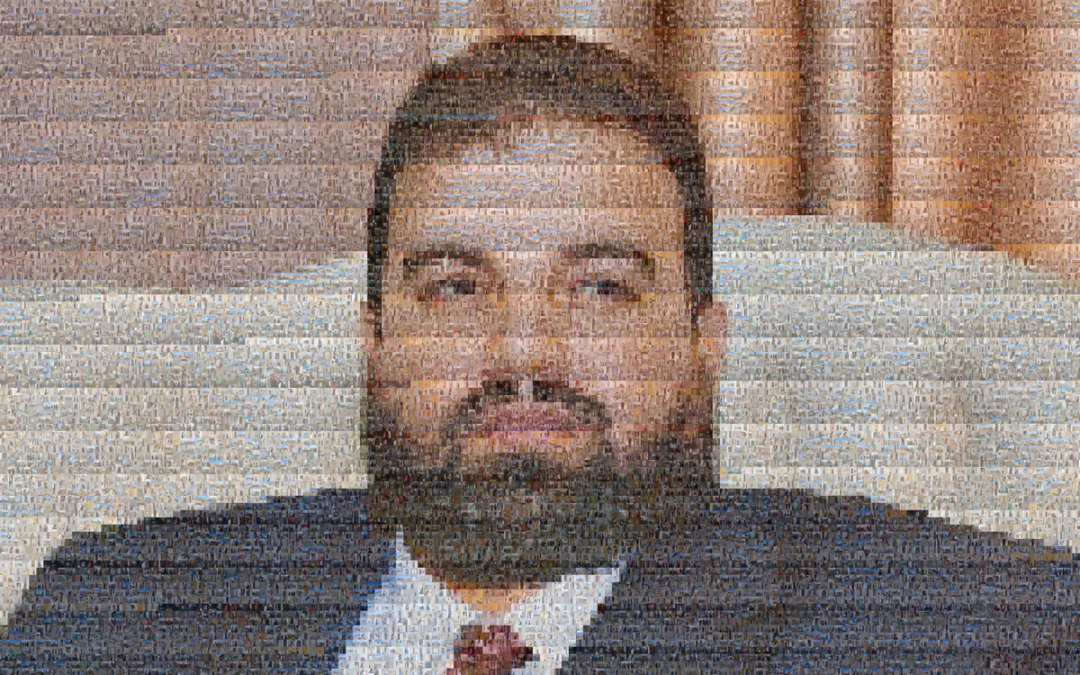
Second phase: first warning and intimidation (April–June)

On April 27, a fake recording was circulated on social media in which an unidentified voice could be heard insulting the Prophet Muhammad, sparking a riot by Islamists at the University of Homs, led by petroleum engineering student Abbas Al-Khaswani. This Islamist agitator, identified as one of the armed perpetrators of the attacks on the Syrian coast two months earlier, delivered an inflammatory speech in which he called for violence against the Druze, Alawite, and Kurdish communities. Following this speech, dozens of people chanting sectarian and hateful slogans stormed the university campus and attacked non-Muslim students. The elderly Druze sheikh Marwan Kiwan, accused of being the author of the recording, quickly denied the accusation, while the de facto authorities in Damascus issued an unconvincing press release thanking the rioters for their efforts to defend their prophet, instead of holding them accountable for the dangerous unrest they had caused. Abbas Al-Khaswani was not arrested and returned to the university the next day, where he and his colleagues would continue to threaten the safety of other students.
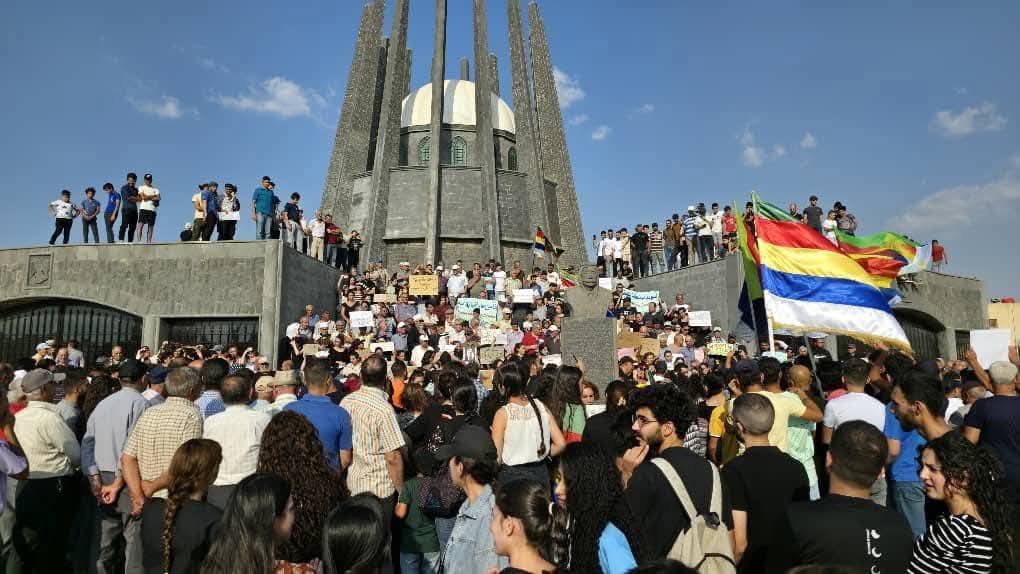
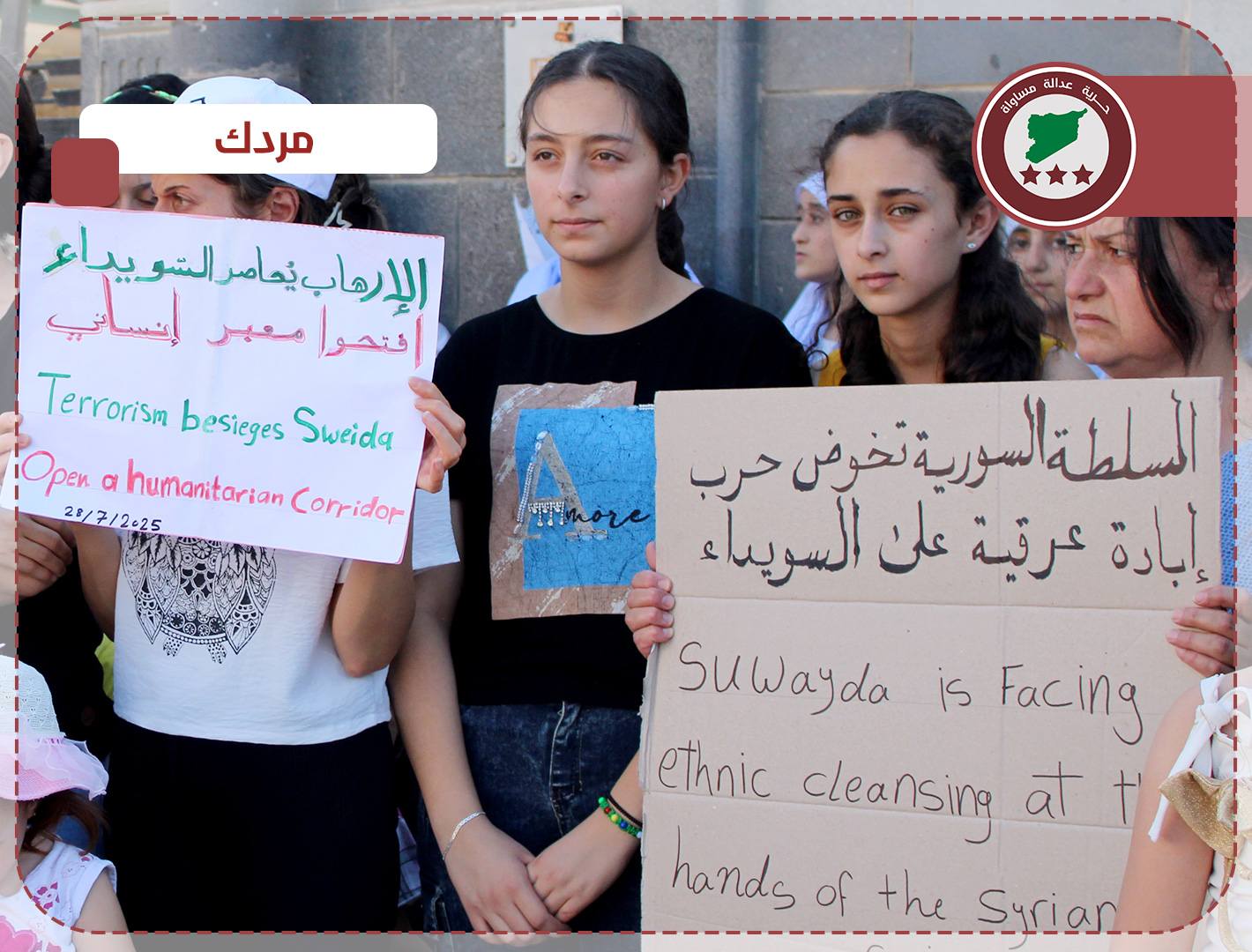
Two days later, the authenticity of the recording was finally denied by the government, but it took no action to prevent subsequent events from unfolding. As a result, unidentified armed groups attacked the Jaramana neighborhood that same day, targeting its residents and local Druze self-defense factions. The General Security intervened alongside the groups that had previously attacked the neighborhood, themselves identified as Bedouins from the Al-Uqaydat tribe, originally from Deir Ez-Zor, so that it was uneasy to distinguish between them. Seventeen attackers were killed before being reported as members of the General Security, while local factions were designated as the main instigators of the clashes.On April 30, armed Islamist groups from Dera’a, Deir Ez Zor, and Ghouta attacked the towns of Sahnaya and Ashrafiyeh-Sahnaya in a pattern similar to that seen in Jaramana, targeting residents and local Druze self-defense factions. This time, 45 people were killed, most of them members of the Druze community. Among them, 10 civilians were summarily executed, including the mayor of the city, Hussam Warwar, and his son Haider. Although Warwar had been seen welcoming General Security forces a few hours before his execution. At the same time, Druze factions from Suwayda attempted to leave the governorate to rescue their community under attack in Sahnaya-Ashrafiyeh, but were ambushed near Braq, on the road to Damascus, by mixed groups of local tribes and Islamists from Dera'a and Deir Ez Zor, as well as members of the General Security. A video clearly shows them opening fire as they stand side by side. As a result, 42 Druze fighters were killed, with the community of Salkhad particularly affected, with 11 martyrs belonging to the Quwaat Sheikh al-Karami and Quwaat al-‘Alya self-defense factions, including the leader of the latter, Amjad Baali.

On May 1, the central authority in Damascus reiterated its pressure on the leaders of the Druze community to accept the disarmament of local factions, unjustly accused of being the source of the unrest. Israel took advantage of the situation to threaten Syria and bombed near the presidential palace in Damascus, allegedly to “send a warning” to the Syrian authorities in case of threats against the Druze. Following negotiations between the government and the Druze leadership, a five-point agreement was finally adopted, providing for the activation of the police and General Security in the governorate of Suwayda, on condition that its members all originate from the region, as well as the securing of the road to Damascus and a ceasefire in all areas affected by the clashes of recent days. It should be noted that during the day, Laith al-Balous escaped an assassination attempt while traveling in Shahba, before being heckled in his town of Mazraa for opening it up to several General Security vehicles. The latter were once again sent back out of the province.

On the night of May 1, mortar shells were fired at the towns of As-Sawara al-Kbira, Al-Thaala, Ad-Dour, ‘Ira, Kanaker, and Rsas in the province of Suwayda. All factions in Suwayda, comprising more than 30,000 fighters, were put on alert and deployed to strategic points throughout the governorate, while the General Security encircled the governorate that same evening, ostensibly to prevent any further attacks from Dera’a. This did not prevent armed groups from attacking the villages of Lubayn, Harran, Ad-Dour, and Jreen, located on the western border of the province, where they encountered strong resistance, resulting in the death of most of the attackers. The number of casualties is unknown, but the attackers were identified as belonging to local Bedouin tribes.

On May 2, an Israeli drone flying over Suwayda targeted a farm in Kanaker, killing four of its Druze inhabitants. One of them, Issam Azam, was known for actively supporting the protests in Dignity Square against the Assad regime. During the night, Israeli planes launched a series of strikes on military sites in Dera'a, Damascus, and Hama. On May 3, Khaldun Sayah Al-Mahithawi, a Druze lawyer involved in negotiating the release of another lawyer kidnapped north of Suwayda, was assassinated in Aqraba, near Jaramana, while the 11 martyrs of Salkhad were buried after a ceremony attended by thousands of people in their hometown.
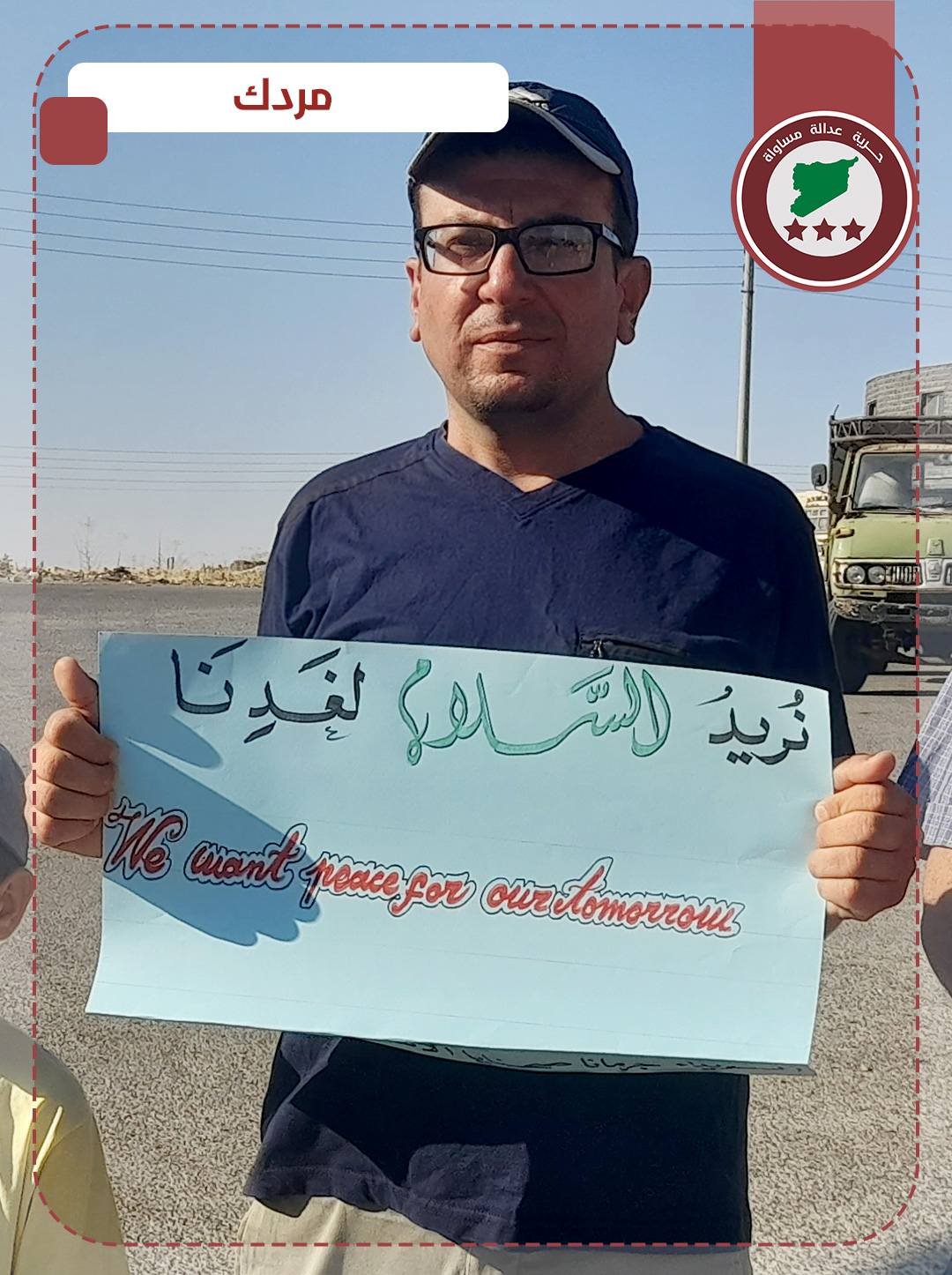
On May 5, clashes between Bedouin tribes and Druze factions continued in the vicinity of al-Thaala and Harran in Suwayda, while rumors circulated that Druze factions were threatening mosques. Several imams from the region and representatives of local Bedouin tribes denied these rumors of sectarian threats by the Druze against Muslims, reaffirming peaceful coexistence within the governorate and the need to combat fake news and sectarian incitement on social media. The Druze factions have in fact deployed to protect Muslim religious sites from any individual sectarian initiatives. After the General Security withdrew from the town of As-Sawara al-Kbira, the Suwayda police entered the town accompanied by Governor Mustafa Bakur and found several houses burned and looted, as well as the Druze shrine. It should be noted that the only town where houses were looted and vandalized in Suwayda was also the only one where General Security forces had been deployed.
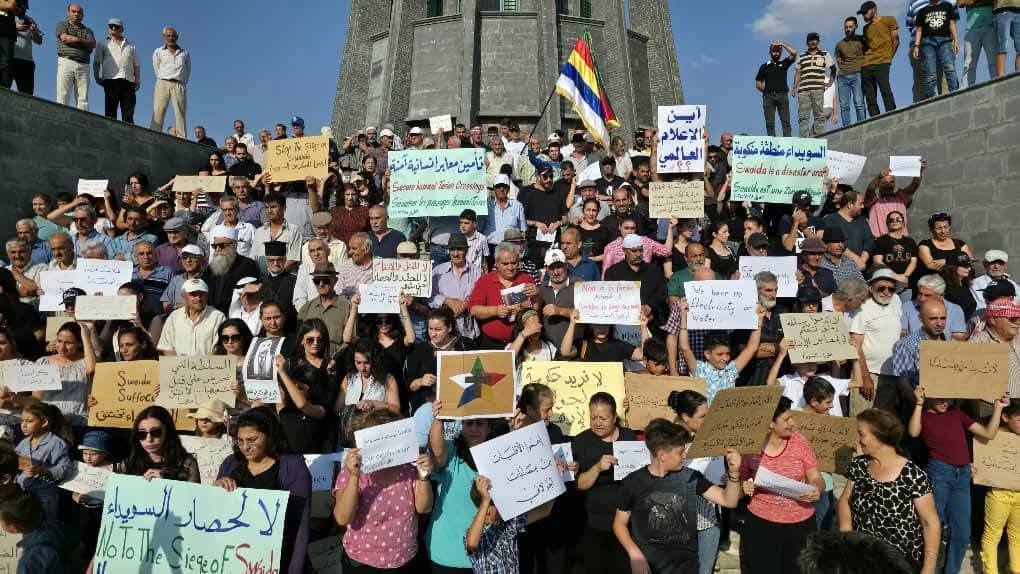
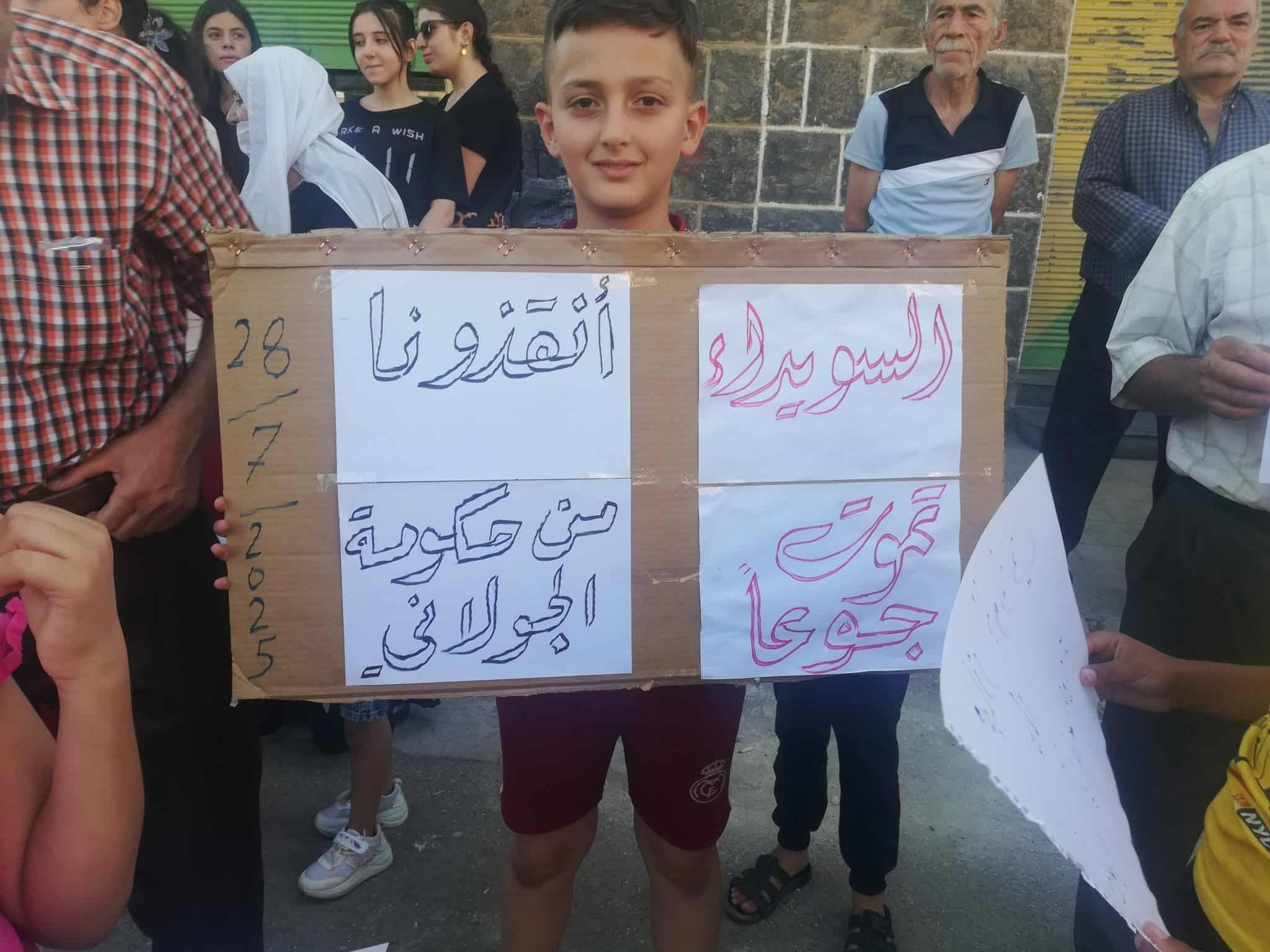
As part of the agreement signed on May 1, the government has set up several checkpoints on the road between Suwayda and Damascus, while Druze police officers have been deployed at the entrance to As-Sawara al-Kbira, the first village in the province. Eleven kilometers further north, at the strategic junction of the roads connecting Damascus, Suwayda, and Deraa, a checkpoint was entrusted to armed men belonging to Bedouin tribes in the region (the Al-Na'im tribe from the village of Al-Mtalleh and the Al-Lajat region), whose affiliation with government forces was uncertain: they were not wearing official uniforms and several of them were wearing masks and displaying ISIS symbols. At the same time, it was announced that three members of the Uqaydat tribe from Shuhayl (Deir Ez-Zor) had been appointed to senior positions: Hussein al-Salama as head of intelligence, replacing Anas Khattab; Amer Names al-‘Ali as president of the Central Control and Inspection Authority (anti-corruption); and Sheikh Rami Shahir al-Saleh al-Dosh as head of the Supreme Council of Tribes and Clans, an entity subordinate to HTS since 2019. These appointments came just as their tribe was one of the most involved in the deadly attacks against the Druze community in recent days.

Between May and July, numerous complaints were made about the Braq-Masmiyeh checkpoint, whose guards were accused of harassment, theft, and extortion against road users traveling to or from Suwayda. On several occasions, continuing criminal practices dating back to before the fall of the Assad regime, passengers were kidnapped or targeted by gunfire from armed Bedouin groups residing in Al-Mtalleh and Al-Lajat. As a result, the government's May 1 commitment to secure the road between Damascus and Suwayda has not been honored and has been violated by members of the government forces themselves. During the same period, sectarian violence has increased, with members of religious minorities being murdered every week in different parts of the country, culminating in the attack on the Mar Elias Orthodox Christian Church in the Dweila neighborhood of Damascus on June 22, 2025. Five people from the Christian community of Kharaba, a village west of Suwayda, were among those killed in the explosion. It was later revealed that one of the attackers was a member of the Ministry of Defense.

Third phase: the invasion and massacres (July)

In early July, under the pretext of settling a dispute with the Bedouin groups in charge of the checkpoint, government forces interrupted road traffic for several hours, during which the security officials for Suwayda and Deraa, Ahmed al-Dalati and Shaher Jabr Omran (nom de guerre: Abu al-Baraa) traveled to Bedouin hamlets in the Al-Lajat region to reconcile two clans disputing control of the Braq-Masmiyeh checkpoint and offered to integrate several dozen of their members into the Interior Ministry forces.

On July 11, Druze merchant Fadlallah Dwara was kidnapped near the checkpoint, beaten, robbed of his vehicle, cargo, phone, and money, and then thrown onto the side of the road. The response was swift. The very next day, a Druze faction from Ariqa kidnapped Bedouins—who were not connected to Fadlallah Dwara's kidnappers—prompting a retaliatory response from Bedouin clans in Suwayda, particularly those in the Al-Maqwas neighborhood, located at the eastern entrance to the city of Suwayda. At around 9 a.m. on July 13, they blocked the road to the mountains and kidnapped five Druze civilians.

1. The Southern Tribes Gathering starts the conflict

Al-Maqwas is a neighborhood that has been divided by conflicts between Bedouin clans for many years. The Al-Badah and Al-Kaniher clans, involved in drug trafficking, have ruled the area since they expelled the rival Al-Anizan clan in May. They are associated with the Southern Tribes Gathering, a local tribal confederation set up by a notorious drug trafficker, Sheikh Rakan Khalid al-Khudair, who lives outside Suwayda in Al-Mtaleh after going into exile in Jordan between 2019 and 2024. It was the latter organization, close to Suleiman Abdul Baqi and loyal to the government, that signaled the start of armed hostilities, provoking a response from the Druze factions. The latter laid siege to Al-Maqwas, trapping its residents inside and preventing the wounded from being evacuated to hospital. It was this blunder that allowed the Southern Tribes Gathering to spin a catastrophic and partially false narrative that would justify the intervention of government forces and the mobilization of Bedouin tribes throughout Syria in the hours that followed, in particular the narrative claiming ethnic cleansing of Bedouins by armed factions associated indiscriminately with the Suwayda Military Council and Sheikh Hikmat al-Hajari.The clashes initially extended to the Bedouin neighborhoods on the outskirts of Suwayda city (Rajem al-Zeytun, Al-Hrubi, Al-Mansoura, and Al-Shaqrawiyeh), where several armed groups began attacking Druze factions. Throughout the day, the wounded poured into the national hospital, which reported 54 wounded and 13 dead by early evening, including children and elderly people shot in the head by snipers, while the tribes reported 50 wounded and 10 dead on their side, including three women. Shortly after 4 p.m., a first attack from outside the province of Suwayda targeted the As-Sawara al-Kbira checkpoint (in the north of the province), manned by Druze members of the new local police force. An hour later, attacks targeted the neighboring village of Hazm, followed by coordinated attacks shortly before 7 p.m. against several villages in the west of the province from the Housh al-Hammad area in Deraa: Harran, Jreen, Lubeyn, Sami', and At-Tireh. This was a clear sign that the Bedouin tribes of Hauran and Lajat (mostly affiliated with the Al-Na'im tribe) were behind the offensive.

Alert issued by the Southern Tribes Gathering on July 13 at 4:18 p.m.

2. Government forces invade Suwayda

At this stage, negotiations had already begun under the mediation of Sheikh Youssef Jarbou'a in an attempt to resolve the conflict and secure the release of hostages on both sides. These negotiations culminated in the middle of the night with a commitment from both parties to release the hostages, but this did not stop the fighting. On the contrary, at around 1:30 a.m. on July 14, government forces occupied As-Sawara al-Kbira, while at 7:30 a.m. they entered the province from the west along the Bosra al-Harir–Mazraa and Umm Walad–Kanaker routes. The villages mentioned above were quickly occupied by the army after being taken by Bedouin tribes, followed by Ta'ara and Ad-Dour around noon, then Qarasa, Najran, at-Tireh, and Kanaker an hour later. The towns of Mazraa and Al-Thaala were taken between 3 p.m. and 4 p.m., while 'Ira and Mjemer decided to open their gates to government forces. Everywhere, homes were looted, vandalized, and burned, while their occupants suffered indiscriminate violence at the hands of both tribes and government forces, even in villages that offered no resistance.

According to initial reports, the army units involved in the offensive against Suwayda belong to the following divisions:

  • the 40th based in Deraa and commanded by Banyan Ahmad Al-Hariri (Abu Fares);
  • the 42nd based in Palmyra and commanded by Mohammed Saeed Abdullah;
  • the 52nd based in Homs and commanded by Haitham al-Ali (Abu Muslim Afs, Abu Muslim al-Shami)
  • the 54th based in Homs and commanded by Hussein Abdullah Al-Obeid (Abu Suheib);
  • the 62th based in Hama and commanded by Muhammad al-Jassem (Abu Amsha);
  • the 70th based in Damascus and commanded by Essam al-Buwaydhani's (Abu Hammam) deputy;
  • the 72nd based in Aleppo and commanded by Doghan Suleiman;
  • the 82nd based in Hama and commanded by Khaled Mohammed al-Halabi (Abu Khattab).

The head of military operations Hasan Abd al-Ghani announces the launch of the intervention, Bosra al-Harir, July 14, 6:30 p.m.

At least five of these divisions are led by (ex)-jihadists, while the 82nd Division contains elements likely to sympathize with ISIS. Several members of its units have been seen in videos in Suwayda wearing the organization's emblem. A number of factors also confirm the presence of two units of the special forces with a notorious reputation: the Ali Bin Abi Talib brigade commanded by Abd al-Mun’im al-Dhaher (Abu Suleiman al-‘Iss) – who would get injured in the battle - and the “Red Bands” unit, whose leadership remains unclear to this day. The latter are trained by private military companies founded by foreign jihadists, notably Malhama Tactical, a group founded by Chechen Abdullah Tac. It should be pointed out that a Chechen fighter was taken prisoner by Druze factions, who interrogated him on camera.

In the middle of the afternoon, the Suwayda National Hospital announced that it had recorded 53 deaths and more than 200 injuries. While other towns in the province, such as Walgha, 'Atil, Rima Hazem, and Rsas, were already being bombed and experiencing clashes, the advance of government forces was finally halted shortly before 6 p.m. when the Israeli air force carried out its first strike between Mazraa and Walgha, at the entrance to the University of Agricultural and Veterinary Studies, before following up with further strikes on other roads leading to Suwayda.

At dawn on July 15, intense military pressure combined with international diplomatic pressure forced Sheikh Al-Hajari to accept the deployment of government forces in the province and city of Suwayda and to call on the factions not to resist and to cooperate with them by handing over their weapons. Thus, at 8 a.m., Interior Ministry Colonel Ahmed al-Dalati announced the entry of government forces into Suwayda and the enforcement of a curfew, calling on Druze factions to lay down their arms. At 8:15 a.m., government forces entered the outskirts of Suwayda from Kanaker in the southwest, and thirty minutes later they reached the Omran roundabout in the northwest. Clashes broke out immediately afterwards and were quickly accompanied by acts of violence as armed groups with no clear affiliations spread throughout the city's neighborhoods and proceeded to systematically destroy and loot shops and homes, as well as summarily execute numerous civilians.

At 10:50 a.m., an initial report already mentioned 24 executions of civilians, while at 12:20 p.m., news spread of the massacre of more than a dozen members of the Al-Radwan family in the guesthouse of their home, even as Ahmed al-Dalati had just declared a ceasefire with the aim of bringing the Druze leadership back to the negotiating table. Ahmad al-Dalati and Shaher Jabr Omran thus met around noon with representatives of various local religious groups and factions in the Druze shrine of Ain al-Zaman, located in the heart of the city, even as fighting and crimes continued to unfold in the surrounding neighborhoods.

An hour later, the first images of the atrocities were made public, while the attackers posted videos of their own crimes on social media in real time. Many videos show members of the government forces and Bedouin tribes staging scenes in which they beat civilians, forcibly shave their mustaches, and even summarily execute them before desecrating their corpses, calling them repeatedly “ya khanazir”, which means “you pigs!”. Entire families were executed in their homes or in public spaces, while many people were shot dead in their cars or targeted by snipers as they tried to flee the city. Among the victims were many elderly people and children. The youngest victim was three months old. They also left numerous inscriptions on walls, openly signing their names and claiming responsibility for their crimes. These numerous acts of violence were committed in most of the occupied neighborhoods of the city, even though a dozen journalists affiliated with the Ministry of Communication were present nearby, as well as Security Chief Ahmad al-Dalati, who appeared at around 2:20 p.m. on the roof of a vehicle in the middle of the Bedouin neighborhood of Al-Maqwas to announce its “liberation.”

Until dawn on July 17, government forces and their Bedouin auxiliaries fought with Druze factions for control of the city's neighborhoods, while the Israeli air force carried out targeted strikes in and around Suwayda. The National Hospital neighborhood was the scene of intense fighting on several occasions over the two days: government forces targeted the hospital for the first time on July 15 at around 5 p.m., then again on the morning of the 16th, finally taking control of it at around 3 p.m. that same day. Members of the army and General Security killed the police officers in charge of security at the premises, then executed wounded patients and medical staff: CCTV footage shows the execution of nurse Mohammad Buhsas in the hospital lobby. When government forces began their withdrawal at dawn on the 17th, armed Bedouin groups remained in the city and were repelled or eliminated by Druze factions during the day. In several neighborhoods where they had remained over the previous 24 hours, numerous bodies of executed civilians were discovered.

Several sources confirm that on the morning of July 17, as Druze factions regained control of the situation, crimes were committed against Bedouin populations in several localities, who were subjected to forced expulsions, physical violence, and even killings, while a number of homes were set on fire. There are also indications that the Al-Hrubi mosque was vandalized, while satellite images confirm that destruction was carried out in Shahba and Breiki. Unfortunately, these localities remain inaccessible to independent investigators, and press reports of persecution against Bedouin populations are riddled with approximations and false testimony, making it impossible to distinguish truth from fiction.

3. The Syrian Council of Tribes and Clans comes to the rescue

On July 17 at around 3:30 p.m., the Southern Tribes Gathering launched an aggressive communications campaign, adding to its appeal to Bedouin tribes an appeal to the Sunni community as a whole, claiming that Druze factions were engaged in ethnic cleansing of Sunni tribes in Suwayda and were directly targeting mosques. The movement specifically accused Druze factions of kidnapping hundreds of Bedouins and committing atrocities against them. Photographs of Druze and Christian families executed in recent days were manipulated to suggest that the victims were Bedouins, while images showing Druze fighters desecrating the bodies of tribal fighters reinforced the idea that large-scale abuses were being committed against Bedouin civilians. In the wake of these incitements, the Syrian Council of Tribes and Clans, headed by Abdul Moneim al-Naseef, and the Army of Tribes, commanded by brother of above-mentioned Ibrahim Al-Hafel, Sami Al-Abdulaziz, brought together more than 40 tribes and clans from all over Syria to join the call and converge on Suwayda, while those still on the ground regained control of the villages from which government forces had withdrawn in the previous hours: Al-Mazraa, As-Sawara al-Kbira, Hazem, Ad-Dour, and Al-Thaala. On July 18 and 19, Bedouin tribes freely entered the province of Suwayda and gradually regained control of some fifteen villages north of Shahba, where they proceeded to loot and systematically destroy homes, while most of the residents still present were executed, particularly the elderly. Many women and children were kidnapped after their loved ones were murdered in front of them, while at least three cases of beheadings have been documented, as well as several cases of people being burned alive. Atrocities were also committed on the outskirts of Suwayda, where pockets of resistance from Bedouin groups present for several days persisted until July 20. These crimes were committed despite the ceasefire agreement discussed in the absence of Druze representatives and made public by White House envoy Tom Barrack on the night of July 18-19.

At around 1 p.m. on the 19th, government forces took over from the Bedouin tribes and began occupying the 34 villages that could not be liberated by the Druze factions. However, it was not until the evening of July 21 that the Bedouin tribes ceased their attacks on Umm Zeytoun, Shahba, Ariqa, and Majadel, during which a large number of Shaheen drones were used. From July 21, the government organized the evacuation of 1,500 Bedouin civilians to Deraa, representing less than 5% of the total Bedouin population residing in the province of Suwayda. At the same time, humanitarian aid convoys were sent to Suwayda as part of a communication campaign aimed at preserving the government's image, which continued to present itself as a mediator in inter-communal conflicts and denied that its own armed forces had committed any crimes. When the Druze community collected the bodies, it was found that many Bedouin fighters were carrying cards identifying them as members of the Ministries of Defense and the Interior, while videos released by Druze factions alleged the presence of foreign fighters.

The head of the Council of Syrian Tribes and Clans Abdul Moneim al-Naseef calls on all Bedouin tribes to converge on Suwayda to reinforce the Southern Tribes Gathering, Deir Ez-Zor, July 18, 12:50 a.m.

At this stage of our investigation, it has been confirmed that the following Bedouin tribes and clans actively participated in the assault on the Suwayda community:

1. Anzah

2. Bakara

3. Bani Khalid

4. Bu Sha'ban

5. Fawa'ira

6. Jabur

7. Mawali

8. Na'im

9. Shammar

10. Tayy

11. Uqaydat

12. Abd al-Karim

13. Afadlah

14. Arida

15. Bani Sakhr

16. Breidij / Breij

17. Bu Issa

18. Bu Saraya

19. Damalkha

20. Dulaim

21. Fidaan

22. Hadadin

23. Hneidi

24. Hassoun

25. Huweidi

26. Haweitat

27. Ja'abara

28. Marsuma

29. Na'san

30. Omeirat

31. Rifa'ah

32. Ruwalah

33. Sakhani

34. Sarhan

35. Sardiya

36. Saba'ah

37. Sabeila

38. Shamur

39. Sharabin

40. Waldah

41. Zubayd

However, it cannot be ruled out that members of other tribes participated individually or collectively in the attack, as at least 40 other tribe and clan names were mentioned in our sources by participants and members of these groups themselves. This would bring the number of participating clans and tribes to 81, out of a total of 211 Syrian clans and tribes listed in our database, which would therefore represent between 38 and 40% of the country's tribes and clans.

It is also important to remember, as we have already pointed out, that the government forces themselves have recruited Bedouins on a massive scale. Furthermore, the rebel and jihadist groups that merged with Hayat Tahrir al-Sham in January 2025 to place themselves under the command of the Ministry of Defense were already largely made up of Bedouins.

Fourth phase: siege and denial (July-present)

In the days following the ceasefire, journalists were kept out of the province, where government forces set up checkpoints and claimed that Druze factions were preventing anyone from entering, a claim refuted by a number of residents. The Civil Defense (“White Helmets”) organized a humanitarian corridor for people residing abroad from the south of the province to the neighboring town of Bosra al-Sham, until several incidents involving gunfire and passenger abductions interrupted operations.
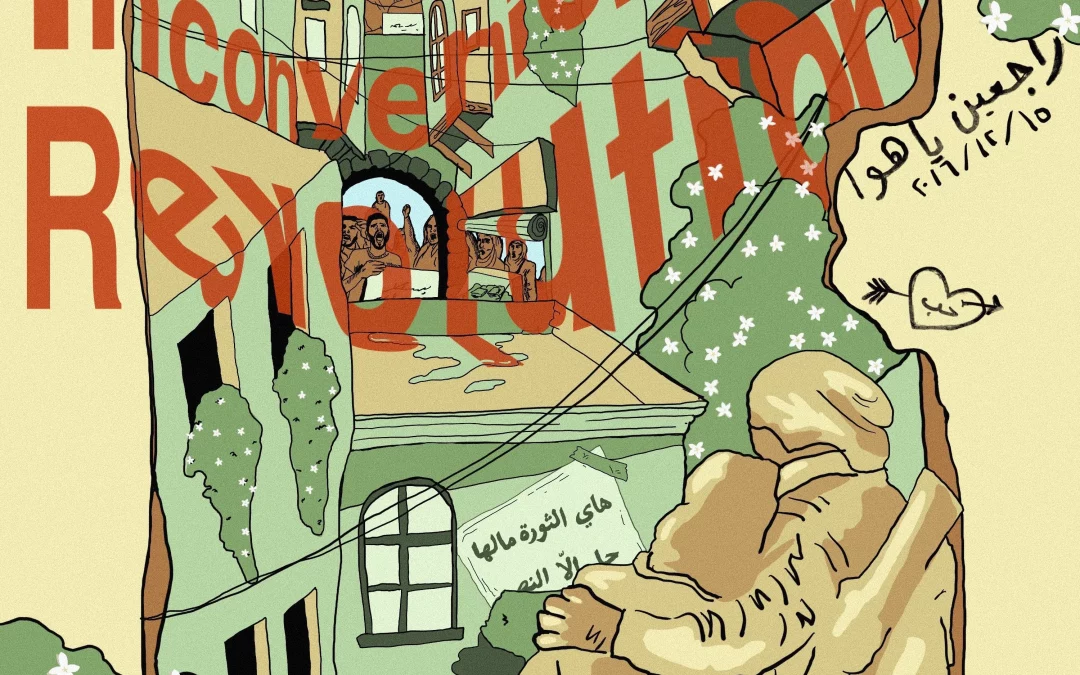
On July 31, the Ministry of Justice announced the establishment of an Investigation Committee on the events in Suwayda, but like other institutions implemented by the de facto authority, it does not meet the conditions of impartiality and independence required to carry out these investigations. The representative of the commission of inquiry into crimes committed against the Alawites on the Syrian Coast in march, Yasser al-Farhan, who delivered his conclusions the day after the massacres in Suwayda (July 22), had earlier thanked the Bedouin tribes for their intervention on the coast, while Anas Ayrout, head of the Supreme Committee for the Preservation of Civil Peace in Syria, issued a statement on July 18 praising the tribes and congratulating them on their mobilization. Another member of this committee, Sheikh Ragheb al-Saifi from the Uqaydat tribe, has been identified as one of the coordinators of the attack on Suwayda. Finally, Al-Sharaa himself thanked the tribes for their “heroic commitment” in his public address on July 19, without ever considering them to be “outlaw gangs” that needed to be disarmed.

On October 12, the government organized a campaign called “Suwayda is ours and we are hers,” an inappropriate charity event intended to raise money for the province. The event was held in the martyred village of As-Sawara al-Kbira, a Christian village whose church was burned down and many of whose residents were murdered, in the presence of Mustafa Bakour, representatives of the tribes involved in the massacres, and Laith al-Balous and Suleiman Abdul Baqi. The latter are portrayed by the government as representatives of the Druze community and are subsequently called upon in diplomatic negotiations abroad, even though they played an active role in committing crimes against their own community. Suleiman Abdul Baqi, who, it should be remembered, himself murdered a young Christian for religious reasons, was promoted to “Head of Security for Suwayda” before being invited to Washington by members of the US Congress on January 22, 2026.

On December 17, the leader of the Southern Tribes Gathering, Rakan al-Khudeir, organized his “Victory Festival” in his stronghold of Al-Mtalleh—the Bedouin village where the violence began—to celebrate the anniversary of Assad's fall, declaring that the Southern Tribes' allegiance to the state was a national duty. Mustafa Bakour and several government representatives were present, as well as representatives of the Council of Tribes and Clans.

The population of Suwayda has been protesting regularly since the end of the massacres, attempting to alert international opinion to the siege they are enduring and the criminal nature of the government's policies.

More than six months after the military assault, 34 villages remain occupied by government forces, who have made Mazraa the administrative center of the occupied area. Governor Mustafa Bakour is organizing the cosmetic rehabilitation of hundreds of burned houses in order to conceal the extent of the crimes committed, while nearly 190,000 residents remain displaced outside the area. Earth barriers cut off a number of roads and access to the occupied area remains hampered, while armed groups continue to use the villages of Mazraa, Walgha, and Al-Mansoura as a launching pad for regular raids and strikes against Druze positions, particularly the villages of Umm Zeytoun, Najran, Majdal, Remat Hazem, and the western suburbs of Suwayda city. Although the road to Damascus is officially reopened to trafic, movement is extremely limited and many men in the province are de facto housebound, as they have been for the past ten years, for fear of being associated with combatants and arrested at checkpoints.
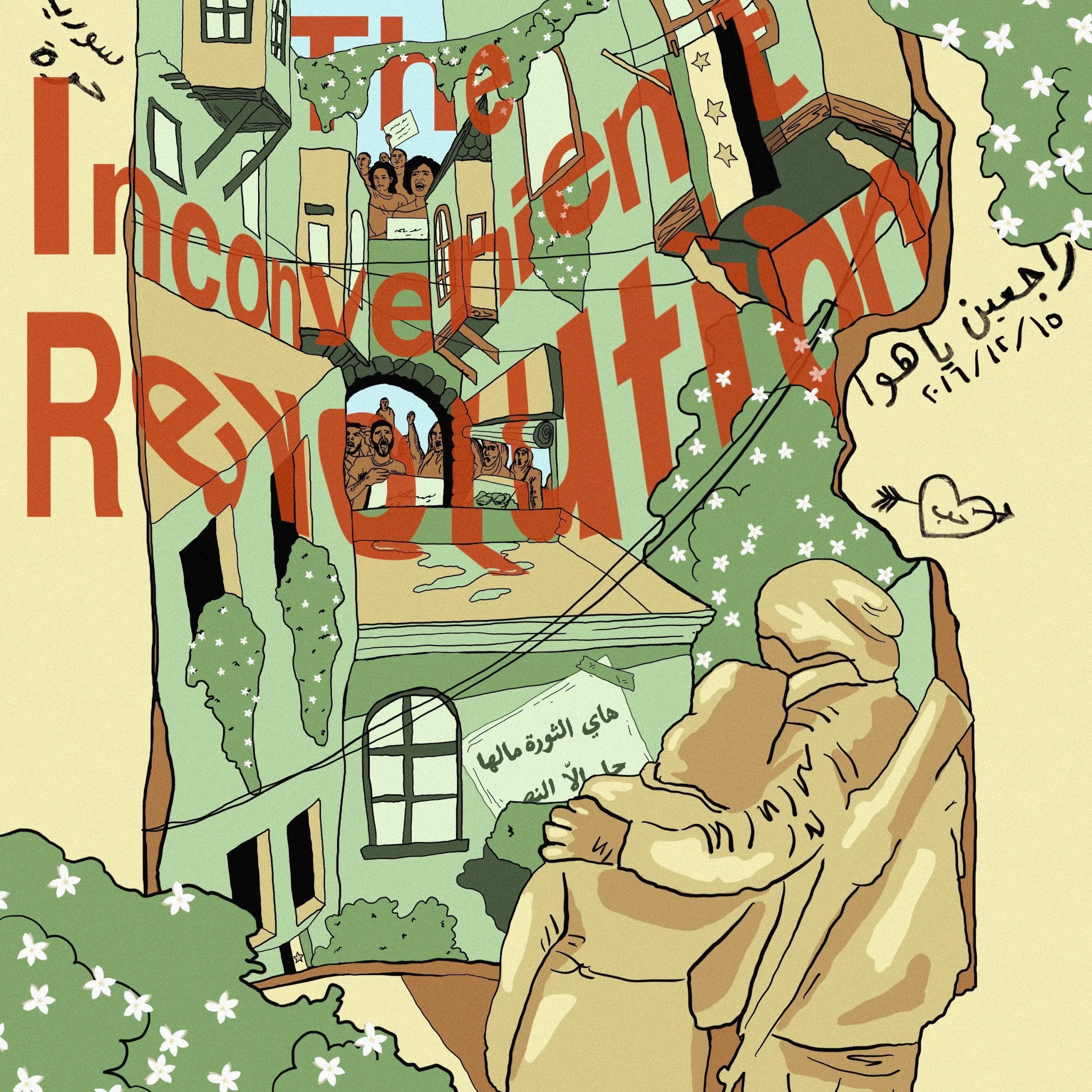
All these factors do not bode well for the weeks and months ahead, with foreign governments seemingly agreeing to give carte blanche to the unelected president Ahmad al-Sharaa, who for many Syrians has never ceased to be the warlord Abu Mohammad al-Jolani.

Left: Map of the Suwayda province showing the attacked and occupied areas | Above: Map of Suwayda city neighborhoods.
Summary Abuses and Killings (Non-exhaustive list)

    1. On July 15 at around 9:45 a.m. in the town of Al-Thaala, located 10 km west of Suwayda city, nine civilians were executed in the courtyard of their home by men in military uniforms. Among them were two children aged 13 and 15. The victims are from Akhwan, Dahouk, and Aouj families.
    2. On July 15, four civilians, including a 16-year-old child, were executed in their home in the Al-Khudr neighborhood of the city of Suwayda. The victims were members of the Saleh and Mahasen families.
    3. On July 15, three civilians belonging to the Hamidan family, one of whom were disabled, were executed at their home in the city of Suwayda.
    4. On July 15, around noon, armed men forced their way into the Radwan family home and executed thirteen civilians from the same family in their guesthouse.
    5. On July 15, armed men entered the Arnous family's apartment and forced three young men to jump from the balcony while shooting at them. The perpetrators filmed their actions. Prior to this, the father of the family was executed in the building. All four victims were members of the Arnous family.
    6. On July 15 at around 5:30 p.m. on Tishrin Square in the center of Suwayda, seven civilians, including one American citizen, were executed in the street after being abducted from their homes. The perpetrators filmed their actions. The victims were members of the Saraya family.
    7. On July 15, in the Nahda neighborhood of the city of Suwayda, six civilians from the Qarzab family were executed in their car as they attempted to leave the city.
    8. On July 15, near the Al-Khudr neighborhood of Suwayda, eight members of the Shuhayib family were executed on the side of the road leading to Al-Thaala.
    9. On July 16, at dawn in the National Hospital neighborhood of Suwayda twelve civilians were forcibly taken from their home to the ground floor of a building under construction located 140 meters South West from the entrance to the hospital and summarily executed on a pile of rubble and rubbish. The victims are from Dbeisi, Abu Maghdab, Shaarani, Zain, Hatem, Abu Faour, Qarqout, Abu Qaisar and Abu Fakhr families.
    10. On July 16 at 8:45 a.m. in the Al-Thawra neighborhood south of Suwayda city, five civilians were executed in and near their car as they attempted to leave the city. Three children were pulled from the vehicle before their relatives were executed and were kidnapped by the perpetrators. The scene was filmed by a surveillance camera. The victims were members of the Barbour, Musleh, Raef, and Ghanem families.
    11. On July 16 around 10:00 a.m. in the Al-Jawlan neighborhood of Suwayda, armed men broke into the Baeini – Abu Saadeh family home and executed four members of the family, including a teenager. Their bodies were found burned.
    12. On July 16, around 12:30 p.m. in the Al-Jaala neighborhood of Suwayda, four members of the Jarira family, including two 12-year-old children, were shot and killed in their car as they attempted to leave the city. A young girl survived by hiding in a ditch until dawn the next day.
    13. On the morning of July 16, in the old town of Suwayda, a group of men in military uniforms entered the Badr family home, where more than forty people had taken refuge, after throwing grenades inside. Twenty-three civilians were executed, some after being beaten and stabbed with knives. The victims are from Badr, Los, Kamal, Taqi, Shtay and Melhem families.
    14. On the morning of July 16, in the Al-Koum neighborhood of Suwayda (on the southern outskirts of the city), armed men broke into the Mezher family home and executed fourteen civilians. The victims are from Mezher, Halabi, Hamoud and Khatib families.
    15. On July 16, at the intersection of the main avenue (Route 110) and Al-Jandi al-Majhul Street, seven civilians were executed in the street after being abducted from their homes. The victims are from Mazhar, Ahmad, Ashqar, Hassoun and Abu Hamza families.
    16. During the day of July 16, a number of civilians were killed by sniper fire as they attempted to leave the city or seek shelter. Among them are several children. Non-exhaustive list of victims: Tala Al-Shufi (14 years old), Amer Hilal and her daughter Ghena (14), Qais Al-Nabwani (13), Dr Taalat Amer, Salama Al-Jaber…
    17. On July 17, in the village of Sahwet Blata, located 6 km southeast of the city of Suwayda, eleven members of the Gharz Ad-Din family were executed in their home. Among the victims was a three-month-old baby whose body was found in a cardboard box.
    18. On July 18, in the village of Walgha, located 4 km northwest of the city of Suwayda, five members of the Kfeiri family were executed in their home.
    19. On July 19, in the Mazraa neighborhood (Dawar Thaali) located northwest of the city of Suwayda, three members of the Sayyid family, including an 80-year-old disabled man, his wife, and their daughter, were executed and their bodies burned.
Podcast: First Newroz After the Fall – After the Fall (Montreal)

Podcast: First Newroz After the Fall – After the Fall (Montreal)

This podcast was made by AFTER THE FALL / Dispatches from the Women's Revolution in North-East Syria, Montreal

https://afterthefallpod.libsyn.com/episode-five-first-newroz-after-the-fall

Our final episode takes us to the Newroz celebrations in Qamislo, where we see Syrian musician Samih Choukeir perform. Once back in Montreal, Virginia talks to Khuzama and Cedric from the media project Fajawat about the importance of Choukeir’s performance and their perspectives on the changing climate in Syria. Newroz 2025 was openly celebrated in Damascus for the first time and the holiday has taken on new significance in the wake of Assad’s fall. However, as of October 2025, the transitional government in Damascus has decided to exclude Newroz from the list of official holidays in Syria. We end the episode with an update from Khuzama and Cedric that was recorded in late September 2025 and includes talk about the massacres that took place in Sweida in July.
 

Notes:

citations

On Samih Choukeir: https://www.syriawise.com/samih-chouker-the-very-first-voice-of-the-syrian-revolution/, https://syriauntold.com/2021/04/09/remembering-the-syrian-revolution-through-song/

On Sweida: https://interstices-fajawat.org/suwayda-2025-chronology-of-a-predictable-massacre/

https://hawarnews.com/en/sweida-announces-formation-of-unified-national-army-under-name-national-guard

More information on the situation Khuzama and Cedric talked about from April 2025 when activists from Sweida were arrested on their way to a workshop in Raqqa:

https://jinhaagency.com/en/actual/women-arrested-on-their-way-to-raqqa-we-were-subjected-to-torture-36914

Links

Khuzama and Cedric’s media project, Fajawat:

https://interstices-fajawat.org/

Kongra Star's website: https://kongra-star.org/ 

Music credits: Theme music is from Koma Şehîd Hêva Ya Şehba available online at https://jintv.net/ku/posts/post1729280299/ and interlude and outro music is from Shahriyar Jamshidi https://shahriyarjamshidi.bandcamp.com/album/my-sunset-land-rojava. This episode also featured audio recorded by me at the Qamislo Newroz Festival in March 2025 as well as audio of Samih Choukeir’s performance there that was recorded by Ronahi TV and is available online at https://www.youtube.com/watch?v=ODd_WMe55VM

A Short List of Further resources on Syria, Kurdistan, Rojava, etc. (things I read or listened to while making this podcast)

List of media to check out re: Syria from Fajawat website: https://interstices-fajawat.org/its-not-complicated-a-note-to-help-you-understand-syria/

Podcasts:

https://thefirethesetimes.com/ (specifically https://thefirethesetimes.com/2025/03/04/ocalans-statement-and-the-future-of-the-pkk-w-dilan/ and Syria: The Inconvenient Revolution: https://fromtheperiphery.com/syria-the-inconvenient-revolution-pod/)

https://thedigradio.com/Thawra/

https://ckut.ca/playlists/shows/15267 featuring Shahrzad Arshadi's podcast "The Future is Now"

https://thekurdishedition.com/

https://www.iheart.com/podcast/105-it-could-happen-here-30717896/episode/what-does-the-pkks-disarmament-mean-286340407/

Books:

Rojava in Focus: Critical Dialogues. Edited by Cihad Hammy and Thomas Jeffrey Milley, AK Press, 2025.

Bringing the Rojava Revolution Home. By Jenni Keasden and Natalia Szarek, Active Distribution, 2023.

My Road from Damascus: A Memoir. By Jamal Saeed, ECW Press, 2022.

Burning Country: Syrians in Revolution and War. By Leila Al-Shami and Robin Yassin-Kassab, Pluto Press, 2018. 

First Newroz After the Fall

by Virginia | After the Fall: Dispatches from the Women's Revolution in North-East Syria

Podcast: Unrest in Sweida (Part 2) – From The Periphery Media Collective (UK)

Podcast: Unrest in Sweida (Part 2) – From The Periphery Media Collective (UK)

Credits and More:

This podcast was made by FROM THE PERIPHERY MEDIA / The Inconvenient Revolution, UK

https://www.patreon.com/posts/140712528

Khuzama and Cedric from the Fajawat grassroots initiative return to STIR to talk to Leila about the July unrest in Sweida province, which included massacres against members of the Druze community. Our guests were in Sweida during the unrest, so share their moving first-hand testimony as well as provide analysis on implications for the future of Syria as a whole.
STIR is part of the From The Periphery Media Collective. To support all of our projects please head out to ⁠Patreon.com/fromtheperiphery⁠


STIR is also on ⁠Bluesky⁠!

Date of recording: September 5th 2025


STIR 6/ Unrest in Sweida, Part 2

by Leila Al-Shami | From the Periphery Media - The Inconvenient Revolution