٢٠٢٥: الإبادة المُتعمّدة للدروز في سوريا
٢٠٢٥: الإبادة المُتعمّدة للدروز في سوريا
تمت كتابة هذا المقال كجزء من التحقيق في الجرائم التي ارتكبت في السويداء خلال شهر تموز/يوليو ٢٠٢٥. ويُظهر المقال بعض النتائج فقط وسيتم تحديثه في وقت لاحق. لمزيد من المعلومات، يرجى زيارة الصفحة المخصصة لمشروع التحقيق: https://interstices-fajawat.org/ar/mashareina/tahqeeq-beshaen-aljaraem-altaefiyah/
بين ١٣و٢١ تموز/يوليو ٢٠٢٥، تعرضت محافظة السويداء في جنوب سوريا لعدوان عسكري من قبل مجموعات مسلحة تابعة للسلطات السورية الفعلية، مما أسفر عن مقتل أكثر من ٩٣٠ مدنياً و٥٥٠ مقاتلاً درزياً ومسيحياً. في حين تم تقديم هذه العملية على نطاق واسع على أنها تدخل يهدف إلى استعادة النظام بعد الاشتباكات الطائفية، فإن تحليلًا متعمقًا لأسباب وظروف هذه الأحداث يكشف عن حقيقة مختلفة تمامًا ويبرز المسؤولية الكاملة لحكومة أحمد الشرع غير المنتخبة فيما يجب اعتباره جريمة حرب.
السياق
في ٩ كانون الأول/ديسمبر ٢٠٢٤، أي في اليوم التالي لفرار بشار الأسد إلى روسيا، أعلن أحمد الشرع (الاسم الحركي: أبو محمد الجولاني) نفسه رئيسًا للدولة السورية، رافضًا بشكل قاطع أي شكل من أشكال تقاسم السلطة أو اللامركزية أو الفيدرالية، ومطالبًا جميع الجماعات المسلحة بإلقاء أسلحتها والانضمام إلى الجيش الوطني الجديد، الذي وضع تحت قيادة عشرات من أمراء الحرب الإسلاميين الذين عُينوا في نهاية كانون الأول/ديسمبر في أعلى المناصب في الجيش، بمن فيهم العديد من الجهاديين الأجانب.
إلى جانب الأكراد، الدروز هم المجتمع الوحيد في سوريا الذي يتمتع بنوع من الحكم الذاتي داخل منطقة محددة، فضلاً عن قوات مسلحة عديدة مكرسة للدفاع عن مجتمعهم على أساس عرقي أو طائفي أو سياسي. بالنسبة للشرع، فإن إخضاعهم يمثل مسألة مهمة تتعلق بالسلطة، حيث أن استسلامهم التام هو وحده الذي يمكن أن يضمن سيطرته على كامل الأراضي السورية. خلال النصف الأول من عام ٢٠٢٥، باشرت حكومة الأمر الواقع العمل بشكل منهجي لتحقيق هذا الهدف.
وفي وقت نشر هذه السطور، كانت قوات الحكومة والجماعات المسلحة البدوية قد استعادت السيطرة على معظم أراضي محافظتي دير الزور والرقة، في حين لا يزال مصير محافظة الحسكة معلقاً في انتظار نتائج المحادثات بين الحكومة والقوات الكردية. وتشير تقارير متعددة إلى أن الدبلوماسية الأمريكية تدعم الحكومة السورية في جهودها للسيطرة على محافظة السويداء. لذلك لا يمكن استبعاد احتمال حدوث انتشار جديد للقوات في الأسابيع المقبلة.
المرحلة الأولى: المفاوضات وبذور الخلاف (كانون الثاني/يناير – آذار/مارس)
في الأول من كانون الثاني/يناير ٢٠٢٥، حاولت أول قافلة من الأمن العام دخول محافظة السويداء دون تنسيق مسبق مع السلطات المحلية والفصائل، التي رفضت دخولها. كان موقف الدروز واضحاً للغاية: لا يمكن أن يكون هناك انتشار مسلح في المحافظة ولا نزع سلاح للفصائل المحلية في غياب الدولة والدستور والحكومة، وبالتالي الحد الأدنى من الضمانات الديمقراطية والالتزامات الملموسة بحماية الأقليات.
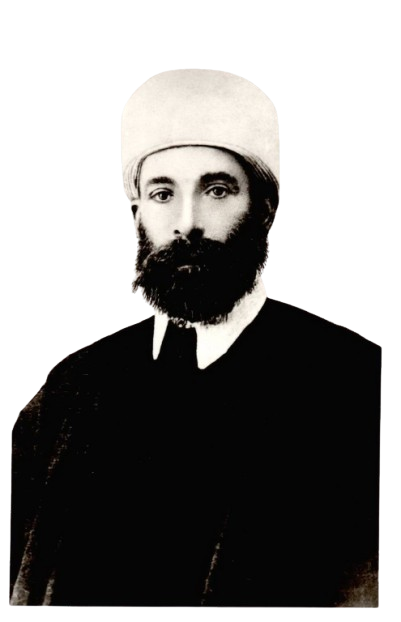
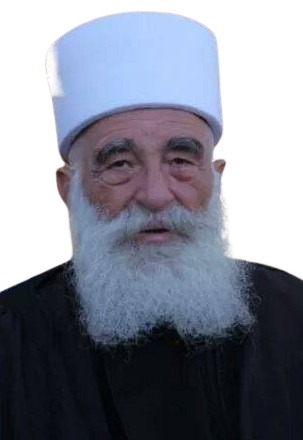
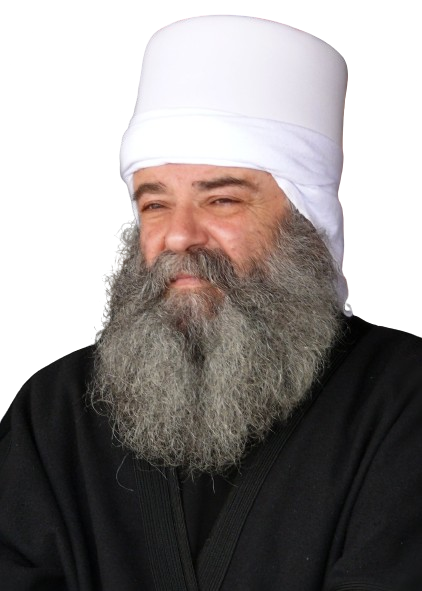
دفع هذا الحدث أحد الزعماء الروحيين الثلاثة الرئيسيين للدروز (شيخ العقل أو شيوخ العقل) في سوريا، الشيخ حكمت الهجري، إلى توضيح موقفه في مقابلتين مع التلفزيون السوري و963+ في الثامن من كانون الثاني/يناير. وشارك رؤيته للمستقبل، داعياً إلى الوحدة الوطنية والحكم الشامل واللامركزي في إطار دولة مدنية. وشدد بشكل خاص على أن السويداء قد أعربت عن معارضتها للانفصال منذ بداية انتفاضة ٢٠١١. وبدا موقفه معتدلاً نسبياً ومتوافقاً مع موقف العديد من السوريين، على الرغم من أن قيادته بعيدة عن الإجماع داخل الطائفة الدرزية في السويداء، لا سيما بسبب دعمه لبشار الأسد حتى عام ٢٠٢٣. وتجدر الإشارة أيضاً إلى أنه في صراع مفتوح منذ أكثر من اثني عشر عاماً مع شيخين آخرين من شيوخ العقل، هما يوسف جربوع وحمود الحناوي.
في الربع الأول من عام ٢٠٢٥، استمرت المظاهرات في ساحة الكرامة في السويداء، حيث كانت تقام بانتظام منذ خريف عام ٢٠٢٣ احتجاجًا على نظام الأسد. وبحلول الوقت الراهن، أصبحت هذه المظاهرات فرصة للاحتفال بسقوط النظام والدخول في نقاشات ساخنة حول المستقبل. ورغم انقسام الآراء، لا سيما حول مصداقية الجولاني وقواته المسلحة، أعرب غالبية المشاركين عن الأمل والفرح، وغنوا أغاني انتفاضة ٢٠١١ ولوحوا بشكل حصري تقريبًا بعلم الاستقلال السوري ذي النجوم الثلاث الحمراء، الذي أصبح مرة أخرى العلم الرسمي لسوريا.
اتسعت الفجوة داخل مجتمع السويداء في شباط/فبراير، حين أجرت الحكومة المركزية مفاوضات مباشرة مع بعض الفصائل المحلية، ولا سيما الشيخان الدرزيان المثيران للجدل ليث البلعوس وسليمان عبد الباقي، وذلك استعداداً لتفعيل وزارتي الداخلية والدفاع في السويداء.
كان الرجلان، وهما زعيما الفصيلين الصغيرين «مضافة الكرامة» و«أحرار جبل العرب»، قد عاشا تاريخاً مضطرباً على مدى السنوات العشر الماضية، متأرجحين بين التمرد المسلح والسلب والنهب. الأول، نجل مؤسس حركة رجال الكرامة الشهير وحيد البلعوس، قد طُرد من الحركة في عام ٢٠١٦ بعد وفاة والده بسبب افتقاره للنزاهة (حالات سرقة وتداول مسروقات)، قبل أن يبحث عن مكان له في عدة فصائل، ليقوم في النهاية بعزل نفسه وتأسيس فصيله الخاص. أما الثاني، فقد أدين في عام ٢٠٠٩ بقتل الشاب المسيحي موسى جورج فرانسيس في جريمة شرف، قبل أن يصبح عضواً في قوات الدفاع الوطني، الميليشيا الرئيسية الموالية للأسد، ثم يتخصص في التوسط في قضايا الاختطاف، حيث سمح له دوره كوسيط بالحصول على نسبة من كل فدية. اكتسب كلا الرجلين شهرة خلال الحرب ضد العصابات التي بدأت في عام ٢٠٢٢، حيث شوهد ليث البلعوس وهو يقوم بإعدام عدة أعضاء من عصابة راجي فلحوط، وهو زعيم مافيا مقرب من حزب الله والمخابرات العسكرية لبشار الأسد، في ساحة عامة (دوار المشنقة).
تم لاحقًا التلاعب بصور هذه الإعدامات الجماعية لتبرير العنف الذي ارتكب ضد الدروز في عام ٢٠٢٥. ومع ذلك، ظهر البلعوس وعبد الباقي بانتظام برفقة كبار المسؤولين الحكوميين بين شهري شباط/فبراير ونيسان/أبريل، وبدأوا في الدعوة علنًا إلى دمج الفصائل في الجيش الوطني، على الرغم من عدم وجود أي تنسيق مع أي من الفصائل المسلحة ومكونات المجتمع المدني المحلي. وتجدر الإشارة إلى أن فصيلي رجال الكرامة ولواء الجبل فقط – اللذين كانا يمثلان في ذلك الوقت موقف الأغلبية من سكان السويداء – قاما بالتنسيق مع المكونات المدنية والمسلحة الأخرى للمجتمع الدرزي. خلال الفترة نفسها، زار العقيد بنيان الحريري، قائد فرقة الجيش السوري التي تغطي المحافظات الجنوبية الثلاث في سوريا (السويداء ودرعا والقنيطرة)، الجماعات المسلحة في محافظة درعا المجاورة لتنظيم اندماجها في الجيش الوطني. وفي ١٩ شباط/فبراير، زار قبائل البدو في منطقة اللجاة، الواقعة بين السويداء ودرعا والمعروفة بكونها أحد معاقل تنظيم الدولة الإسلامية في المنطقة. وكان لهذه المنطقة وسكانها دور رئيسي في هجوم تموز/يوليو.
في الأيام التي تلت ذلك، أعلن الضابط السابق طارق الشوفي رسمياً عن تشكيل مجلس السويداء العسكري، الذي كان يجمع منذ كانون الأول/ديسمبر بين عسكريين سابقين وأعضاء فصائل معارضة لحكومة أحمد الشرع وللاندماج في الجيش الوطني. وأعرب المجلس عن رغبته في إنشاء جيش وطني مستقل عن أي نفوذ أجنبي ويشمل جميع المجموعات العرقية والدينية، على أمل توحيد جميع الفصائل الدرزية تحت راية واحدة تروج للعلمانية والفيدرالية، على غرار نموذج قوات سوريا الديمقراطية في شمال شرق سوريا. وقد أعلن عدد من الفصائل المحلية الصغيرة الموالية للشيخ حكمت الهجري ولاءها للمجلس العسكري في الأسابيع التي تلت ذلك، على الرغم من أن دعم الشيخ للمجلس لم يتم تأكيده في هذه المرحلة. وتجدر الإشارة إلى أن تدخلات المجلس العسكري خلال الاحتجاجات في ساحة الكرامة بدت وكأنها استفزازات هامشية قامت بها مجموعة صغيرة من حوالي ١٥ شاباً يرفعون صور الشيخ الهجري ويفتقرون إلى أي خطاب سياسي متماسك. كان المجلس العسكري في الواقع يُنظر إليه بشكل سيئ، حيث اتهمه الكثيرون داخل المجتمع نفسه بجمع عملاء سابقين لنظام بشار الأسد (”فلول“) وخدمة مصالح أجنبية. صحيح أن الموالين السابقين والعصابات وجدوا ملاذاً بين هذه القوات المتمردة الجديدة، لكن هذا ليس سبباً كافياً لاتهام أي من الفصيلين بتجسيد قوة موالية بحد ذاتها، كما هو الحال مع لواء ”درع الساحل” بقيادة ضباط علويين سابقين.
في الأول من آذار/مارس ٢٠٢٥، أقامت القوات الحكومية بشكل تعسفي حاجزاً أمنياً عند مدخل مدينة جرمانا ذات الأغلبية الدرزية، الواقعة في الضواحي الجنوبية الشرقية لدمشق، مما دفع الفصائل الدرزية إلى إقامة حاجز أمني قريب رداً على ذلك. ثم حاول أفراد مسلحون تابعون لوزارة الدفاع المرور عبر نقطة التفتيش التي يديرها الدروز، وطُلب منهم تسليم أسلحتهم، مما أدى إلى نشوب مشادة كلامية أعقبتها اشتباكات مسلحة أسفرت عن مقتل أحدهم والقبض على آخر أصيب بجروح في الاشتباكات. ثم تصاعدت حدة الموقف خلال مشادة بين ضباط من مركز شرطة جرمانا-السلمية وممثلي المجتمع المحلي، مما أدى إلى طرد الضباط ومصادرة الأسلحة من مركز الشرطة. تدخل ليث البلعوس في النهاية كوسيط لتهدئة النزاع، بينما أضاف المسؤولون الإسرائيليون الوقود إلى النار بتهديدهم الحكومة السورية بالتدخل العسكري إذا تم استهداف الدروز.
مباشرة بعد هذه الأحداث، بادرت مجموعة صغيرة في السويداء إلى رفع العلم الإسرائيلي عند مدخل المدينة وبثت بياناً مصوراً دعت فيه إلى التدخل الإسرائيلي، قبل أن تقوم الفصائل المحلية بإنزال العلم وحرقه. ولم تلبث الخلافات المحلية حول الأعلام – التي كشفت عن جدل متزايد الاستقطاب داخل المحافظة حول الموقف الذي ينبغي اتخاذه تجاه الحكومة المركزية – أن اشتدت في الأسابيع التالية. في ٦ آذار/مارس، أعلنت حركة رجال الكرامة في بيان أنها توصلت إلى اتفاق مع الحكومة من خلال ليث البلعوس وسليمان عبد الباقي لإعادة تفعيل قوات الأمن في محافظة السويداء. تم تسليم ثماني سيارات تابعة للأمن العام في اليوم نفسه، مما زاد من الجدل داخل المجتمع المحلي، حيث هددت بعض الفصائل بحرق السيارات إذا تم نشرها في المحافظة.
في هذه الفترة تم ارتكاب مجازر ضد السكان العلويين على الساحل السوري، أسفرت عن مقتل أكثر من ١٤٠٠ مدني، وهو حدث لا يمكن فصله عما سيحدث لاحقاً في السويداء. وتجدر الإشارة في هذا الصدد إلى أن الحكومة قد استخدمت بالفعل القبائل البدوية في هذه الأحداث لتعمل كقوات مساعدة وتعوض عن ضعف الجيش بعد تدمير إسرائيل لجميع الأسلحة الثقيلة التي خلفها النظام السابق. كما انتشرت خطابات الكراهية الطائفية وصور الفظائع والإرهاب على وسائل التواصل الاجتماعي وتفوقت على التحليل العقلاني للوضع. تم ترحيل مئات الطلاب من السويداء من مساكن الطلبة الجامعية في اللاذقية وطرطوس عندما تم رفع حظر التجول المفروض على المنطقة. تم تنظيم عملية الإجلاء هذه بشكل خاص من خلال وساطة سليمان عبد الباقي، مما كشف عن رغبة الحكومة في فرضه كوسيط وضامن شرعي لحماية الدروز، على الرغم من سمعته السيئة في السويداء. في ٨ آذار/مارس، نجا عبد الباقي من محاولة اغتيال عندما استُهدف منزله بصاروخ آر بي جي.
خلال الأسبوع الثاني من شهر آذار/مارس، ومع بقاء مذابح الساحل السوري حاضرة في أذهان الجميع، أعلنت الحكومة عن توقيع اتفاق مع الضابط الكردي مظلوم عبدي لدمج قوات سوريا الديمقراطية في الجيش الوطني، في حين اتفق مبعوث الحكومة إلى السويداء مصطفى بكور مع القيادة الدرزية على تفعيل القوات الحكومية في المحافظة، بشرط أن يتم تجنيد أفرادها حصرياً من داخل المجتمع المحلي. وقد وافق الشيخ حكمت الهجري مبدئيًا في البداية – وكان ابن أخيه والمتحدث باسمه أسامة الهجري من بين الموقعين على مذكرة تم تبنيها في ١٢ آذار/مارس – قبل أن يعلن أنه لم يوقع على الوثيقة بنفسه ويتهم الحكومة بأنها كيان إرهابي في مقطع فيديو بثه من دار ضيافته في قنوات. وفي نفس المساء، رفع أنصاره العلم الدرزي في عدة ساحات في مدينة السويداء وأطلقوا النار في الهواء للتباهي بمعارضتهم لاستخدام علم الاستقلال والخضوع للحكومة المركزية.
في الوقت نفسه، افتتحت حركة رجال الكرامة مكتباً للتجنيد في بلدة المزرعة بالتعاون مع ليث البلعوس، حيث جندت ما يقرب من ٨٠٠ عضو من القبائل البدوية. وبالتوازي مع ذلك، تم تسوية وضع ما يقرب من ٤٠٠٠ من أفراد قوات الأمن التابعة للأسد. طوال شهري آذار/مارس ونيسان/أبريل، جرت العديد من المحادثات والاجتماعات بين القادة المدنيين والدينيين والعسكريين في السويداء، وكذلك مع المحافظ مصطفى بكور، أكد خلالها الجانب الدرزي رفضه نزع سلاح الفصائل المحلية دون ضمانات أمنية جادة لحماية الأقليات، وكذلك اتفاقه على نشر قوات أمنية تابعة للحكومة المركزية، مرة أخرى بشرط أن يكون أفرادها حصرياً من أبناء المحافظة.
في ٢٠ نيسان/أبريل، التقى وزير الثقافة محمد ياسين صالح، شقيق أحمد الشرع، جمال، وسيف الدين بولاد، قائد الفرقة العسكرية ٧٦، مع عدد من زعماء البدو الذين كانوا ينتمون سابقاً إلى نظام الأسد، ومنهم إبراهيم الهفل (قبيلة العقيدات) وفرحان المرسومي (قبيلة المرسومى) في منزل الأخير في ضواحي دمشق (المعضمية). كانت هذه الزيارة المثيرة للجدل جزءًا من سلسلة مفاوضات ورشاوى شملت القبائل البدوية بهدف كسب ولائها. وستلعب هذه القبائل دورًا حاسمًا في الأحداث اللاحقة.
المرحلة الثانية: التحذير الأول والترهيب (نيسان/أبريل – حزيران/يونيو)
في ٢٧ نيسان/أبريل، تم تداول تسجيل مزيف على وسائل التواصل الاجتماعي، يمكن أن يسمع فيه صوت مجهول الهوية يهين النبي محمد، مما أدى إلى اندلاع أعمال شغب من قبل الإسلاميين في جامعة حمص، بقيادة طالب هندسة البترول عباس الخصواني. ألقى هذا المحرض الإسلامي، الذي تم التعرف عليه كأحد المسلحين الذين نفذوا الهجمات على الساحل السوري قبل شهرين، خطابًا تحريضيًا دعا فيه إلى العنف ضد الطوائف الدرزية والعلوية والكردية. وعقب هذا الخطاب، اقتحم عشرات الأشخاص وهم يهتفون بشعارات طائفية وكراهية حرم الجامعة وهاجموا الطلاب غير المسلمين. وسرعان ما نفى الشيخ الدرزي المسن مروان كيوان، المتهم بكونه صاحب التسجيل، هذه التهمة، في حين أصدرت السلطات الفعلية في دمشق بياناً صحفياً مبهماً أشادت فيه بهؤلاء المشاغبين لجهودهم في الدفاع عن نبيهم، بدلاً من محاسبتهم على الاضطرابات الخطيرة التي تسببوا بها. لم يتم اعتقال عباس الخصواني وعاد إلى الجامعة في اليوم التالي، حيث واصل هو وزملاؤه تهديد سلامة الطلاب الآخرين.
بعد يومين، نفت الحكومة أخيراً صحة التسجيل، لكنها لم تتخذ أي إجراء لمنع وقوع الأحداث اللاحقة. ونتيجة لذلك، هاجمت جماعات مسلحة مجهولة الهوية مدينة جرمانا في اليوم نفسه، مستهدفة سكانها وفصائل الدفاع الذاتي الدرزية المحلية. وتدخل الأمن العام إلى جانب الجماعات التي هاجمت المدينة في وقت سابق، والتي تم تحديد هويتها على أنها مجموعات بدوية من قبيلة العقيدات، أصلها من دير الزور، بحيث كان من الصعب التمييز فيما بينهم. قُتل ١٧ مهاجمًا قبل أن يُعلن أنهم أعضاء في الأمن العام، بينما تم تحديد الفصائل المحلية على أنها المحرضة الرئيسية على الاشتباكات. في ٣٠ نيسان/أبريل، هاجمت جماعات إسلامية مسلحة من درعا ودير الزور والغوطة بلدتي صحنايا وأشرفية-صحنايا بنمط مشابه لما حدث في جرمانا، مستهدفة السكان وفصائل الدفاع الذاتي الدرزية المحلية. هذه المرة، قُتل ٤٥ شخصاً، معظمهم من أفراد الطائفة الدرزية. ومن بينهم، أُعدم ١٠ مدنيين إعداماً ميدانياً، بمن فيهم رئيس بلدية المدينة، حسام ورور، وابنه حيدر. على الرغم من أن ورور شوهد وهو يرحب بقوات الأمن العام قبل ساعات قليلة من إعدامه. في الوقت نفسه، حاولت فصائل درزية من السويداء مغادرة المحافظة لإنقاذ مجتمعهم الذي يتعرض للهجوم في صحنايا-الأشرفية، لكنهم تعرضوا لكمين بالقرب من براق، على الطريق إلى دمشق، من قبل مجموعات مختلطة من القبائل المحلية والإسلاميين من درعا ودير الزور، بالإضافة إلى أفراد من الأمن العام. يُظهر مقطع فيديو بوضوح إطلاقهم النار وهم يقفون جنباً إلى جنب. ونتيجة لذلك، قُتل ٤٢ مقاتلاً درزياً، وتضررت جماعة صلخد بشكل خاص، حيث سقط ١١ شهيداً من فصيلي الدفاع الذاتي ”قوات شيخ الكرامة“ و”قوات العليا“، بمن فيهم زعيم الأخير أمجد بالي.
في الأول من أيار/مايو، كررت السلطة المركزية في دمشق ضغوطها على قادة الطائفة الدرزية لقبول نزع سلاح الفصائل المحلية، التي اتُهمت ظلماً بأنها مصدر الاضطرابات. واستغلت إسرائيل الوضع لتهديد سوريا وقصفت بالقرب من القصر الرئاسي في دمشق، بزعم ”إرسال تحذير“ إلى السلطات السورية في حالة توجيه تهديدات ضد الدروز. وبعد مفاوضات بين الحكومة والقيادة الدرزية، تم التوصل أخيراً إلى اتفاق من خمس نقاط، ينص على تفعيل الشرطة والأمن العام في محافظة السويداء، بشرط أن يكون جميع أفرادها من أبناء المنطقة، بالإضافة إلى تأمين الطريق إلى دمشق ووقف إطلاق النار في جميع المناطق المتضررة من الاشتباكات التي وقعت في الأيام الأخيرة. وتجدر الإشارة إلى أن ليث البلعوس نجا خلال النهار من محاولة اغتيال أثناء تنقله في شهبا، قبل أن يتعرض للمضايقة في بلدته المزرعة لفتحه الطريق أمام عدة سيارات تابعة للأمن العام. وقد أعيدت هذه السيارات مرة أخرى إلى خارج المحافظة.
في ليلة الأول من أيار/مايو، أُطلقت قذائف هاون على بلدات الصورة الكبيرة والثعلة والدور وعرى وكناكر ورساس في محافظة السويداء. وتم وضع جميع الفصائل في السويداء، التي تضم أكثر من ثلاثين ألف مقاتل، في حالة تأهب ونشرها في نقاط استراتيجية في جميع أنحاء المحافظة، بينما طوقت قوات الأمن العام المحافظة في نفس الليلة، بزعم منع أي هجمات أخرى من درعا. لم يمنع ذلك الجماعات المسلحة من مهاجمة قرى لبّين وحران والدور وجرين، الواقعة على الحدود الغربية للمحافظة، حيث واجهت مقاومة شديدة، مما أدى إلى مقتل معظم المهاجمين. عدد الضحايا غير معروف، لكن تم التعرف على المهاجمين على أنهم ينتمون إلى قبائل بدوية محلية.
في ٢ أيار/مايو، استهدفت طائرة إسرائيلية بدون طيار كانت تحلق فوق السويداء مزرعة في كناكر، مما أسفر عن مقتل أربعة من سكانها الدروز. كان أحدهم، عصام عزام، معروفاً بدعمه النشط للاحتجاجات في ساحة الكرامة ضد نظام الأسد. خلال الليل، شنت الطائرات الإسرائيلية سلسلة من الضربات على مواقع عسكرية في درعا ودمشق وحماة. في ٣ أيار/مايو، اغتيل خلدون صياح المحيثاوي، وهو محامٍ درزي شارك في التفاوض على إطلاق سراح محامٍ آخر اختُطف شمال السويداء، في عقربة، بالقرب من جرمانا، بينما دُفن ١١ شهيداً من صلخد بعد مراسم جنازة حضرها آلاف الأشخاص في مسقط رأسهم.
في ٥ أيار/مايو، استمرت الاشتباكات بين القبائل البدوية والفصائل الدرزية في محيط الثعلة وحران في السويداء، بينما انتشرت شائعات بأن الفصائل الدرزية تهدد المساجد. ونفى عدة أئمة من المنطقة وممثلون عن القبائل البدوية المحلية هذه الشائعات حول تهديدات طائفية من قبل الدروز ضد المسلمين، مؤكدين على التعايش السلمي داخل المحافظة وضرورة مكافحة الأخبار الكاذبة والتحريض الطائفي على وسائل التواصل الاجتماعي. وقد انتشرت الفصائل الدرزية في الواقع لحماية المواقع الدينية الإسلامية من أي مبادرات طائفية فردية. بعد انسحاب الأمن العام من بلدة الصورة الكبرى، دخلت شرطة السويداء البلدة برفقة المحافظ مصطفى بكور ووجدت عدة منازل محترقة ومنهوبة، كما تعرض المزار الدرزي للحرق والنهب. تجدر الإشارة إلى أن البلدة الوحيدة التي تعرضت فيها المنازل للنهب والتخريب في السويداء كانت أيضاً البلدة الوحيدة التي انتشرت فيها قوات الأمن العام.
كجزء من الاتفاق الموقع في الأول من أيار/مايو، أقامت الحكومة عدة نقاط تفتيش على الطريق بين السويداء ودمشق، بينما تم نشر ضباط شرطة دروز عند مدخل الصورة الكبيرة، أول قرية في المحافظة. وعلى بعد ١١ كيلومترًا شمالًا، عند التقاطع الاستراتيجي للطرق التي تربط بين دمشق والسويداء ودرعا، تم تكليف رجال مسلحين ينتمون إلى قبائل بدوية في المنطقة (قبيلة النعيم من قرية المطلة ومنطقة اللجاة) بإدارة نقطة تفتيش، وكان انتماء هؤلاء إلى القوات الحكومية غير مؤكد: فهم لم يكونوا يرتدون الزي الرسمي وكان العديد منهم يرتدون أقنعة ويحملون رموز داعش. وفي الوقت نفسه، أُعلن عن تعيين ثلاثة أعضاء من قبيلة العقيدات من الشحيل (دير الزور) في مناصب عليا: حسين السلامة رئيساً للمخابرات، ليحل محل أنس خطاب؛ عامر نامس العلي رئيساً للهيئة المركزية للرقابة والتفتيش (مكافحة الفساد)؛ والشيخ رامي شاهر الصالح رئيساً للمجلس الأعلى للقبائل والعشائر، وهو كيان تابع لهيئة تحرير الشام منذ عام ٢٠١٩. جاءت هذه التعيينات في الوقت الذي كانت فيه قبيلتهم من أكثر القبائل تورطاً في الهجمات الدامية ضد الطائفة الدرزية في الأيام الأخيرة.
بين أيار/مايو وتموز/يوليو، وردت شكاوى عديدة بشأن حاجز براق-المسمية، حيث اتُهم حراسه بالتحرش والسرقة والابتزاز ضد مستخدمي الطريق المسافرين من وإلى السويداء. في عدة مناسبات، استمرت الممارسات الإجرامية التي تعود إلى ما قبل سقوط نظام الأسد، حيث تم اختطاف ركاب أو استهدافهم بإطلاق نار من قبل مجموعات بدوية مسلحة مقيمة في المطلة واللجاة. ونتيجة لذلك، فإن التزام الحكومة المنصوص عليه في اتفاق الأول من أيار/مايو بتأمين الطريق بين دمشق والسويداء لم يتم الوفاء به، بل تم انتهاكه من قبل أفراد القوات الحكومية أنفسهم. وخلال الفترة ذاتها، ازدادت أعمال العنف الطائفي، حيث تم قتل أفراد من الأقليات الدينية كل أسبوع في مناطق مختلفة من البلاد، وبلغت ذروتها بالهجوم على كنيسة القديس إلياس الأرثوذكسية في حي الدويلعة بدمشق في ٢٢ حزيران/يونيس ٢٠٢٥. وكان من بين القتلى في الانفجار خمسة أشخاص من الطائفة المسيحية من قرية خربا، وهي قرية تقع غرب السويداء. وكُشف لاحقاً أن أحد المهاجمين كان عضواً في وزارة الدفاع.
المرحلة الثالثة: الغزو والمجازر (تموز/يوليو)
في أوائل تموز/يوليو، وبذريعة تسوية نزاع مع الجماعات البدوية المسؤولة عن نقطة التفتيش، قطعت القوات الحكومية حركة المرور على الطريق لعدة ساعات، وخلال تلك الفترة سافر ضابطي الأمن في السويداء ودرعا، أحمد الدالاتي وشاهر جبر عمران (الاسم الحركي: أبو البراء) إلى قرى بدوية في منطقة اللجاة للوساطة بين عشيرتين متنازعتين على السيطرة على حاجز براق-المسمية، وعرضا دمج العشرات من أفراد العشيرتين في قوات وزارة الداخلية.
في ١١ تموز/يوليو، اختُطف التاجر الدرزي فضل الله دوارة بالقرب من الحاجز، وتعرض للضرب والسرقة، حيث سُلبت منه سيارته وبضاعته وهاتفه ونقوده، ثم أُلقي به على جانب الطريق. كان الرد سريعاً. في اليوم التالي، قام فصيل درزي من عريقة باختطاف عدد من البدو – الذين لا علاقة لهم بخاطفي فضل الله دوارة – مما دفع عشائر بدوية في السويداء، ولا سيما تلك الموجودة في حي المقوس الواقع عند المدخل الشرقي للمدينة، إلى الرد الانتقامي. في حوالي الساعة التاسعة من صباح يوم ١٣ تموز/يوليو، قاموا بإغلاق الطريق المؤدي إلى الجبل واختطفوا خمسة مدنيين دروز.
١. تجمع عشائر الجنوب يشعل الصراع
المقوس هو أحد الأحياء التي فرقتها النزاعات بين العشائر البدوية لسنوات عديدة. وتسيطر عشيرتا البداح والكنيهر، المتورطتان في تهريب المخدرات، على المنطقة منذ أن طردتا عشيرة العنيزان المنافسة في أيار/مايو. وهما مرتبطتان بتجمع عشائر الجنوب، وهو اتحاد قبلي محلي أنشأه تاجر المخدرات الشهير الشيخ راكان خالد الخضير، الذي يعيش خارج السويداء، في المطلة، بعد أن لجأ إلى الأردن بين عامي ٢٠١٩ و٢٠٢٤. وكانت هذه المجموعة الأخيرة، المقربة من سليمان عبد الباقي والموالية للحكومة، هي التي أشارت إلى بدء الأعمال العدائية المسلحة، مما أثار رد فعل من الفصائل الدرزية. فحاصرت هذه الأخيرة حي المقوس، وحاصرت سكانه في الداخل ومنعت إجلاء الجرحى إلى المستشفى. وكان هذا الخطأ الفادح هو الذي سمح لتجمع عشائر الجنوب بترويج رواية كارثية وكاذبة إلى حد ما لتبرير تدخل القوات الحكومية وتعبئة العشائر البدوية في جميع أنحاء سوريا في الساعات التي تلت ذلك، ولا سيما الرواية التي تدّعي قيام الفصائل المسلحة المرتبطة بدون تمييز بالمجلس العسكري للسويداء والشيخ حكمت الهجري بتطهير عرقي للبدو. امتدت الاشتباكات في البداية إلى الأحياء البدوية في ضواحي مدينة السويداء (رجم الزيتون، الحروبي، المنصورة، والشقراوية)، حيث بدأت عدة مجموعات مسلحة بمهاجمة الفصائل الدرزية. طوال اليوم، تدفق الجرحى إلى المستشفى الوطني، الذي أعلن عن وصول ٥٤ جريحاً و١٣ قتيلاً في وقت مبكر من المساء، بينهم أطفال ومسنون أصيبوا في الرأس برصاص قناصة، بينما أعلنت القبائل عن سقوط ٥٠ جريحاً و١٠ قتلى في صفوفها، بينهم ثلاث نساء. بعد الساعة ٤ عصراً بقليل، استهدف أول هجوم من خارج محافظة السويداء حاجز الصورة الكبرى (شمال المحافظة)، الذي كان يحرسه أفراد دروز من قوة الشرطة المحلية الجديدة. وبعد ساعة، استهدفت الهجمات قرية حزم المجاورة، تلاها هجمات منسقة قبل الساعة ٧ مساءً بقليل ضد عدة قرى في غرب المحافظة من منطقة حوش الحماد في درعا: حران وجرين ولبين وسميع والطيرة. كان هذا دليلاً واضحاً على أن قبائل البدو في حوران واللجاة (المنتمية في معظمها إلى قبيلة النعيم) كانت وراء الهجوم.
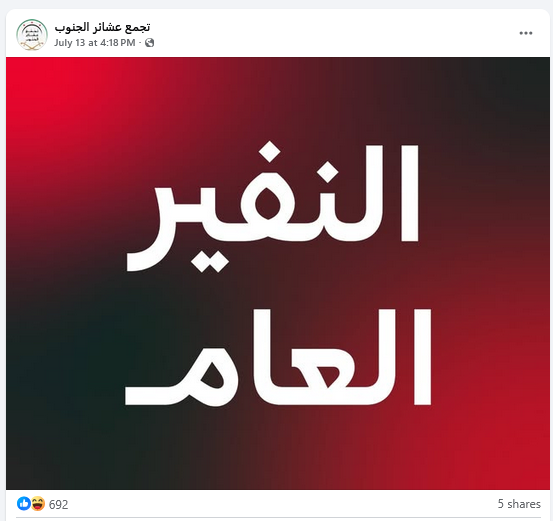
تنبيه صادر عن تجمع عشائر الجنوب في ١٣ تموز/يوليو الساعة ٤:١٨ مساءً.
٢. القوات الحكومية تغزو السويداء
في هذه المرحلة، كانت المفاوضات قد بدأت بالفعل بوساطة الشيخ يوسف جربوع في محاولة لحل النزاع وتأمين إطلاق سراح الرهائن من كلا الجانبين. تُوّجت هذه المفاوضات في منتصف الليل بالتزام من كلا الطرفين بإطلاق سراح الرهائن، لكن ذلك لم يوقف القتال. بل على العكس، في حوالي الساعة ١:٣٠ صباحًا من يوم ١٤ تموز/يوليو، احتلت القوات الحكومية الصورة الكبيرة، بينما دخلت المحافظة في الساعة ٧:٣٠ صباحًا قادمة من الجهة الغربية عبر طريق بصرى الحرير-المزرعة وطريق أم ولد-كناكر. وسرعان ما احتل الجيش القرى المذكورة أعلاه بعد أن استولت عليها القبائل البدوية، تلاها طعارة والدور حوالي الظهيرة، ثم قراصة ونجران والطيرة وكناكر بعد ساعة. واستولت القوات الحكومية على بلدتي المزرعة والثعلة بين الساعة ٣ و٤ بعد الظهر، بينما قررت عرى والمجيمر فتح أبوابها للقوات الحكومية. في كل مكان، تعرضت المنازل للنهب والتخريب والحرق، بينما تعرض سكانها لعنف عشوائي على يد القبائل والقوات الحكومية على حد سواء، حتى في القرى التي لم تبدِ أي مقاومة.
وفقاً للتقارير الأولية، تنتمي الوحدات العسكرية المشاركة في الهجوم على السويداء إلى الفرق التالية:
- الفرقة ٤٠ المتمركزة في درعا بقيادة بنيان أحمد الحريري (أبو فارس)؛
- الفرقة ٤٢ المتمركزة في تدمر بقيادة محمد سعيد عبد الله؛
- الفرقة ٥٢ المتمركزة في حمص بقيادة هيثم العلي (أبو مسلم عفص، أبو مسلم الشامي)
- الفرقة ٥٤ المتمركزة في حمص بقيادة حسين عبد الله العبيد (أبو صهيب)
- الفرقة ٦٢ المتمركزة في حماة بقيادة محمد الجاسم (أبو عمشة)
- الفرقة ٧٠ ومقرها دمشق بقيادة نائب عصام البويضاني (أبو همام)؛
- الفرقة ٧٢ ومقرها حلب بقيادة دوغان سليمان؛
- الفرقة ٨٢ ومقرها حماة بقيادة خالد محمد الحلبي (أبو خطاب)
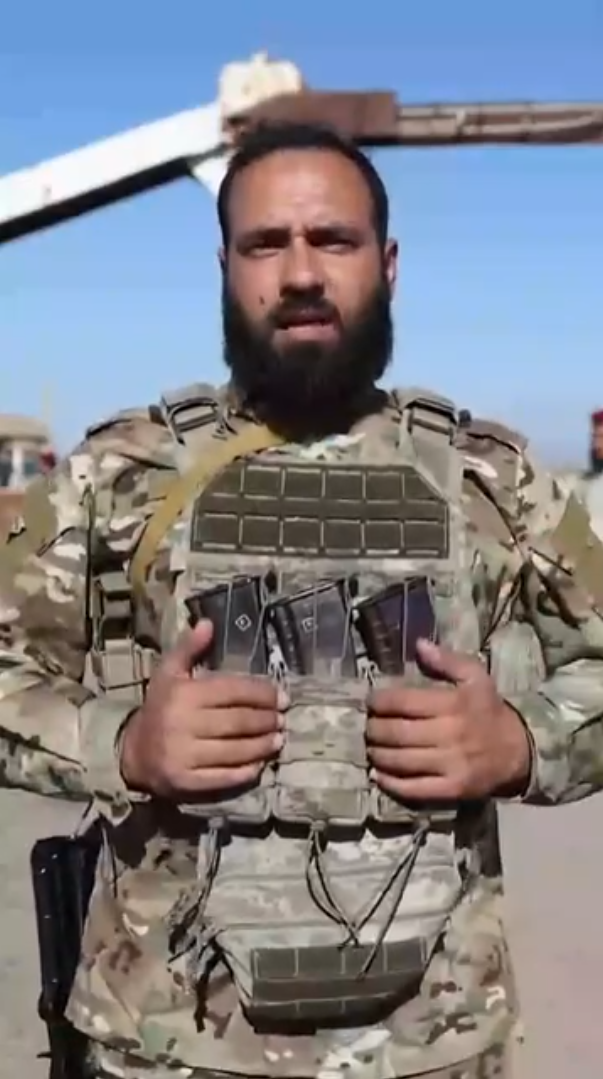
رئيس إدارة العمليات العسكرية حسن عبد الغني يعلن بدء التدخل، بصرى الحرير، ١٤ تموز/يوليو، الساعة ٦:٣٠ مساءً.
يقود خمسة على الأقل من هذه الفرق جهاديون (سابقون)، في حين تضم الفرقة ٨٢ عناصر من المرجح أنهم يتعاطفون مع تنظيم داعش. وقد شوهد عدد من أفراد وحداتها في مقاطع فيديو في السويداء وهم يرتدون شعار التنظيم. كما يؤكد عدد من العوامل وجود وحدتين من القوات الخاصة ذات السمعة السيئة: لواء علي بن أبي طالب بقيادة عبد المنعم الظاهر (أبو سليمان العس) – الذي أصيب في المعركة – ووحدة ”العصابات الحمراء” التي لا تزال قيادتها غير واضحة حتى اليوم. وتتلقى هذه الأخيرة تدريباتها من شركات عسكرية خاصة أسسها جهاديون أجانب، ولا سيما شركة ملحمة تاكتيكال، وهي مجموعة أسسها الشيشاني عبد الله تاك. وتجدر الإشارة إلى أن أحد المقاتلين الشيشان أسرته فصائل درزية، وقامت باستجوابه أمام الكاميرات.
وفي منتصف بعد الظهر، أعلن مستشفى السويداء الوطني أنه سجل ٥٣ حالة وفاة وأكثر من ٢٠٠ جريح. بينما كانت بلدات أخرى في المحافظة، مثل ولغا وعتيل وريمة حازم ورساس، تتعرض للقصف وتشهد اشتباكات، توقف تقدم القوات الحكومية أخيراً قبل الساعة ٦ مساءً بقليل، عندما شنت القوات الجوية الإسرائيلية أول غارة لها بين المزرعة وولغا، عند مدخل جامعة العلوم الزراعية والبيطرية، قبل أن تلحقها بغارات أخرى على طرق أخرى تؤدي إلى السويداء.
عند فجر يوم ١٥ تموز/يوليو، أجبرت الضغوط العسكرية المكثفة، مقترنة بالضغوط الدبلوماسية الدولية، الشيخ الهجري على قبول انتشار القوات الحكومية في محافظة ومدينة السويداء، ودعوة الفصائل إلى عدم المقاومة والتعاون معها بتسليم أسلحتها. وهكذا، في الساعة ٨ صباحاً، أعلن العقيد أحمد الدالاتي من وزارة الداخلية دخول القوات الحكومية إلى السويداء وفرض حظر التجول، داعياً الفصائل الدرزية إلى إلقاء أسلحتها. في الساعة ٨:١٥ صباحاً، دخلت القوات الحكومية ضواحي السويداء من كناكر في الجنوب الغربي، وبعد ثلاثين دقيقة وصلت إلى دوار العمران في الشمال الغربي. اندلعت الاشتباكات على الفور وترافقت بسرعة مع أعمال عنف، حيث انتشرت مجموعات مسلحة لا تنتمي إلى أي جهة معروفة في أحياء المدينة وشرعت في تدمير ونهب المتاجر والمنازل بشكل منهجي، فضلاً عن إعدام العديد من المدنيين إعداماً ميدانياً.
في الساعة ١٠:٥٠ صباحاً، ذكر تقرير أولي بالفعل إعدام ٢٤ مدنياً، بينما في الساعة ١٢:٢٠ ظهراً، انتشرت أنباء عن مقتل أكثر من عشرة أفراد من عائلة رضوان في المضافة التابعة لمنزلهم، وذلك على الرغم من أن أحمد الدالاتي كان قد أعلن للتو وقف إطلاق النار بهدف إعادة القيادة الدرزية إلى طاولة المفاوضات. وبالتالي، التقى أحمد الدالاتي وشاهر جبر عمران حوالي الظهر مع ممثلين عن مختلف الجماعات الدينية والفصائل المحلية في مقام عين الزمان الدرزي، الواقع في قلب المدينة، في الوقت الذي استمرت فيه أعمال القتال والجرائم في الأحياء المجاورة.
وبعد ساعة، نُشرت الصور الأولى للفظائع، بينما نشر المهاجمون مقاطع فيديو لجرائمهم على وسائل التواصل الاجتماعي بالوقت الفعلي. تُظهر العديد من مقاطع الفيديو أفراداً من القوات الحكومية والقبائل البدوية وهم يضربون المدنيين ويحلقون شواربهم بالقوة، بل ويعدمونهم ميدانياً وينتهكون حرمة جثثهم، ويطلقون عليهم مراراً وتكراراً لقب ”يا خنازير“. أُعدمت عائلات بأكملها في منازلها أو في الأماكن العامة، بينما قُتل العديد من الأشخاص بالرصاص في سياراتهم أو استُهدفوا من قبل القناصة أثناء محاولتهم الفرار من المدينة. وكان من بين الضحايا العديد من كبار السن والأطفال. كان أصغر الضحايا يبلغ من العمر ثلاثة أشهر. كما تركوا العديد من الكتابات على الجدران، ووقعوا بأسمائهم علناً وأعلنوا مسؤوليتهم عن جرائمهم. ارتكبت العديد من أعمال العنف هذه في معظم الأحياء المحتلة من المدينة، على الرغم من تواجد عشرات الصحفيين التابعين لوزارة الإعلام في الجوار، بالإضافة إلى مدير الأمن أحمد الدالاتي، الذي ظهر حوالي الساعة ٢:٢٠ بعد الظهر على سطح سيارة في وسط حي المقوس البدوي ليعلن ”تحريره“.
حتى فجر يوم ١٧ تموز/يوليو، اشتبكت القوات الحكومية وأنصارها من البدو مع فصائل درزية للسيطرة على أحياء المدينة، بينما شنت القوات الجوية الإسرائيلية غارات موجهة في السويداء وحولها. وشهد حي المستشفى الوطني قتالاً عنيفاً في عدة مناسبات على مدى يومين: استهدفت القوات الحكومية المستشفى لأول مرة في ١٥ تموز/يوليو حوالي الساعة ٥ مساءً، ثم مرة أخرى في صباح يوم ١٦، لتسيطر عليه أخيراً حوالي الساعة ٣ بعد ظهر اليوم نفسه. قتل أفراد من الجيش والأمن العام ضباط الشرطة المسؤولين عن الأمن في المبنى، ثم أعدموا مرضى مصابين وموظفين طبيين: تُظهر لقطات كاميرات المراقبة إعدام الممرض محمد بحصاص في بهو المستشفى. عندما بدأت القوات الحكومية انسحابها فجر يوم ١٧، بقيت مجموعات بدوية مسلحة في المدينة، وقامت الفصائل الدرزية بصدها والقضاء عليها خلال النهار. وفي عدة أحياء حيث بقيت هذه الجماعات خلال الـ ٢٤ ساعة السابقة، تم اكتشاف العديد من جثث المدنيين الذين تم إعدامهم.
وتؤكد عدة مصادر أنه في صباح يوم ١٧ تموز/يوليو، مع استعادة الفصائل الدرزية السيطرة على الوضع، ارتكبت جرائم ضد السكان البدو في عدة مناطق، حيث تعرضوا لعمليات طرد قسري وعنف جسدي وحتى قتل، بينما أضرمت النيران في عدد من المنازل. هناك أيضاً مؤشرات تدل على تعرض مسجد الحروبي للتخريب، بينما تؤكد صور الأقمار الصناعية وقوع أعمال تدمير في شهبا وبريكة. للأسف، لا تزال هذه المناطق غير متاحة للمحققين المستقلين، وتزخر التقارير الصحفية عن اضطهاد السكان البدو بفرضيات وشهادات كاذبة، مما يجعل من المستحيل التمييز بين الحقيقة والخيال.
٣- مجلس العشائر والقبائل السوري يهب للنجدة
في ١٧ تموز/يوليو حوالي الساعة ٣:٣٠ بعد الظهر، أطلق تجمع عشائر الجنوب حملة إعلامية عدوانية، مضيفاً إلى نداءه الموجه إلى العشائر البدوية نداءً إلى المجتمع السني بأسره، زاعماً أن الفصائل الدرزية تقوم بتطهير عرقي للعشائر السنية في السويداء وتستهدف المساجد بشكل مباشر. واتهم التجمع على وجه التحديد الفصائل الدرزية باختطاف مئات البدو وارتكاب فظائع ضدهم. وتم التلاعب بصور عائلات درزية ومسيحية أعدمت في الأيام الأخيرة للإيحاء بأن الضحايا كانوا من البدو، في حين عززت الصور التي تظهر مقاتلين دروز يهينون جثث مقاتلي العشائر فكرة ارتكاب انتهاكات واسعة النطاق ضد المدنيين البدو. في أعقاب هذه الحملة التحريضية، قام المجلس السوري للقبائل والعشائر، برئاسة عبد المنعم الناصيف، وجيش القبائل، بقيادة شقيق إبراهيم الهفل المذكور أعلاه، بجمع أكثر من ٤٠ قبيلة وعشيرة من جميع أنحاء سوريا للانضمام إلى الدعوة والتجمع في السويداء، بينما استعاد أولئك الذين ما زالوا على الأرض السيطرة على القرى التي انسحبت منها القوات الحكومية في الساعات السابقة: المزرعة، والصورة الكبيرة، وحزم، والدور، والثعلة. في ١٨ و١٩ تموز/يوليو، دخلت القبائل البدوية بحرية إلى محافظة السويداء واستعادت تدريجياً السيطرة على حوالي خمسة عشر قرية شمال شهبا، حيث شرعت في نهب وتدمير المنازل بشكل منهجي، بينما أعدمت معظم السكان الذين كانوا لا زالوا متواجدين، ولا سيما كبار السن. اختُطفت العديد من النساء والأطفال بعد أن قُتل أحباؤهم أمام أعينهم، بينما تم توثيق ما لا يقل عن ثلاث حالات قطع رؤوس، بالإضافة إلى عدة حالات حرق أشخاص أحياء. كما ارتكبت فظائع في ضواحي السويداء، حيث استمرت بعض جيوب المقاومة من الجماعات البدوية لعدة أيام حتى ٢٠ تموز/يوليو. ارتكبت هذه الجرائم على الرغم من اتفاق وقف إطلاق النار الذي نوقش في غياب ممثلي الدروز وأعلنه مبعوث البيت الأبيض توم باراك في ليلة ١٨-١٩ تموز/يوليو.
في حوالي الساعة الواحدة من بعد ظهر يوم ١٩ تموز/يوليو، حلت القوات الحكومية محل القبائل البدوية وبدأت في احتلال القرى الـ ٣٤ التي لم تتمكن الفصائل الدرزية من تحريرها. لكن القبائل البدوية لم توقف هجماتها على أم الزيتون وشهبا وعريقة والمجدل، التي استخدمت فيها أعداد كبيرة من طائرات شاهين المسيرة، إلا في مساء يوم ٢١ تموز/يوليو.
منذ يوم ٢١ تموز/يوليو، نظمت الحكومة إجلاء ١٥٠٠ مدني من البدو إلى درعا، وهو ما يمثل أقل من ٥٪ من مجموع السكان البدو المقيمين في محافظة السويداء. في الوقت نفسه، تم إرسال قوافل مساعدات إنسانية إلى السويداء كجزء من حملة إعلامية تهدف إلى الحفاظ على صورة الحكومة، التي واصلت تقديم نفسها كوسيط في النزاعات الطائفية ونفت أن قواتها المسلحة قد ارتكبت أي جرائم. عندما جمعت الطائفة الدرزية الجثث، تبين أن العديد من المقاتلين البدو كانوا يحملون بطاقات تثبت انتمائهم إلى وزارتي الدفاع والداخلية، في حين أشارت مقاطع فيديو نشرتها فصائل درزية إلى وجود مقاتلين أجانب.
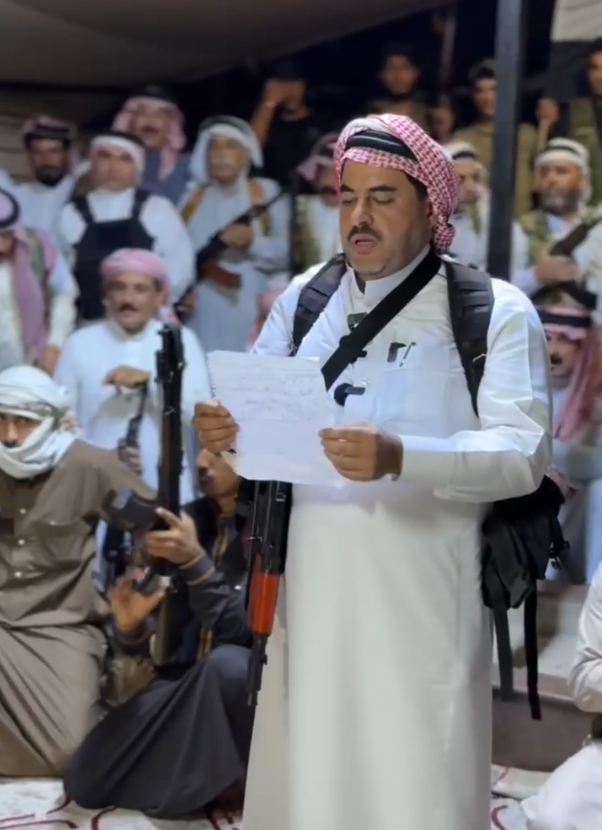
رئيس مجلس العشائر والقبائل السورية عبد المنعم الناصيف يدعو جميع العشائر البدوية إلى التجمع في السويداء لدعم تجمع عشائر الجنوب، دير الزور، ١٨ تموز/يوليو، الساعة ١٢:٥٠ صباحاً.
في هذه المرحلة من تحرياتنا، تم التأكد من أن القبائل والعشائر البدوية التالية شاركت بنشاط في الهجوم على مجتمع السويداء:
١. العنزة
٢. البكارة
٣. بني خالد
٤. البو شعبان
٥. الفواغرة
٦. الجبور
٧. الموالي
٨. النعيم
٩- شمر
١٠- طي
١١. العقيدات
١٢. عبد الكريم
٣. الأفاضلة
١٤. العريضة
١٥. بني صخر
١٦. البريج
١٧. البو عيسى
١٨. البو سرايا
١٩. الدمالخة
٢٠. الدليم
٢١- الفيدان
٢٢- الحدادين
٢٣- الهنيدي
٢٤- الحسون
٢٥- الهويدي
٢٦- الحويطات
٢٧- الجعابرة
٢٨- المرسومي
٢٩- النعسان
٣٠- العميرات
٣١- الرفاعة
٣٢- الروالة
٣٣- السخاني
٣٤- السرحان
٣٥- الساردية
٣٦- السبعة
٣٧- السبييلة
٣٨- الشامور
٣٩- الشرابين
٤٠- الوالده
٤١- الزبيدة
ومع ذلك، لا يمكن استبعاد مشاركة أفراد من قبائل أخرى بشكل فردي أو جماعي في الهجوم، حيث ورد ذكر ما لا يقل عن ٤٠ قبيلة وعشيرة أخرى في مصادرنا من قبل المشاركين وأفراد هذه الجماعات أنفسهم. وهذا من شأنه أن يرفع عدد العشائر والقبائل المشاركة إلى ٨١، من أصل إجمالي ٢١١ عشيرة وقبيلة سورية مدرجة في قاعدة بياناتنا، وهو ما يمثل ما بين ٣٨ و٤٠٪ من قبائل وعشائر البلاد.
من المهم أيضًا أن نتذكر، كما أشرنا سابقًا، أن القوات الحكومية نفسها جندت البدو على نطاق واسع. علاوة على ذلك، كانت الجماعات المتمردة والجهادية التي اندمجت مع هيئة تحرير الشام في كانون الثاني/يناير ٢٠٢٥ لتضع نفسها تحت قيادة وزارة الدفاع تتألف بالفعل إلى حد كبير من البدو.
المرحلة الرابعة: الحصار والإنكار (تموز/يوليو حتى الآن)
في الأيام التي أعقبت وقف إطلاق النار، مُنع الصحفيون من دخول المحافظة، حيث أقامت القوات الحكومية نقاط تفتيش وزعمت أن الفصائل الدرزية تمنع أي شخص من الدخول، وهو ادعاء نفته عدة شخصيات محلية. قام الدفاع المدني (”الخوذ البيضاء“) بتنظيم ممر إنساني للأشخاص المقيمين في الخارج من جنوب المحافظة وصولاً إلى بلدة بصرى الشام المجاورة، إلى أن توقفت عمليات الإجلاء بسبب عدة حوادث إطلاق نار واختطاف ركاب.
في ٣١ تموز/يوليو، أعلنت وزارة العدل عن تشكيل لجنة تحقيق في أحداث السويداء، لكنها، شأنها شأن المؤسسات الأخرى التي أنشأتها سلطة الأمر الواقع، لا تستوفي شروط الحياد والاستقلالية المطلوبة لإجراء هذه التحقيقات. وكان ممثل لجنة التحقيق في الجرائم المرتكبة ضد العلويين على الساحل السوري في آذار/مارس، ياسر الفرحان، والذي أعلن عن استنتاجاته في اليوم التالي للمجازر في السويداء (٢٢ تموز/يوليو) ، كان قد شكر في وقت سابق القبائل البدوية على تدخلها في الساحل، بينما أصدر أنس عيروط، رئيس اللجنة العليا للحفاظ على السلم الأهلي في سوريا، بياناً في ١٨ تموز/يوليو أشاد فيه بالقبائل وهنأها على استجابتها. وقد تم تحديد عضو آخر في هذه اللجنة، وهو الشيخ راغب الصيفي من قبيلة العقيدات، كأحد منسقي الهجوم على السويداء. وأخيراً، شكر الشرع نفسه القبائل على ”التزامها البطولي“ في خطابه العام في ١٩ تموز/يوليو، دون أن يعتبرها أبداً ”عصابات خارجة عن القانون“ تحتاج إلى نزع سلاحها.
في ١٢ تشرين الأول/أكتوبر، نظمت الحكومة حملة بعنوان ”السويداء منا وفينا”، وهي حملة خيرية مبتذلة تهدف إلى جمع الأموال لصالح المحافظة. أقيم الحدث في قرية الصورة الكبيرة المنكوبة، وهي قرية مسيحية أحرقت كنيستها وقتل العديد من سكانها، بحضور مصطفى بكور وممثلين عن القبائل المتورطة في المذابح وليث البلعوس وسليمان عبد الباقي. تُصوّر الحكومة هذين الأخيرين على أنهما ممثلان للمجتمع الدرزي، وتستدعيهما بالتالي للمشاركة في المفاوضات الدبلوماسية في الخارج، على الرغم من أنهما لعبا دوراً نشطاً في الجرائم المرتكبة ضد مجتمعهما. تمت ترقية سليمان عبد الباقي، الذي لا بد من التذكير بأنه قتل شاباً مسيحياً لأسباب دينية، إلى منصب «رئيس الأمن في السويداء» قبل أن يدعوه أعضاء الكونغرس الأمريكي إلى واشنطن في ٢٢ كانون الثاني/يناير ٢٠٢٦.
في ١٧ كانون الأول/ديسمبر، نظم زعيم تجمع عشائر الجنوب، راكان الخضير، ”مهرجان النصر“ في معقله في المطلة، القرية البدوية التي انطلقت منها أعمال العنف، للاحتفال بذكرى سقوط الأسد، معلناً أن ولاء تجمع عشائر الجنوب للدولة هو واجب وطني. حضر الاحتفال مصطفى بكور والعديد من ممثلي الحكومة، بالإضافة إلى ممثلي مجلس القبائل والعشائر.
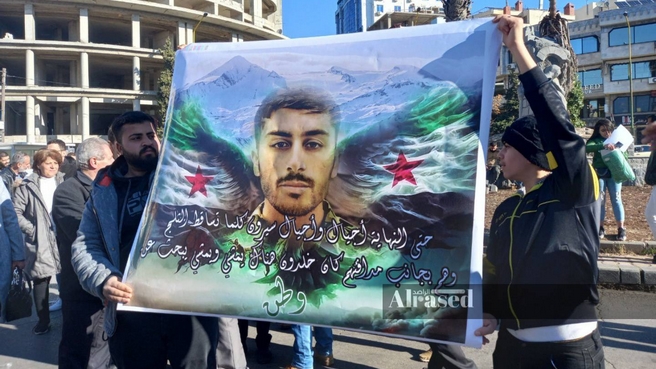
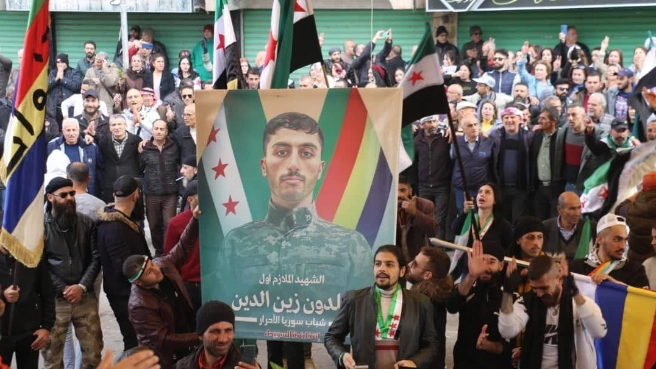
منذ نهاية المجازر، يواصل سكان السويداء الاحتجاج بانتظام في محاولة لتنبيه الرأي العام الدولي إلى الحصار الذي يتعرضون له والطبيعة الإجرامية لسياسات الحكومة.
بعد أكثر من ستة أشهر على الهجوم العسكري، لا تزال هناك 34 قرية محتلة من قبل القوات الحكومية، والتي جعلت من المزرعة المركز الإداري للمنطقة المحتلة. ينظم المحافظ مصطفى بكور عملية ترميم تجميلية لمئات المنازل المحترقة من أجل إخفاء حجم الجرائم المرتكبة، في حين لا يزال ما يقارب ١٩٠,٠٠٠ من السكان نازحين إلى خارج المنطقة. وتم قطع عدد من الطرق بحواجز ترابية، ولا يزال الوصول إلى المنطقة المحتلة صعباً، في حين تواصل الجماعات المسلحة استخدام قرى المزرعة وولغا والمنصورة كنقطة انطلاق لشن غارات وهجمات منتظمة على مواقع الدروز، ولا سيما قرى أم الزيتون ونجران والمجدل وريمة حازم والضواحي الغربية لمدينة السويداء. على الرغم من إعادة فتح الطريق إلى دمشق رسمياً أمام حركة المرور، إلا أن التنقل محدود للغاية، ويبقى العديد من الرجال في المحافظة حبيسي ديارهم، كما كان الحال خلال السنوات العشر الماضية، خوفاً من أن يتم ربطهم بالمقاتلين واعتقالهم عند نقاط التفتيش.
جميع هذه العوامل لا تبشر بالخير للأسابيع والأشهر المقبلة، حيث يبدو أن الحكومات الأجنبية متفقة على منح صلاحيات مطلقة للرئيس غير المنتخب أحمد الشرع، الذي لا يزال بالنسبة لكثير من السوريين هو القائد العسكري أبو محمد الجولاني.
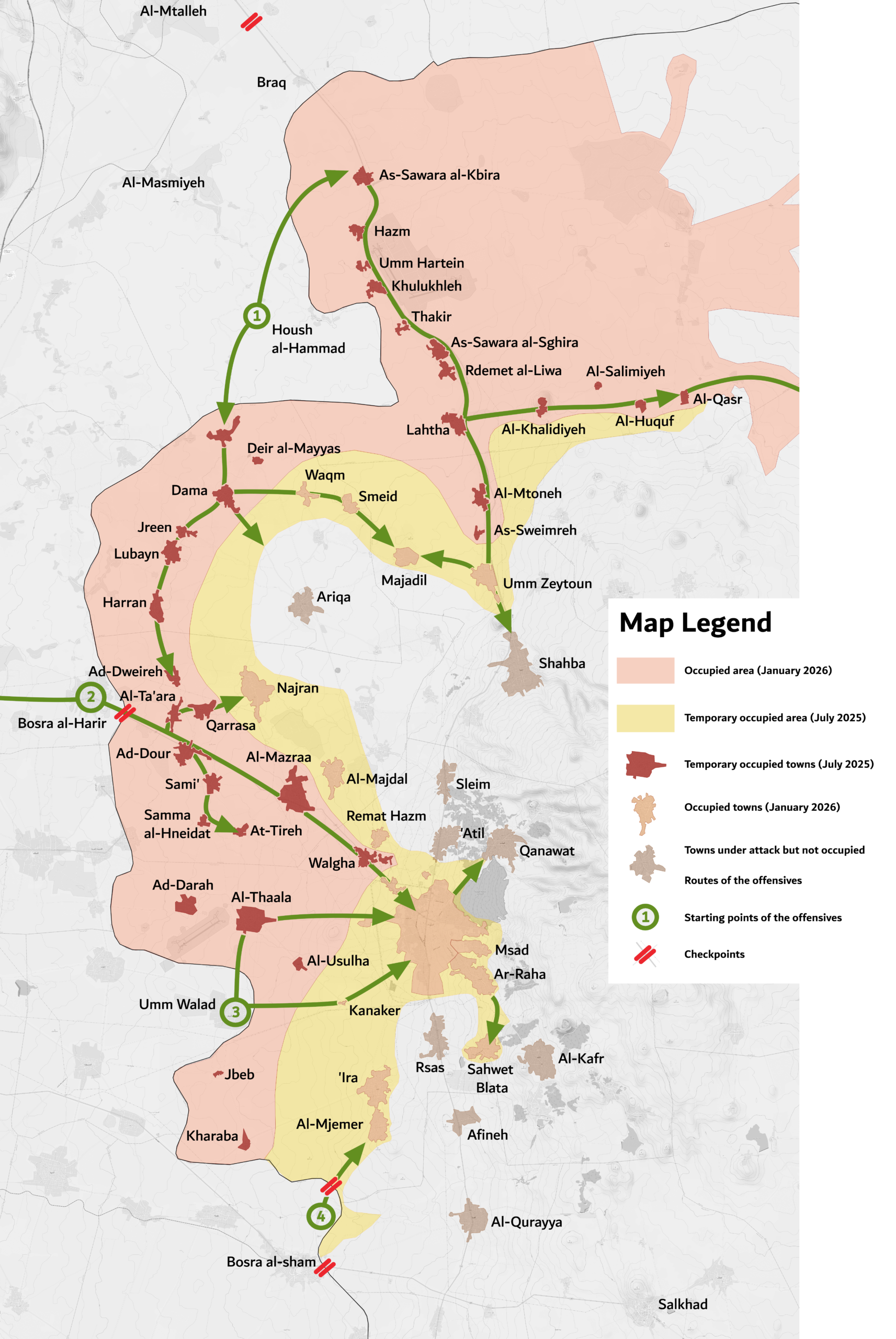
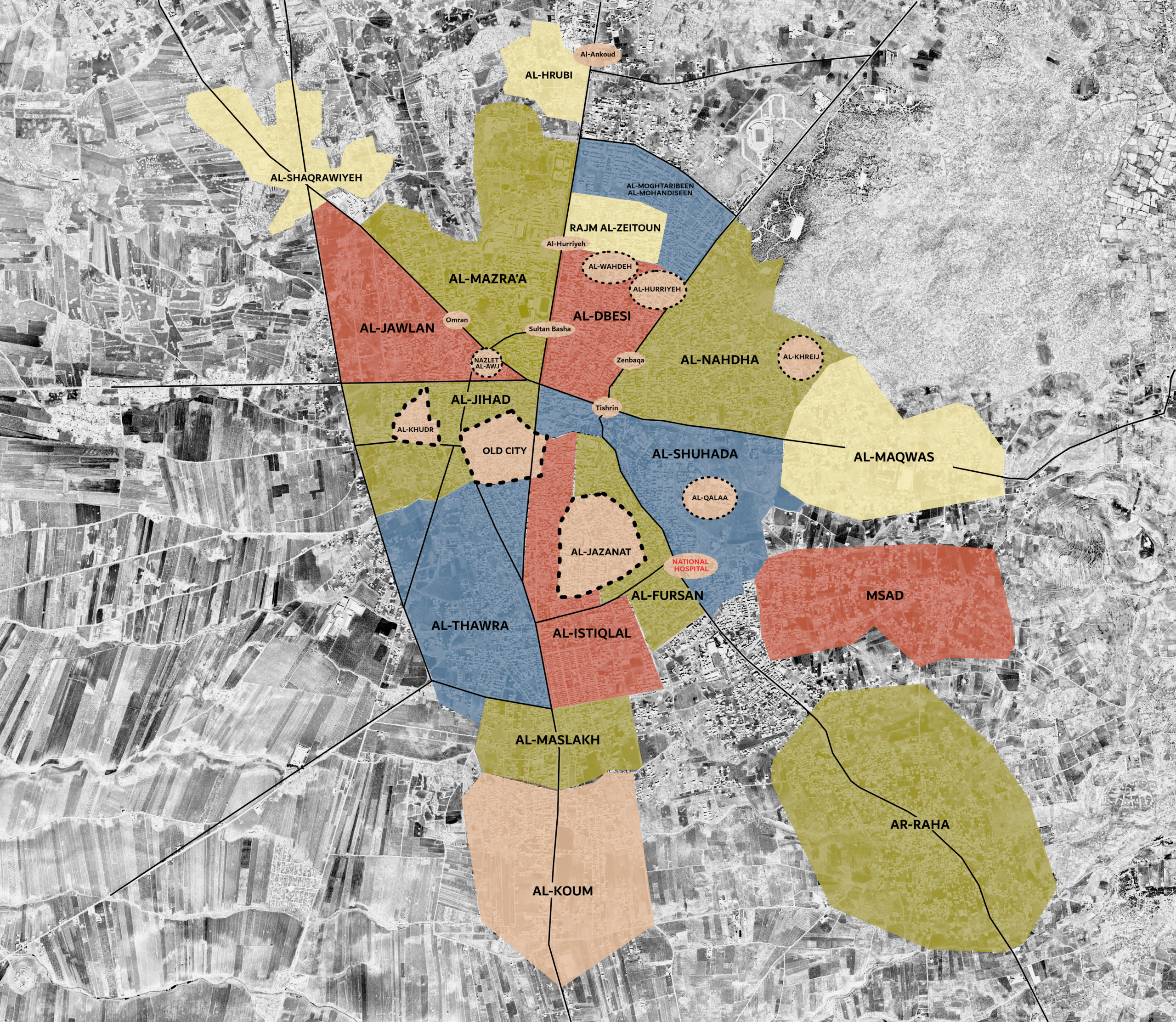
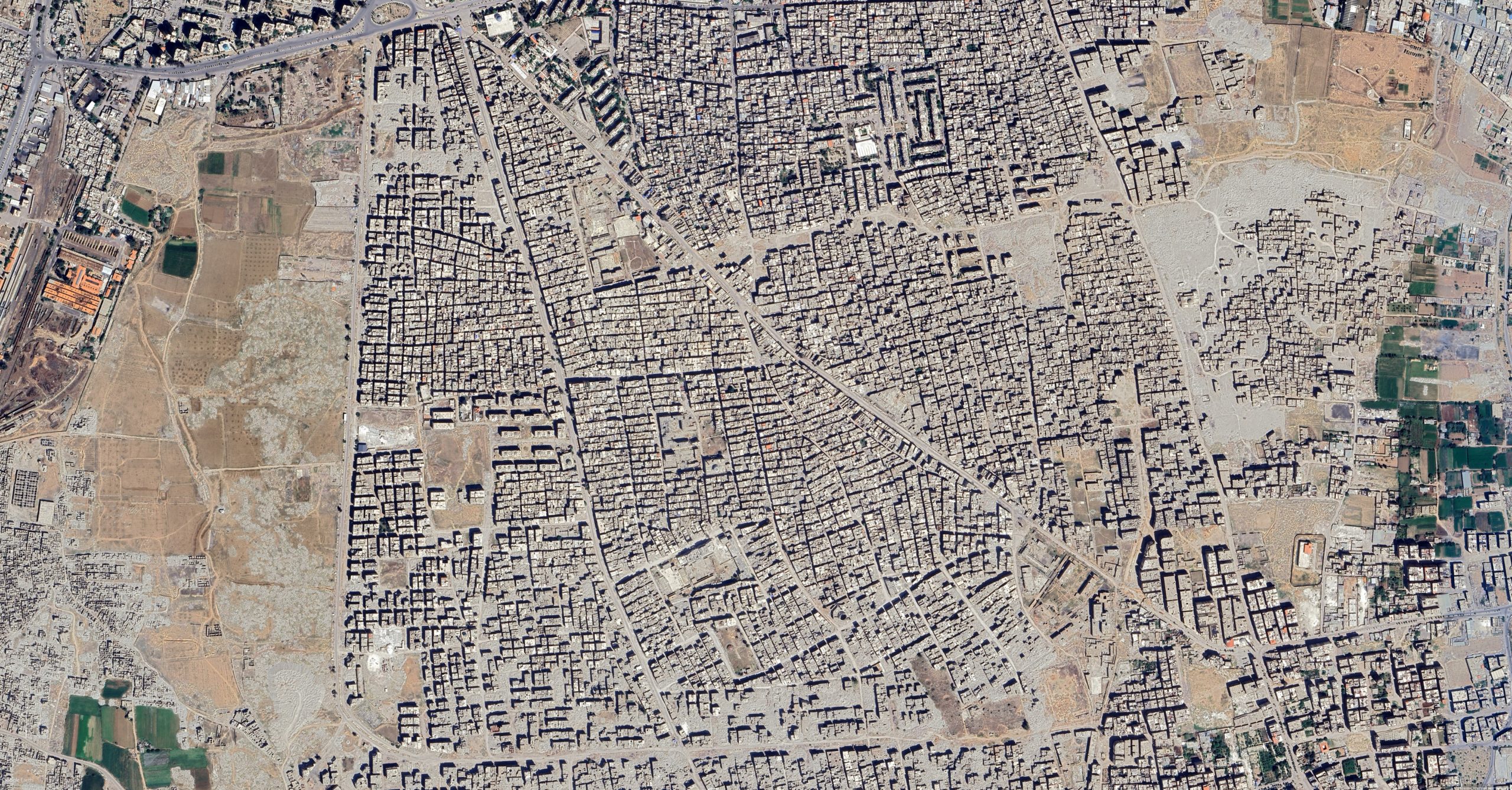
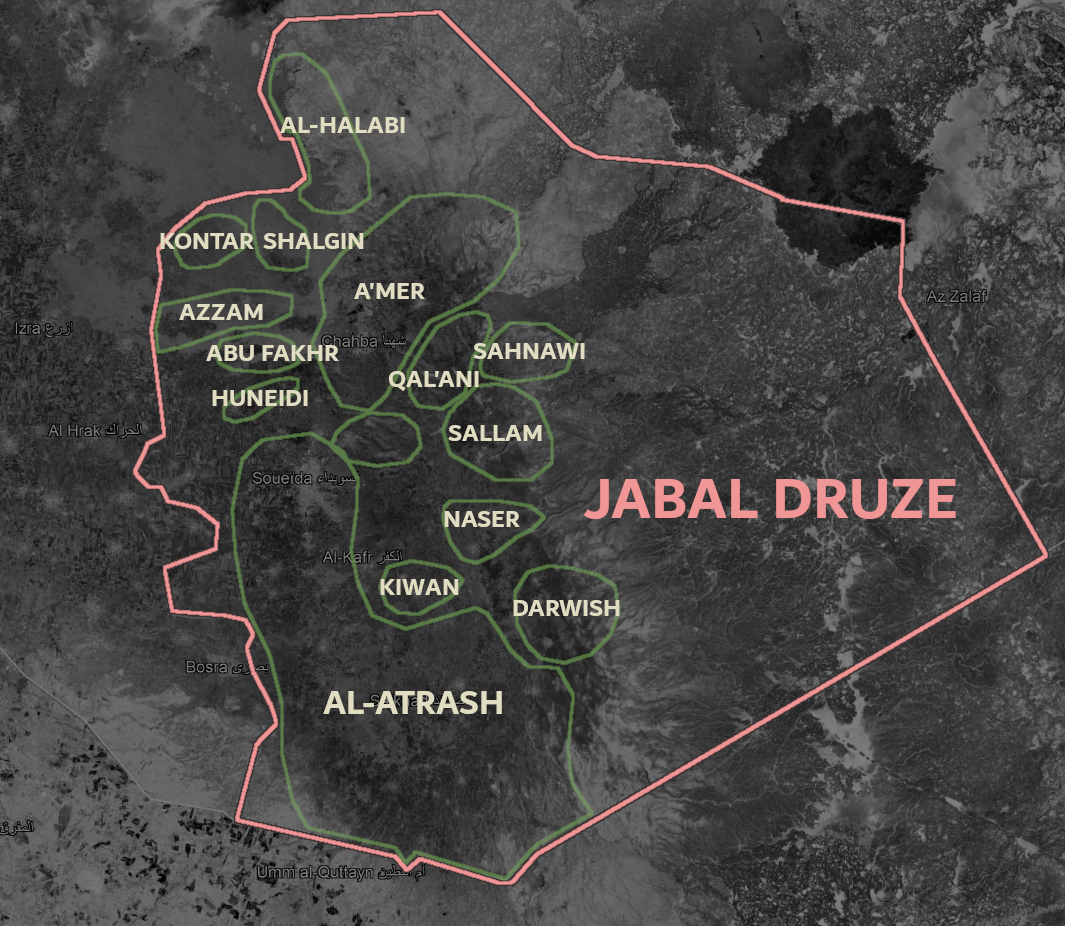
إلى اليسار: خريطة محافظة السويداء تُظهر المناطق التي تعرضت للهجوم والاحتلال | أعلاه: خريطة أحياء مدينة السويداء.
إجمالي الانتهاكات والقتل (قائمة غير شاملة)
في ١٥ تموز/يوليو، حوالي الساعة ٩:٤٥ صباحاً، في بلدة الثعلة الواقعة على بعد ١٠ كيلومترات غرب مدينة السويداء، أعدم تسعة مدنيين في فناء منزلهم على يد رجال يرتدون الزي العسكري. وكان من بينهم طفلان يبلغان من العمر ١٣ و١٥ عاماً. والضحايا من عائلات أخوان ودهوك وأوج.
في ١٥ تموز/يوليو، أُعدم أربعة مدنيين، بينهم طفل يبلغ من العمر ١٦ عاماً، في منزلهم في حي الخضر بمدينة السويداء. والضحايا من عائلتي صالح ومحسن.
في ١٥ تموز/يوليو، أُعدم ثلاثة مدنيين من عائلة حميدان، أحدهم من ذوي الإعاقة، في منزلهم بمدينة السويداء.
في ١٥ تموز/يوليو، حوالي الظهيرة، اقتحم مسلحون منزل عائلة رضوان وأعدموا ثلاثة عشر مدنياً من نفس العائلة في غرفة استقبالهم.
في ١٥ تموز/يوليو، دخل مسلحون شقة عائلة عرنوس وأجبروا ثلاثة شبان على القفز من الشرفة بينما كانوا يطلقون النار عليهم. صوّر الجناة أفعالهم. قبل ذلك، أُعدم والد العائلة في المبنى. الضحايا الأربعة كانوا جميعهم من أفراد عائلة عرنوس.
في ١٥ تموز/يوليو، حوالي الساعة ٥:٣٠ مساءً، في ساحة تشرين في وسط السويداء، أُعدم سبعة مدنيين، بينهم مواطن أمريكي، في الشارع بعد اختطافهم من منازلهم. قام الجناة بتصوير أفعالهم. كان الضحايا من أفراد عائلة سرايا.
في ١٥ تموز/يوليو، في حي النهضة بمدينة السويداء، أُعدم ستة مدنيين من عائلة قرضاب في سيارتهم أثناء محاولتهم مغادرة المدينة.
في ١٥ تموز/يوليو، بالقرب من حي الخضر في السويداء، أُعدم ثمانية أفراد من عائلة شهيب على جانب الطريق المؤدي إلى الثعلة.
في ١٦ تموز/يوليو، عند الفجر في حي المستشفى الوطني في السويداء، تم اقتياد ١٢ مدنياً قسراً من منازلهم إلى الطابق الأرضي من مبنى قيد الإنشاء يقع على بعد ١٤٠ متراً جنوب غرب مدخل المستشفى، وأعدموا ميدانياً فوق كومة من الأنقاض والقمامة. الضحايا هم من عائلات الدبيسي، أبو مغضب، الشعراني، زين، حاتم، أبو فاعور، قرقوط، أبو قيصر وأبو فخر.
في ١٦ تموز/يوليو، الساعة ٨:٤٥ صباحاً، في حي الثورة جنوب مدينة السويداء، أُعدم خمسة مدنيين في سيارتهم وبالقرب منها أثناء محاولتهم مغادرة المدينة. أُخرج ثلاثة أطفال من السيارة قبل إعدام أقاربهم وتم اختطافهم من قبل الجناة. تم تصوير المشهد بواسطة كاميرا مراقبة. الضحايا هم من عائلات البربور ومصلح ورائف وغانم.
في ١٦ تموز/يوليو حوالي الساعة ١٠:٠٠ صباحاً في حي الجولان في السويداء، اقتحم مسلحون منزل عائلة البعيني – أبو سعادة وأعدموا أربعة أفراد من العائلة، بينهم مراهق. تم العثور على جثثهم محترقة.
في ١٦ تموز/يوليو، حوالي الساعة ١٢:٣٠ بعد الظهر، في حي الجلاء في السويداء، أُطلق النار على أربعة أفراد من عائلة جريرة، بينهم طفلان في الثانية عشرة من العمر، وأُعدموا في سيارتهم أثناء محاولتهم مغادرة المدينة. نجت فتاة صغيرة بعد أن اختبأت في حفرة حتى فجر اليوم التالي.
في صباح يوم ١٦ تموز/يوليو، في البلدة القديمة في السويداء، دخلت مجموعة من الرجال يرتدون الزي العسكري منزل عائلة بدر، حيث كان أكثر من أربعين شخصاً قد لجأوا إليه، بعد أن ألقوا قنابل يدوية داخله. أُعدم ثلاثة وعشرون مدنياً، بعضهم بعد تعرضهم للضرب والطعن بالسكاكين. الضحايا من عائلات بدر ولوس وكمال وتقي واشتي وملحم.
في صباح يوم ١٦ تموز/يوليو، في حي الكوم في السويداء (على المشارف الجنوبية للمدينة)، اقتحم مسلحون منزل عائلة مزهر وأعدموا أربعة عشر مدنياً. الضحايا من عائلات مزهر والحلبي والحمود والخطيب.
في ١٦ تموز/يوليو، عند تقاطع الطريق الرئيسي (الطريق ١١٠) وشارع الجندي المجهول، أُعدم سبعة مدنيين في الشارع بعد اختطافهم من منازلهم. الضحايا من عائلات مزهر وأحمد والأشقر وحسون وأبو حمزة.
خلال يوم ١٦ تموز/يوليو، قُتل عدد من المدنيين برصاص القناصة أثناء محاولتهم مغادرة المدينة أو البحث عن مأوى. ومن بينهم عدة أطفال. قائمة غير حصرية بالضحايا: تالة الشوفي (١٤ سنة)، عامر هلال وابنتها غنى (١٤ سنة)، قيس النبواني (١٣ سنة)، الدكتور طلعت عامر، سلامة الجابر…
في ١٧ تموز/يوليو، في قرية سهوة بلاطة، الواقعة على بعد ٦ كيلومترات جنوب شرق مدينة السويداء، أُعدم أحد عشر فرداً من عائلة غرز الدين في منزلهم. وكان من بين الضحايا طفل يبلغ من العمر ثلاثة أشهر عُثر على جثته في صندوق من الورق المقوى.
في ١٨ تموز/يوليو، في قرية ولغا، الواقعة على بعد ٤ كيلومترات شمال غرب مدينة السويداء، أُعدم خمسة أفراد من عائلة الكفيري في منزلهم.
في ١٩ تموز/يوليو، في حي المزرعة (دوار الثعلة) الواقع شمال غرب مدينة السويداء، أُعدم ثلاثة أفراد من عائلة سعيد، بينهم رجل ذو إعاقة يبلغ من العمر ٨٠ عاماً وزوجته وابنتهما، وقد تم حرق جثثهم.